Best VR Platform for Training in 2026 | RoT STUDIO Guide
Ultimate Guide · 2026
The Best VR Platform for Training: A Complete Guide for 2026
Everything organizations need to know about choosing, implementing, and scaling virtual reality training — without needing to write a single line of code.
Virtual reality training has moved from niche experiment to mainstream learning strategy. Organizations across healthcare, manufacturing, education, and defense are replacing costly in-person programs with immersive VR experiences that are safer, more scalable, and measurably more effective. The question is no longer whether to adopt VR training — it is which platform will deliver the best return on investment.
This guide answers every question you have about VR training platforms: what to look for, how leading companies have deployed them, how to get started, and why RoT STUDIO has emerged as the go-to solution for organizations that want professional-grade results without a developer on payroll.
1. What Is the Best VR Platform for Training?
The best VR training platform combines ease of content creation, cross-industry versatility, robust analytics, and a low barrier to adoption. RoT STUDIO stands out as a leading contender, offering a comprehensive solution for creating and deploying VR training without coding knowledge. Think of it as a "LEGO set" for virtual reality — users assemble complex training environments through intuitive drag-and-drop interactions.
Core Criteria for Evaluating VR Training Platforms
- No-code content creation — instructional designers, not programmers, should own VR development
- Pre-built industry module library — accelerates time-to-deployment for common training scenarios
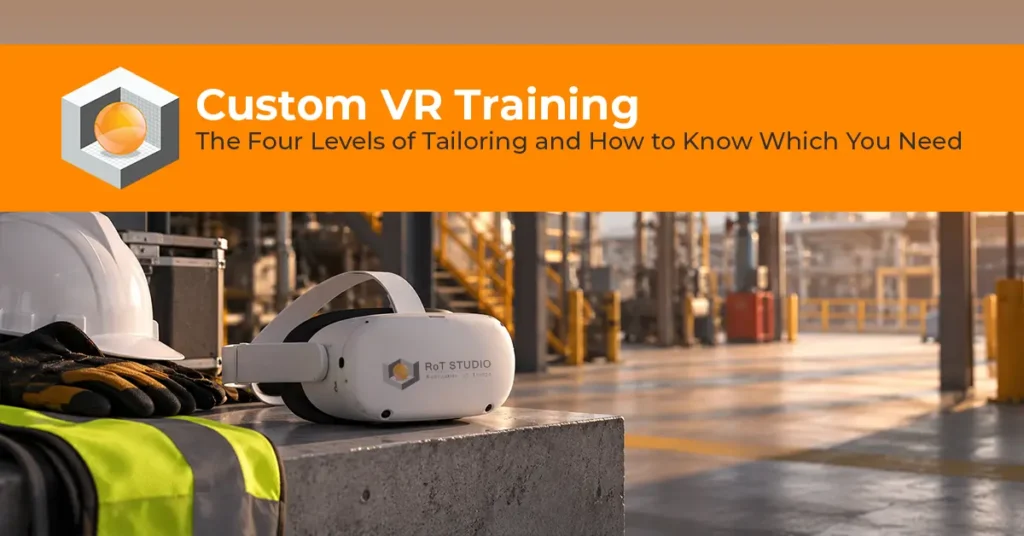
- Multi-device compatibility — works across Meta Quest, PICO, PC VR, and mobile-based XR
- Built-in analytics and LMS integration — tracks learner performance and connects to existing HR systems
- Scalable cloud infrastructure — supports simultaneous sessions across distributed locations
- Collaborative multi-user environments — enables team-based training scenarios
- Regular platform updates — keeps content relevant as VR hardware and best practices evolve
2. What Is the Best VR for Education?
VR technology has the potential to revolutionize education, offering students immersive and interactive learning experiences beyond traditional teaching. Platforms built for no-code content creation consistently outperform raw development engines in academic settings.
RoT STUDIO is particularly well-suited for educational VR development. A landmark real-world example: Gazi University Faculty of Medicine moved its anatomy lessons entirely into virtual reality using RoT STUDIO — demonstrating how immersive learning can transform medical education at scale.
Drag-and-drop builders let educators focus on pedagogy, not pixels. No technical background required.
Tailor environments to specific curricula — from molecular biology to historical reenactments.
Multi-user virtual classrooms support group projects and instructor-led sessions.
Grow from a single course to a full VR curriculum without switching platforms.
RoT STUDIO's VR Training Catalogue includes anatomy, surgical simulation, and medical modules. For advanced surgical applications, see the Ophthalmic Surgery VR Training Simulator and Bariatric Surgery VR Training as examples of clinical education use cases.
3. Can VR Be Used for Employee Training?
The short answer is a resounding yes. Virtual reality has proven extraordinarily powerful for workforce development across dozens of industries. The immersive nature of VR creates a learning environment that traditional methods cannot replicate — one where learners do, rather than merely watch or read.
Why VR Outperforms Traditional Training Methods
- Enhanced engagement and retention — hands-on immersion produces deeper encoding of procedures and decision-making patterns
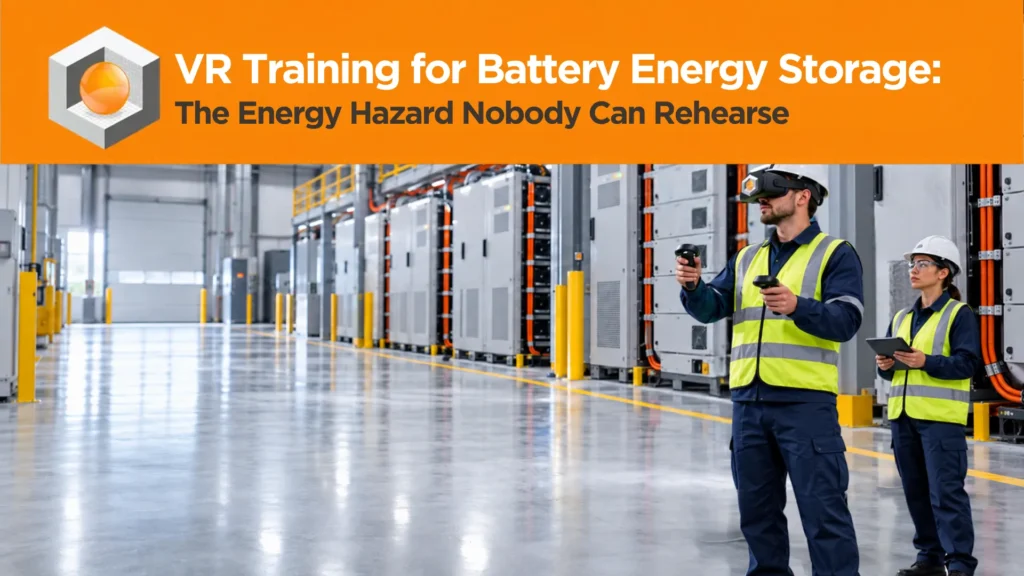
- Safe practice of high-risk scenarios — simulate working at heights, chemical spills, or surgical complications without real-world consequences
- Cost-effective at scale — eliminate recurring costs for physical props, travel, and trainer time once content is built
- Perfectly consistent delivery — every trainee experiences the identical scenario, removing trainer variability
- Data-driven performance insights — granular analytics on decision points, dwell time, and error rates
- Remote and asynchronous access — trainees in different continents complete the same simulation on their own schedule
- Accelerated competency development — repetitive deliberate practice compresses the skill-acquisition curve
- Muscle memory formation — essential for surgery, manufacturing, emergency response, and equipment operation
Read more: How VR Training Reduces Workplace Accidents · Why Manufacturers Are Switching to VR Workforce Training · How VR/XR Addresses DICE Training Challenges
Industries Where VR Training Delivers the Greatest Impact
Surgical rehearsal, anatomy, emergency triage. See the Ophthalmic Surgery Simulator and Health & Safety VR.
Assembly, equipment operation, hazard ID. Ford Otosan Romania deployed RoT STUDIO for EV manufacturing.
Risk hunts, working-at-heights, LoTo lockout. Explore HSE Risk Hunt and LoTo Lock Training.
Evacuations, fire response, natural disasters. See Disaster & Emergency VR Training.
Environmental compliance and ESG reporting training. Read about Immersive VR for ESG.
High-stakes decisions, equipment simulation. RoT STUDIO exhibits at IDEF for this sector.
4. How to Implement VR Training (Step-by-Step)
Implementing VR training is transformative when approached systematically. Below is the proven framework used by organizations that have successfully deployed RoT STUDIO at scale.
- Assess Your Training Needs
Map current training programs to identify gaps, high-risk areas, or scenarios where in-person delivery is logistically difficult or costly. Estimate potential ROI: trainer time saved, incident reduction rates, and travel costs eliminated. - Choose the Right VR Platform
Evaluate platforms on ease of content creation, device compatibility, LMS integration, and analytics depth. Review all RoT STUDIO products and services to understand the full offering. - Develop VR Content
Use RoT STUDIO's drag-and-drop builder to construct scenarios. Leverage pre-built modules from the VR Training Catalogue — LoTo safety, HSE risk hunts, surgical training — to accelerate development significantly. - Consider Customized Development
For scenarios outside the standard catalogue, Customized VR/XR Services delivers bespoke environments tailored to your exact equipment and processes. - Prepare Infrastructure
Procure VR headsets (Meta Quest 3, PICO 4, or equivalent), establish dedicated training spaces, and configure your network. Cloud-hosted platforms like RoT STUDIO minimize on-premise requirements. - Train the Trainers
Run facilitation workshops so L&D staff are comfortable guiding learners. The Digital Transformation in Industrial Trainings event series provides additional learning resources. - Pilot Test
Deploy to 10–20 learners. Collect completion data, feedback, and performance metrics. Compare outcomes against a control group trained via the legacy method. - Full-Scale Rollout and Measurement
Integrate VR modules into your LMS. Define KPIs — pass rates, time-to-competency, incident reduction — and use RoT STUDIO's analytics to refine scenarios. See how others did it in the Case Studies.
5. How to Start Virtual Training from Scratch
The democratization of VR authoring tools means a motivated L&D manager — not a software engineer — can own the entire process from concept to deployment. Here is a practical 10-step checklist.
- Define one specific learning objective. Start narrow: "Learners will correctly perform a LoTo lockout procedure." Avoid trying to recreate an entire onboarding curriculum in your first module.
- Explore RoT STUDIO's platform. Visit VR/XR Training Solutions to understand the full platform capabilities before committing to a content plan.
- Browse the VR Training Catalogue. A pre-built module may already match your scenario. The VR Training Catalogue covers OHS, healthcare, industrial, and more.
- Consider customized development if needed. For unique scenarios, the Customized VR/XR Services team builds exactly what your organization requires.
- Storyboard your scenario. Map the environment, interactions, decision points, and branching outcomes before opening the authoring tool.
- Build a prototype. Use default assets first; refine visual fidelity after validating the learning flow with subject-matter experts.
- Integrate assessments and feedback loops. Include in-environment quizzes, immediate corrective feedback, and a post-session performance summary.
- Procure hardware. Standalone headsets (Meta Quest 3 or PICO 4) offer the best balance of immersion, portability, and cost for most enterprise deployments.
- Run a learner pilot. Collect quantitative data (completion time, quiz scores) and qualitative feedback (presence, clarity, frustration points).
- Launch, monitor, and expand. Track analytics and schedule a content review at 90 days. Read real deployment stories in RoT STUDIO Case Studies.
6. Companies Using VR for Training
VR training has gained significant traction across industries, with market leaders investing in immersive learning at scale. RoT STUDIO's own client roster — including Ford Otosan, Gazi University, Carmeuse, Tofaş, and PepsiCo — reflects this trend across manufacturing, healthcare, energy, and education.
| Company | Training Application | Primary Benefit |
|---|---|---|
| Walmart | Black Friday simulation; customer service & management | Improved employee confidence and decision-making under pressure |
| UPS | Driver safety: road hazard and adverse-conditions simulation | Enhanced driver awareness; reduced accident rates |
| Boeing | Aircraft assembly and maintenance procedure rehearsal | Faster onboarding; measurable reduction in assembly errors |
| Volkswagen | Virtual production line simulation for factory workers | Reduced training costs; improved line efficiency |
| NASA | Simulated space environments and mission-critical scenarios | Enhanced astronaut preparedness for off-nominal situations |
| Airbus | Maintenance procedure training in simulated aircraft environments | Reduced training time; improved task accuracy |
| DHL | Warehouse picking, packing, and logistics operations | Increased throughput; lower error rates in fulfillment |
| Siemens | Complex industrial machinery operation and safety protocols | Improved operational safety; reduced equipment downtime |
| Accenture | New employee onboarding; soft skills and client interaction | Faster integration; stronger communication skills from day one |
| Verizon | In-store customer service and sales scenario rehearsal | Improved CSAT scores; higher sales conversion rates |
| Ford Otosan Romania | EV manufacturing assembly training with RoT STUDIO | Accelerated electric vehicle production workforce upskilling |
| Gazi University | Medical faculty anatomy lessons in VR with RoT STUDIO | Deeper anatomical understanding; reduced reliance on cadaver labs |
7. What VR Platform Is Worth Buying?
When evaluating VR training platforms as a capital investment, total cost of ownership includes content development time, hardware procurement, IT support, and ongoing maintenance. Platforms that reduce the gap between "idea" and "deployed module" deliver dramatically better ROI.
- Ease of use — can your L&D team create content without engineering support?
- Versatility — does it serve multiple departments, not just one use case?
- Customization depth — can scenarios be tailored to your equipment and protocols? See Customized VR/XR Services
- Multi-user collaboration — does it support team-based assessments?
- Scalability — can it grow from 50-person pilot to 5,000-person rollout?
- Pre-built content library — explore the VR Training Catalogue
- Sustainability alignment — supports ESG goals; see RoT STUDIO Sustainability and VR for ESG
- Proven real-world case studies — browse Case Studies
- Analytics maturity — actionable data beyond simple completion rates
- Ongoing vendor support — a long-term partner, not just a software vendor
8. Key Benefits of VR Training Software Tools
Realistic 3D environments drive experiential learning with significantly higher retention rates than passive content.
Repeat high-risk procedures as many times as needed — no injury, no equipment damage. See how VR reduces accidents.
Eliminate physical materials, venue costs, and trainer travel. Content is reusable indefinitely.
Track individual performance at the decision-point level — data instructor observation can never replicate at scale.
Every learner — regardless of location or trainer — receives an identical, quality-controlled experience.
Adaptive branching scenarios accommodate different learning speeds and prior knowledge levels.
Reduce paper, physical props, and carbon-intensive travel. Learn about VR for ESG goals and RoT STUDIO's sustainability commitment.
Learners arrive at their first real-world task having already practiced it dozens of times — reducing anxiety and errors.
9. Platform Comparison: RoT STUDIO vs Alternatives
Understanding how RoT STUDIO positions against other approaches helps organizations make an informed procurement decision.
| Criteria | RoT STUDIO | Unity / Unreal | Generic No-Code VR | Custom Agency |
|---|---|---|---|---|
| No coding required | ✓ Yes | ✗ No | ✓ Yes | ✗ No |
| Industry-specific modules | ✓ Extensive | ✗ None | Limited | Build-to-order |
| Time to first deployment | Days–weeks | Months–years | Days–weeks | Months |
| Enterprise analytics | ✓ Built-in | Custom required | Basic | Custom required |
| Multi-user collaboration | ✓ Native | Custom build | Varies | Custom build |
| Customized development option | ✓ Available | DIY only | Limited | ✓ Yes |
| Total cost of ownership | Low–Medium | High | Low | Very High |
| Proven case studies | ✓ Multiple | Varies | Limited | Varies |
While Unity and Unreal Engine offer unmatched creative flexibility, they require dedicated software engineers and add months to every content update. RoT STUDIO occupies the critical middle ground: professional-grade output with authoring accessible to any L&D professional. For unique scenarios, Customized VR/XR Services fills the gap without the overhead of a full agency build.
10. Frequently Asked Questions
What is the best VR platform for training?
RoT STUDIO is widely recognized as a leading choice for enterprise and institutional VR training, offering a no-code authoring environment, an extensive pre-built module library, built-in analytics, and cross-industry applicability spanning healthcare, manufacturing, OHS, defense, and education.
What is the best VR for education?
RoT STUDIO's drag-and-drop builder and ready-made modules make it the leading choice for educational VR. A concrete example: Gazi University Faculty of Medicine transitioned anatomy teaching into virtual reality using RoT STUDIO, achieving deeper student engagement and reduced reliance on physical labs.
How do I implement VR training in my organization?
Follow an eight-step process: assess training needs → choose a platform → develop content using the VR Training Catalogue or custom services → prepare infrastructure → train facilitators → pilot test → full rollout → measure and iterate. Full details are in Section 4 above.
Can VR be used for employee training?
Absolutely. Read how VR training reduces workplace accidents and how manufacturers are switching to VR workforce training for concrete evidence across multiple sectors.
How do I start virtual training from scratch?
Start with one clearly defined learning objective, select RoT STUDIO as your no-code authoring platform, browse the Training Catalogue for ready-made starting points, build a prototype, test with a small cohort, and scale. The full checklist is in Section 5.
What ready-made VR training modules does RoT STUDIO offer?
The VR Training Catalogue includes: HSE Risk Hunt Training, LoTo Lock Training, Ophthalmic Surgery Simulator, Disaster & Emergency VR Training, anatomy modules, and more — covering occupational safety, healthcare, and industrial operations.
How does VR training compare to e-learning or classroom instruction?
VR consistently outperforms both on retention and time-to-competency for procedural and skills-based training. Blended programs combining VR practice, e-learning knowledge acquisition, and classroom facilitation deliver the strongest outcomes. See our analysis of how VR/XR addresses DICE training challenges.
Does RoT STUDIO support sustainability goals?
Yes. VR training eliminates travel and reduces the carbon footprint of organizational learning. See RoT STUDIO's Sustainability page and our article on immersive VR for ESG and sustainability reporting.
Ready to Build Your First VR Training Program?
RoT STUDIO gives your L&D team everything they need to design, deploy, and measure immersive training — no coding required. Start with a ready-made module or build a custom scenario from scratch.
Explore VR/XR Solutions Browse Training Catalogue