Enterprise VR and XR training has moved past the early-adopter phase. It is now embedded in workforce development strategies at manufacturers, healthcare systems, industrial operators, and multinational service organisations across Europe, Turkiye, and beyond. What has not caught up to that operational reality is the industry conversation. Most of what gets written about immersive training reads like vendor marketing or academic abstraction. Very little of it captures what actually happens inside organisations that are building programmes from first pilot to full rollout: the choices, the trade-offs, the surprises, the results.
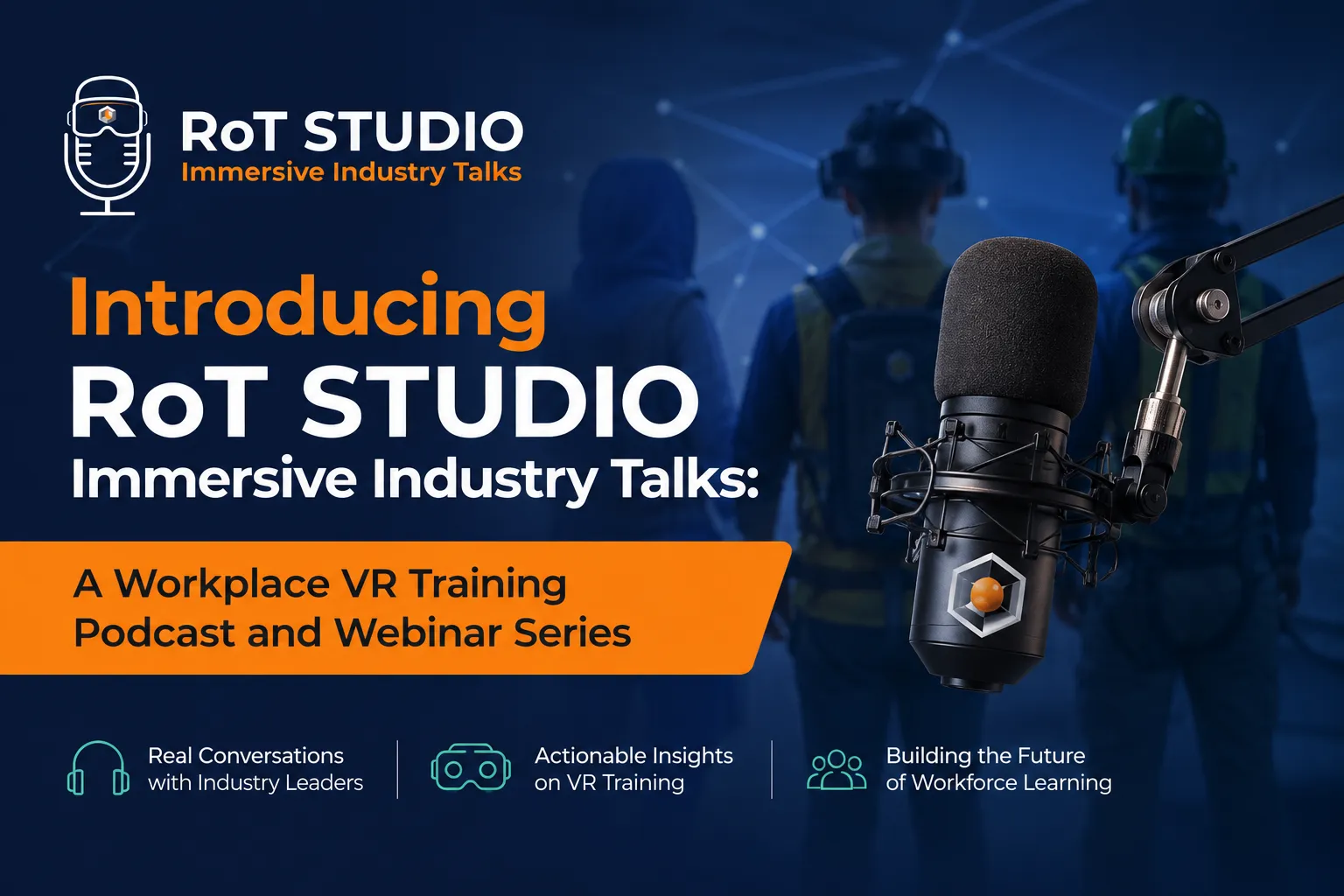
This is the gap RoT STUDIO Immersive Industry Talks is built to close. It is a webinar and podcast series bringing together HR leaders, safety and training professionals, healthcare specialists, and business decision makers for candid conversations about how immersive technology is changing the way organisations train, lead, and grow. The full series lives at rotstudio.com/immersive-industry-talks, with new episodes released on YouTube and Spotify.
This piece walks through what the series is, who it is for, what Episode 01 covers, and the topic pillars the series will move through as it expands. If VR or XR training is on your organisation’s operational agenda, whether you are exploring the first pilot or already scaling across teams, this is the series conversation that will meet you where you actually work.
What Immersive Industry Talks Is Actually About
The series exists to make the operational reality of immersive training visible. Not the vendor pitch, not the theoretical case, not the polished conference talk. The honest, practical view from the people inside organisations who are running these programmes day to day, plus the RoT STUDIO team members supporting them across HR, safety, healthcare, and industrial deployments.
The format is intentionally hybrid. Episodes are structured as long-form conversations that work as audio podcasts and as video-first webinars simultaneously. Podcast listeners can absorb the discussion during a commute or a workout. Video viewers get the added benefit of on-screen visuals, guest reactions, and any product or scenario references that come up during the conversation. The same episode serves both formats without compromise, which reflects how most professional audiences actually consume content in 2026: partly on the go, partly at the desk, and rarely committing to only one channel.
The intended audience spans the four functions that most frequently touch enterprise VR and XR training procurement: HR and L&D leaders responsible for soft skills, leadership, and onboarding programmes; safety and HSE professionals building compliance-grade training with defensible documentation; healthcare specialists working across clinical training, procedural competency, and staff development; and business decision makers in operations, engineering, and executive roles who evaluate the return on immersive training investments. The RoT STUDIO team, working with organisations across Europe and Turkiye, sees the same operational questions come up across all four functions, and the series is designed to surface those questions in the language each audience actually uses.
Episode 01 Spotlight: The Future HR and Soft Skills Training with VR
The series opens with a conversation about the domain that has moved furthest fastest in enterprise VR adoption over the past two years: HR and soft skills training. Episode 01, The Future HR and Soft Skills Training with VR, pairs Ayşegül Güngör from Minerva with Kamil Bozkurt from RoT STUDIO for a conversation about why organisations are moving soft skills and HR training into virtual reality, and what it actually takes to build a training culture that changes behaviour rather than just checking a completion box.
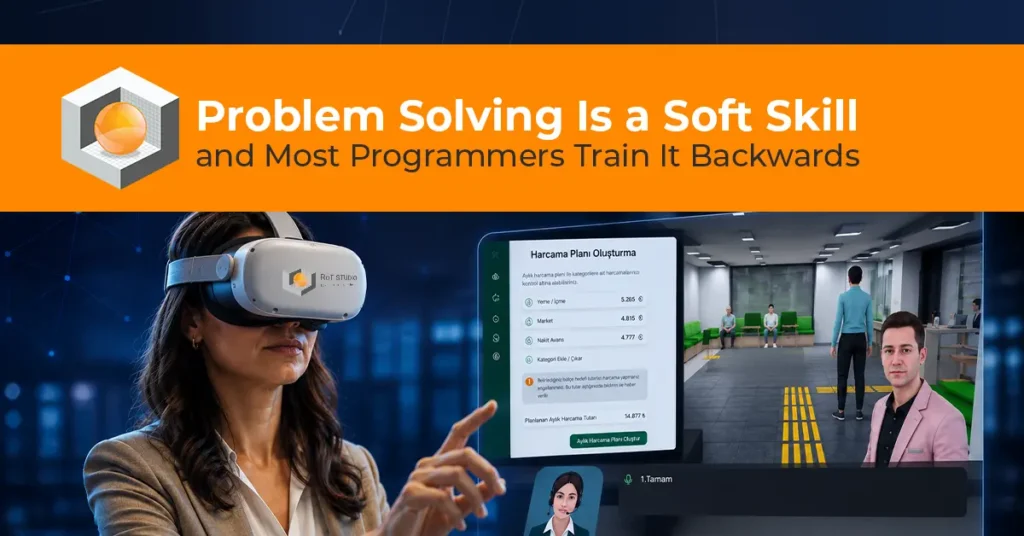
The choice of opening topic is deliberate. Soft skills training has historically been the category most resistant to measurable outcomes: leadership development, empathy building, difficult-conversation practice, conflict resolution, and diversity and inclusion programmes. Traditional formats produce excellent workshops and disappointing behavioural transfer to the workplace. VR-based delivery has changed the outcome curve on this category more decisively than on almost any other training domain, because immersive practice with realistic simulated counterparts produces the emotional and cognitive rehearsal that classroom formats cannot replicate. Ayşegül Güngör and Kamil Bozkurt walk through the operational specifics of what has actually worked, and what has not, in the deployments they have been part of.
For HR directors, heads of L&D, and talent leaders who are being asked whether HR and soft skills VR training should be part of the 2026-27 programme portfolio, the episode gives concrete operational grounding for that conversation. For everyone else, it introduces the tone and analytical depth the series carries forward.
The Four Topic Pillars Coming Up in the Series
The full series scope covers everything RoT STUDIO does across enterprise training. That translates into four topic pillars, each of which will carry multiple episodes as the series expands. Here is how each pillar is scoped, and what listeners can expect from the episodes that will land inside each one.
Pillar 1: HR and Soft Skills
Episode 01 opens this pillar. Subsequent episodes will move through the specific soft skills categories where VR-based training has produced the strongest behavioural outcomes: leadership development for first-time managers and senior leader transitions, high-stakes conversation practice for HR business partners and people managers, diversity, equity, and inclusion training that moves past awareness into practice, and remote-workforce onboarding at the scale distributed organisations now require. The through-line across these episodes is measurable behaviour change, which is the accountability frame HR leaders increasingly work under.
Pillar 2: Occupational Safety and HSE
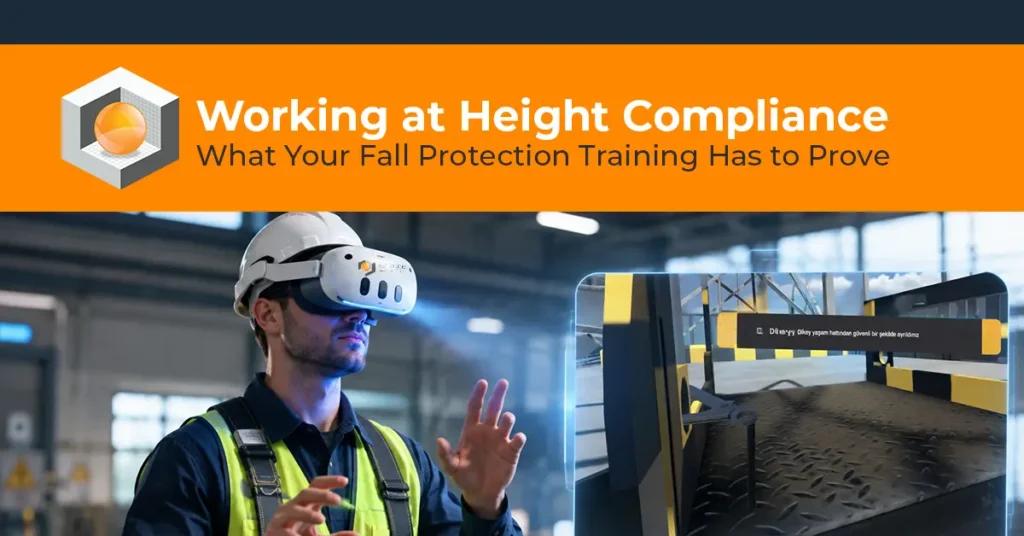
The safety and HSE pillar will bring together industrial safety managers, HSE directors, and workforce risk professionals to talk about how VR-based training is responding to the 2026 workforce reality. Expected episode territory includes procedural safety training that produces defensible documentation under OSHA and EU industrial safety frameworks, hazard identification training built against actual facility geometry, fire and emergency response training that moves past annual compliance briefings, and the workforce shortage response that HSE teams are building as new hires arrive faster than experienced trainers can bring them to competency. The audience for this pillar spans manufacturing, mining, energy, construction, logistics, and equivalent industrial operations.
Pillar 3: Healthcare
The healthcare pillar covers the two adjacent but distinct areas RoT STUDIO’s healthcare portfolio spans: clinical training for medical procedures and surgical skill building, and nursing onboarding at the scale US and European health systems now require. Expected episodes will include surgical training programmes across specialties, medical device manufacturer training partnerships, nursing onboarding compression as the response to the workforce and turnover crisis reshaping bedside care in the US and Europe, and the clinical performance support use cases that AR glasses have begun to enable adjacent to VR training. Guests will include chief nursing officers, clinical education leaders, surgical training programme directors, and the medical device and academic partners working alongside them.
Pillar 4: Industrial Training
The industrial pillar covers the operational deployments that anchor RoT STUDIO’s manufacturing and industrial customer base. Expected episodes will address workforce training for major product introductions and assembly line transitions, the CAD-to-VR training pipeline that engineering teams are now owning directly, skilled trades VR training as the response to the welding, HVAC, electrical, and plumbing workforce shortage, and the integration of VR training into broader Industry 4.0 and digital thread strategies. Guests will include manufacturing operations leaders, engineering managers, workforce development directors, and the training partners embedded in industrial deployments.
What Each Episode Actually Delivers
The series operates against a simple content framework built around three deliverables that shape every conversation.
Real Conversations, Not Sales Pitches
Guests describe how they have actually used immersive technology, including the parts that did not work the first time, the trade-offs they navigated, and the operational realities that a product datasheet cannot convey. This is the deliverable that most sets the series apart from the broader industry conversation about VR training. Listeners hear the operational truth, not the marketing version.
Practical Takeaways
Every episode surfaces ideas listeners can bring directly into their own HSE, HR, L&D, or leadership programmes. This is not education-in-general. It is operational transfer for professionals who are running the programmes the series is discussing. The bar for every conversation is that a listener walks away with at least one specific action they can apply on Monday morning.
Global Perspectives
The guest pool draws from organisations across the globe that are reshaping how their teams train and grow. This matters because the workforce and training realities that shape enterprise VR programmes vary meaningfully by region: US healthcare operates under different regulatory and reimbursement pressures than European healthcare; industrial workforce dynamics in Turkiye and Central Europe differ from North American manufacturing; healthcare workforce dynamics in the UK and NHS-adjacent systems differ from the US private-payer environment. The series brings these perspectives together rather than treating any single geographic experience as the default.
How to Listen, Subscribe, and Suggest Future Episodes
Episodes live on Spotify and YouTube. The main Immersive Industry Talks series page carries the full episode index, subscribe links to both platforms, and a mailing list signup for organisations that want direct notification when a new episode is published.
For listeners who want to suggest topics, propose guests, or nominate their own organisation’s story for a future episode, the series accepts submissions directly at [email protected]. The topic pillars outlined above are the current scope, but the specific episodes within each pillar are shaped by what the audience is actually asking about. If the workforce or training question your organisation is working through would be useful to hear discussed across the series audience, it is worth reaching out.
The Ask: Come Build the Series Audience With Us
Immersive Industry Talks exists because the enterprise VR training conversation deserves better than vendor pitch decks and academic keynotes. The people building these programmes inside real organisations have insight, hard-earned lessons, and operational context that the rest of the industry needs to hear, and the format the series operates in is designed to bring that insight into the open.
For readers who are already exploring or scaling VR training in their organisations, the series is a peer-conversation resource that will get more valuable as the episode library grows. For readers who are earlier in the journey, the series is an on-ramp to the vocabulary, the trade-offs, and the operational realities that shape enterprise immersive training in 2026 and beyond.
How RoT STUDIO Approaches This
RoT STUDIO produces and hosts Immersive Industry Talks as part of its broader commitment to supporting the enterprise VR and XR training community across Europe and Turkiye. The series complements the operational work the RoT STUDIO team does across the VR Training Catalogue, the Customized VR/XR Services scope, and the RoT STUDIO License platform. For organisations that want to move from the series conversation into an operational engagement with the RoT STUDIO team, the Contact page is the direct path in, and business development contact Cem Pekcan handles inbound conversations across the European market.