The landscape of global enterprise resilience, industrial safety, and disaster preparedness is undergoing a fundamental and irreversible transformation. For decades, organizations across high-risk sectors have relied on a combination of theoretical tabletop exercises, static e-learning modules, and highly choreographed live-action drills to prepare their workforces for catastrophic events. While these traditional methodologies established a baseline of regulatory compliance, they consistently failed to replicate the cognitive load, sensory overload, and unpredictable variables inherent in genuine emergencies. The evolution of Virtual Reality (VR) and Extended Reality (XR) has bridged this critical gap, providing a medium through which extreme, hazardous boundaries of operational failure can be simulated safely, repeatedly, and cost-effectively.
At the vanguard of this technological revolution is RoT STUDIO, a technology company recognized as a global pioneer in 3D technologies and digital engineering solutions. Rooted in a rich legacy of innovation that spans over 30 years, RoT STUDIO operates as a dedicated entity built upon the foundational expertise of its origins dating back to 1994. For three decades, this foundational engineering DNA has driven the introduction and integration of advanced tools such as CAD/CAM/CAE systems, VR/AR platforms, and industrial 3D printing into mission-critical engineering and research and development workflows. Today, operating from headquarters in Turkiye with offices in Istanbul and Ankara, as well as a European base at the 3EALITY High Tech Campus in Eindhoven, the Netherlands, RoT STUDIO delivers an end-to-end ecosystem of digital tools that transform complex disaster preparedness protocols into realistic, measurable, and scalable virtual experiences.
This comprehensive report examines the structural implementation, cognitive efficacy, and economic impact of disaster preparedness and emergency management VR training. By dissecting sector-specific use cases, technological frameworks, human performance metrics, and the enterprise sitemap of solutions provided by RoT STUDIO, the analysis provides a strategic roadmap for organizations seeking to future-proof their workforce readiness across the automotive, defense, aerospace, manufacturing, and healthcare industries.
The Cognitive and Psychological Imperative for Immersive Emergency Training
Managing a large-scale emergency—whether an industrial fire, a highly toxic chemical spill, a mass casualty incident, or a sudden seismic event—requires split-second decision-making under acute psychological stress. Traditional emergency planning defines theoretical behaviors and operational protocols, but individuals are highly prone to cognitive tunneling, panic, and critical errors when subjected to the chaotic, multi-sensory reality of an actual disaster.
Live-action training attempts to mitigate this vulnerability but is inherently limited by physical realities. Drills and emergency simulations are typically conducted on a small scale, in highly controlled environments, and under optimal weather conditions. They fundamentally fail to simulate the true complexities of a large-scale hazard, such as a massive facility fire at night in torrential rain, or a structural collapse in a confined, subterranean space. Virtual reality fundamentally alters the pedagogical approach to emergency preparedness by replacing passive information absorption with active, high-fidelity experiential learning.
Stress Inoculation and Situated Cognition
Immersive VR places trainees inside a photorealistic environment where they must execute standard operating procedures while managing simulated, dynamic environmental hazards. This approach leverages the psychological principle of situated cognition—the concept that human knowledge is deeply and inextricably tied to the context, environment, and culture in which it is learned and applied. By stimulating the spatial, auditory, and visual senses through advanced three-dimensional simulation and 360-degree perspectives, VR triggers genuine psychophysiological stress responses within the trainee.
The continuous, multi-layered visual cues provided by VR environments force trainees to constantly assess dynamic threats, such as a rapidly spreading office fire, a highly volatile refinery explosion, or a sudden breach in a hazardous materials container. This replicates the exact cognitive demands and sensory input of real-world crises. This process of stress inoculation ensures that when an actual emergency occurs, the neurological pathways governing the correct response have already been activated, tested, and reinforced. This leads to rapid, reflexive action rather than psychological paralysis. Extensive enterprise data indicates that trainees utilizing immersive VR are up to 2.75 times more confident in applying their safety skills in the field compared to those trained via traditional classroom or e-learning methods.
The Predictive Analytics of Human Performance
Beyond simply delivering immersive visual content, modern VR platforms function as highly sophisticated behavioral assessment and telemetry tools. During a disaster preparedness simulation, the VR software captures granular, millisecond-level data, including head tracking, eye movement, visual attention, physical interaction speed, and decision-making accuracy. This generates a wealth of predictive analytics that fundamentally changes how organizations assess readiness. Safety managers and corporate trainers can objectively identify knowledge gaps, measure emergency triage speed, and evaluate the efficiency of information transmission to incident command centers.
This behavioral telemetry provides a critical second-order benefit: the proactive identification of systemic workflow and architectural vulnerabilities. If multiple trainees consistently fail to locate a virtual fire extinguisher, struggle to interpret a specific hazardous materials placard, or bottleneck at a specific virtual emergency exit during a simulation, the organization can logically deduce that the physical facility design or the standard operating procedure itself is flawed. This allows for proactive, data-driven correction of the physical environment before a genuine, life-threatening incident occurs.
Overcoming the Bottlenecks of Live-Action Training
The reliance on human assumptions during traditional tabletop exercises severely limits their effectiveness. Tabletop discussions rely heavily on past experiences and the imagination of the facilitator, often failing to account for cascading failures. VR allows for a “forward look” by visualizing all possible scenarios, permutations, and variables, prioritizing them based on mathematical risk rather than human bias. VR programs possess high computing and analytical capabilities that allow them to incorporate all forms and variations of disaster scenarios, which is often impossible for humans managing static exercises.
Furthermore, traditional training exposes participants to inherent, albeit mitigated, physical risks. Firefighter training, confined space entry, and hazardous materials response drills carry a non-zero risk of injury or exposure. VR provides an entirely safe environment where personnel can practice navigating arc flash hazards, roof fall assessments, and chemical neutralization without any exposure to real-world danger. This capability to simulate the extreme boundaries of operational failure without incurring physical harm represents a fundamental paradigm shift in industrial health and safety protocols.
The Economic Architecture of Virtual Readiness
The initial development and deployment of high-quality VR simulations require capital investment in hardware and software, but the long-term economic architecture heavily favors immersive training over traditional methodologies.
Traditional live exercises involve massive, recurring logistical expenditures. These include domestic and international travel costs to centralized training facilities, the rental of specialized equipment, overtime pay for participants and instructors, the physical wear and tear on expensive operational machinery, and the rapid expenditure of consumable materials such as fire retardants or medical supplies. More critically, taking revenue-generating assets—such as automotive assembly lines, commercial aircraft, or heavy manufacturing machinery—offline for training purposes incurs massive, often prohibitive, opportunity costs.
Virtual reality entirely eliminates these logistical and financial bottlenecks. Once a comprehensive simulation is developed, it can be deployed infinitely across global locations with near-zero marginal cost. Industry analysis demonstrates that over a multi-year timeline, VR exercises become significantly less expensive per trainee compared to live exercises, which inherently carry fixed recurring costs per individual. The ability to practice high-consequence situations repeatedly without consuming resources allows personnel to train not just until they get the procedure right, but until they physically cannot get it wrong.
| Training Performance Metric | Traditional Classroom & E-Learning | Virtual Immersive Training Solutions |
| Time-to-Competency | Baseline standard prolonged duration | Up to 4x faster completion rates |
| Long-Term Knowledge Retention | Approximately 20% retention after one week | Up to 80% retention after one full year |
| Financial Cost at Scale | High (Linear cost scaling per employee) | 52% more cost-effective at enterprise scale |
| Confidence in Skill Application | Moderate to Low for complex tasks | 275% higher confidence levels reported |
| First-Time Quality Improvement | Baseline error rates expected | 90% increase in first-time execution quality |
These metrics reveal profound implications for enterprise operations. A faster time-to-competency directly accelerates the onboarding of new personnel, bringing them to total operational productivity in a fraction of the time. This mitigates the financial impact of labor shortages and high industry turnover. The dramatic increase in long-term knowledge retention ensures that emergency protocols remain deeply ingrained in the workforce’s muscle memory, drastically reducing the necessity and associated costs of constant remedial retraining.
The RoT STUDIO Technological Framework and Enterprise Sitemap
To address the highly diverse and complex requirements of global enterprises, RoT STUDIO has engineered a comprehensive, highly synergistic suite of VR/XR products and services. The architecture of the RoT STUDIO platform is purposefully designed to integrate seamlessly with existing organizational structures, supporting everything from corporate sustainability efforts and human resources onboarding to deep-tier digital engineering workflows.
The core offerings, explicitly mapped to the organization’s strategic sitemap, are structured across foundational pillars: the RoT STUDIO License, the comprehensive VR Trainings Catalogue, Customized VR/XR Services, RoT HEALTHCARE, Haptics integration, and specialized Earthquake Awareness Training.
Democratizing Digital Engineering: The RoT STUDIO License
The most significant historical barrier to the widespread adoption of virtual reality in corporate training has been the requirement for highly specialized software development and coding expertise. Organizations traditionally had to outsource every minor update or scenario change to third-party developers, creating unacceptable delays in deploying critical safety updates.
The RoT STUDIO License directly eliminates this bottleneck by providing a proprietary, completely no-code virtual reality software platform. This comprehensive solution empowers enterprise organizations to autonomously create, manage, deploy, and update immersive training content entirely in-house, without writing a single line of code. It requires standard high-performance computing hardware, specifically an i7 processor, at least an RTX 3000 Series graphics card, and SteamVR-supported headsets, making it highly accessible to modern IT departments.
The platform is elegantly structured around dedicated modules that provide end-to-end control over the digital engineering and training lifecycle:
| Platform Component | Core Functionality and Features | Enterprise Value and Impact |
| Designer Module | Immersive 3D environment review, high-precision motion tracking, and anthropometric ergonomics analysis. Allows teams to step inside imported 3D prototypes. | Eliminates late-stage physical design flaws, ensures operator physical safety, and aligns cross-functional engineering teams instantly before production begins. |
| Trainer Module | No-code authoring, drag-and-drop scenario creation, and reusable spatial content generation. Workflows are turned into VR after a simple 2-day course. | Democratizes training creation, allows rapid internal updates by subject matter experts, and massively reduces external content development expenditures. |
| Viewer Engine | High-resolution material rendering (up to 2048×2048), HDRI lighting support, and seamless SteamVR hardware compatibility. | Delivers photorealistic immersion, maximizing user cognitive engagement and accurately replicating exact physical site conditions for valid training transfer. |
By utilizing the Trainer Module, an organization can import existing 3D CAD models of their facilities or heavy machinery and translate standard operating procedures into interactive VR training in a matter of days. This rapid iteration cycle is absolutely vital for disaster preparedness, as emergency response protocols must be updated immediately in response to new regulatory guidelines, facility modifications, or newly identified hazards.
The VR Trainings Catalogue: Standardized High-Fidelity Solutions
For organizations requiring the immediate deployment of established safety protocols without internal development, RoT STUDIO offers an expanding, rigorously validated library of ready-to-use immersive modules. This VR Trainings Catalogue ensures fast rollout and consistent learning outcomes across global sites, divided into strategic sectors.
Within the Health, Safety & Environment (HSE) portfolio, RoT STUDIO provides deeply immersive modules designed to train spatial situational awareness, proactive hazard mitigation, and emergency response:
- HSE Risk Hunt Training: Simulates general industrial environments where users must identify standard workplace hazards, assess personal protective equipment (PPE) compliance, and execute emergency operational shutdowns.
- Information Security Risk Hunt Training: Addresses the critical human element in cybersecurity, training personnel to physically and digitally secure sensitive environments against breaches, social engineering, and unauthorized access during facility emergencies.
- LoTo (Lockout-Tagout) Lock Training: Crucial for industrial and energy environments, this module ensures workers master the sequential, highly regulated procedures for isolating hazardous energy sources during equipment maintenance, preventing catastrophic accidental machine startups.
- Underground Mining Risk Hunt Training: Simulates the uniquely claustrophobic and high-risk environment of subterranean operations, training miners to detect highly specific dangers such as roof fall hazards, toxic gas leaks, and structural instabilities before they result in a collapse.
Earthquake Preparedness and Awareness Training
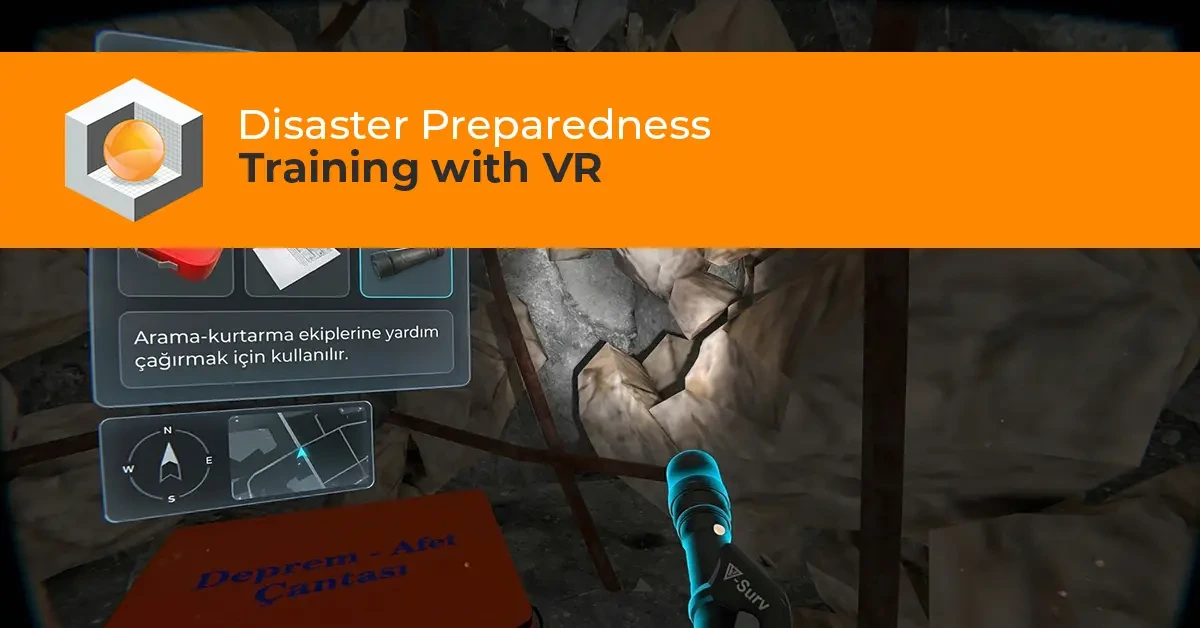
Recognizing the devastating global impact of seismic events, RoT STUDIO has developed a specialized Earthquake Awareness Training suite that leverages Mixed Reality (MR) and XR technologies. This platform offers a comprehensive and immersive earthquake simulation experience, featuring precise physics engines that recreate authentic seismic waves, structural damage, and environmental degradation.
The training is uniquely structured with two distinct modes: Adult and Children. This ensures pedagogical appropriateness across varying demographics. Users can experience high-fidelity 3D environments representing past historical earthquakes and expected future seismic examples. The training facilitates critical mixed-reality crisis survival tactics, spatial situational awareness, and safe architectural evaluation. Users practice emergency procedures and decision-making in real-time, receiving immediate telemetry feedback on the safety of their chosen evacuation methodologies. This forms a scalable, institution-ready preparedness ecosystem suitable for schools, municipalities, public safety units, and emergency management authorities.
Customized VR/XR Services and Advanced Haptic Integration
While the no-code platform and established catalogue service broad enterprise needs, certain mission-critical edge cases require bespoke, highly specialized simulations. RoT STUDIO’s Customized VR/XR Services leverage over three decades of engineering expertise to design tailor-made environments perfectly aligned with an organization’s unique workflows, physical architectures, and specific operational risks. This covers the entire lifecycle from initial scenario design and 3D modeling to deployment and ongoing software updates.
To achieve unparalleled, indistinguishable-from-reality immersion in these custom deployments, RoT STUDIO strategically integrates advanced haptics technology. Haptic feedback mechanisms, such as specialized gloves and tactical vests, transform the user from a passive visual observer into an active, physically engaged participant. By simulating the sensation of touch, vibration, thermal changes, mechanical resistance, and physical force, haptics provide the immediate sensory feedback critical for developing incredibly fine motor skills. This allows teams to interact with the virtual world in a natural and realistic way, ensuring that the physical muscle memory required to turn a heavy emergency valve or operate a precise surgical instrument is accurately developed.
Sector-Specific Deployments and Tactical Applications
The deep versatility of the RoT STUDIO ecosystem allows it to effectively address the specific disaster preparedness, safety, and emergency management challenges across highly divergent global industries. The following analysis details the application and measurable impact of these immersive technologies within key economic sectors.
Industrial Manufacturing and Automotive Safety
The global manufacturing and automotive sectors operate incredibly complex, high-velocity environments where a single procedural error can result in severe physical injury, chemical exposure, or facility-wide catastrophic fires. The industry demands the absolute highest safety standards, and immersive VR training is proven to reduce workplace accidents by up to 60% by providing hands-on simulations in controlled virtual spaces.
In automotive manufacturing, VR is deployed to simulate high-risk tasks, emergency equipment operation, and the handling of automotive-specific hazardous substances. Employees are immersed in virtual replicas of their exact factory floors and assembly lines. This allows them to practice emergency response procedures—such as responding to electrical arc flash events, managing robotic assembly malfunctions, or containing toxic material leaks—without risking actual assembly line downtime or product destruction. It is also used heavily for vehicle and facility familiarization, and troubleshooting intricate technical issues like electrical faults or mechanical breakdowns.
A definitive example of this operational efficacy is RoT STUDIO’s partnership with Ford Otosan Romania. Tasked with transforming assembly training operations to prepare the workforce for an “electric future,” the facility implemented the RoT STUDIO License Trainer Module. By empowering internal virtual trainers to design their own proprietary training scenarios using their existing CAD knowledge, the organization successfully executed 210 highly realistic training sessions in just six weeks. This radically enhanced line productivity, worker safety, and adaptability to new electric vehicle manufacturing protocols.
Similarly, the Carmeuse Group, operating multiple high-risk industrial plants, partnered with RoT STUDIO to completely overhaul its safety infrastructure using customized VR hazard recognition and procedure drills. The implementation yielded immediate, highly measurable results: the company experienced a massive one-third drop in reported near-misses, indicating that VR-trained employees were proactively catching hazards before incidents occurred. Ultimately, they achieved zero lost-time accidents in the period following deployment and won industry awards for their safety innovation. Other major industrial players, such as Tosyalı Holding, have also successfully leveraged these virtual reality solutions to lead the iron and steel industry in on-site, risk-free training.
Hazardous Materials (HazMat) and Chemical Spill Response
Responding to chemical spills, toxic releases, and hazardous materials incidents requires rigorous adherence to strict protocols, as improper handling can trigger cascading environmental, biological, and public health disasters. Traditional HazMat training is notoriously expensive, difficult to organize safely, and highly disruptive to normal operations. Virtual reality simulations allow personnel to practice these high-stakes, highly technical cleanups repeatedly.
Immersive chemical spill response modules are designed to equip industrial and warehouse workers with the skills to safely handle toxic incidents. Trainees are taught to identify specific chemical hazards and consult virtual Safety Data Sheets (SDS) to accurately assess key substance properties, such as flammability, toxicity, and potential health hazards. They must physically interact with the virtual environment to select and wear the correct personal protective equipment (PPE), including safety goggles, protective suits, and respirator masks.
The simulations require trainees to secure and mark the spill area according to safety regulations, preventing unauthorized access. They must then deploy appropriate neutralizers—such as virtual sand, silica, or acid-binding substances—collect the spilled substance into sealed containers, and properly ventilate the contaminated zone. Federal environmental and safety agencies are actively evaluating and utilizing VR to improve operational processes, rapid simulation, and training transfer for first responders dealing with complex scenarios like tanker derailments, dangerous goods transport accidents, and industrial leaks. The ability to track movements, body position, and reaction times offers actionable metrics that lead to more lives saved and reduced environmental impact.
Aerospace and Defense: Mission-Critical Readiness
The aerospace and defense sectors operate at the absolute limits of technological complexity, where equipment downtime and human error have catastrophic consequences. Currently, the defense sector faces a dual crisis: the skyrocketing complexity of next-generation platforms—from 5th and 6th-generation fighters to hypersonic and space systems—and a catastrophic knowledge loss due to the imminent retirement of nearly one-third of its highly experienced workforce. Furthermore, Aircraft on Ground (AOG) downtime incidents cost organizations astronomical sums, ranging between $150,000 and $2,000,000 per day, making physical equipment training prohibitively expensive and logistically disruptive.
Immersive VR and Spatial AI platforms serve as a strategic imperative to capture tacit expert knowledge before it exits the workforce, translating decades of hands-on experience into repeatable, scalable virtual modules. In defense applications, personnel utilize VR to safely practice mission-critical tasks under extreme simulated stress. This includes weapon handling, tactical convoy operations, artillery coordination, and emergency vehicle egress under simulated enemy fire. These environments flawlessly reflect the exact terrain and meteorological conditions expected in real operations. This ensures stronger retention of tactical protocols, builds confidence on the move, and improves operational readiness without incurring physical equipment wear or live-fire risks. Joint training scenarios allow drone operators, ground crews, and tactical controllers to work together in shared virtual spaces, improving coordination in combined-arms operations.
In civilian and commercial aviation, VR is equally transformative for emergency evacuation protocols and pilot readiness. Collaborative virtual environments allow flight crews, airline personnel, and security teams to run multi-user evacuation drills within virtual aircraft and airport terminals. This allows analysts to study human behavior, panic responses, and crowd dynamics under high-stress conditions—scenarios that are ethically impossible and legally prohibited to test with real passengers due to severe health and safety risks. Pilots and flight attendants utilize VR to rehearse complex engine failures, cockpit orientation, hand-off procedures, and abnormal cabin scenarios. This significantly reduces the reliance on highly scheduled and prohibitively expensive Full Flight Simulators for basic procedural familiarization, allowing crews to practice complex airport layouts and emergency flows remotely from home or during layovers.
RoT HEALTHCARE: Surgical Precision and Mass Casualty Incidents (MCI)
The medical and healthcare fields face systemic training challenges entirely analogous to heavy manufacturing and aerospace: the exceptionally high cost of physical training resources, such as human cadavers and operating room time, and the absolute, non-negotiable necessity for zero-risk practice environments to ensure patient safety.
RoT HEALTHCARE, a specialized and dedicated division of RoT STUDIO, directly addresses these challenges by delivering incredibly high-fidelity medical and surgical simulators developed in close collaboration with academic experts, hospitals, and device manufacturers. By utilizing actual patient MRI and CT scan data, RoT STUDIO constructs personalized, patient-specific virtual models. These simulations allow surgeons and medical professionals to navigate complex anatomical structures, anticipate severe surgical complications—such as sudden hemorrhage or organ perforation—and perfect their spatial reasoning in a completely risk-free virtual operating theater.
The RoT STUDIO Healthcare catalogue includes intricate, highly validated modules for Ophthalmic Surgery VR Training, Colorectal Surgery Nursing Training, and precise Surgical Catheterization Procedures. Furthermore, highly detailed 3D Anatomy modules covering the brain and musculoskeletal systems provide an unparalleled spatial understanding of human biology that traditional textbooks simply cannot offer. The transition from simulating the aerodynamics of a defense fighter jet to the hydrodynamics of the human eye relies on the exact same foundational engineering DNA: absolute precision where the margin for error is zero.

Beyond the sterile operating room, VR is fundamentally altering how medical first responders, paramedics, and emergency physicians prepare for chaotic Mass Casualty Incidents (MCIs) and disaster triage. During an MCI, first responders face overwhelming cognitive loads as they must rapidly assess, categorize, and allocate severely limited resources to critically injured patients. Since MCIs are statistically rare, responders lack the daily field experience required to manage these high-demand events effectively.
VR simulations immerse medical personnel in dynamic, chaotic disaster environments, allowing them to practice standardized triage protocols (such as SALT or RAMP) using assertive voice commands and rapid visual assessments. The Pediatric Emergency Care VR training, for example, provides high-pressure scenarios involving critically ill infants, requiring clinicians to form impressions based on the Pediatric Assessment Triangle (PAT): Appearance, Circulation to Skin, and Work of Breathing.
Extensive research indicates that VR-based MCI training effectively discriminates between levels of medical expertise based on objective performance indicators. The software tracks visual attention via eye-tracking, triage accuracy, triage speed, and information transmission efficiency to control centers. Military applications utilize these multiplayer, co-located VR environments to allow elite medical personnel to treat combat trauma and practice hand-off procedures under simulated battlefield stress. This creates the opportunity for military and civilian personnel to exponentially increase their “reps,” drastically improving cross-team communication, clinical decision-making, and stress resilience.
General Fire Safety, Workplace Violence, and Corporate Emergencies
Beyond highly specialized industrial or medical scenarios, general corporate environments require robust emergency preparedness. Companies utilize immersive technologies to train staff on standard first responder protocols, the proper use of safety tools, and the correct procedural steps for contacting emergency services.
Virtual reality fire safety training places trainees inside scenarios such as a spreading office fire, teaching them fire extinguisher best practices through “QuickFire” style simulations tailored for specific environments. This completely overcomes the shortcomings of traditional methods, providing immersive practice in high-risk environments without the actual hazard of live flames or smoke inhalation. Furthermore, VR is increasingly utilized for violence preparedness, offering specific modules designed to train employees on active shooter response protocols in both university and corporate office settings, helping organizations meet strict occupational safety standards and minimize potential liabilities.
Conclusion
The complexity, velocity, and scale of modern industrial, medical, and defense operations have vastly outpaced the capabilities of traditional disaster preparedness training. As the catastrophic financial, environmental, and human costs of operational failures continue to escalate, organizations can no longer rely on static manuals, theoretical tabletop exercises, or infrequent, low-fidelity live drills to safeguard their personnel and highly valuable assets.
Virtual Reality and Extended Reality have matured far beyond experimental novelties or entertainment platforms into foundational, non-negotiable enterprise infrastructure. By inducing genuine psychophysiological stress in a completely risk-free, highly controlled environment, immersive training ensures that critical decision-making and standard operating procedures become rapid, reflexive actions rather than calculated risks taken under panic. The deployment of these advanced technologies results in a profoundly safer, more confident, highly competent, and highly resilient workforce.
As a definitive global pioneer in this space, RoT STUDIO provides the comprehensive, end-to-end architecture necessary for organizations to execute this critical transition. Through the democratization of digital engineering via the no-code RoT STUDIO License, the immediate, standardized applicability of the expansive VR Trainings Catalogue, and the absolute precision of Customized VR/XR Services featuring advanced haptics, RoT STUDIO enables enterprises to internalize, scale, and master their emergency management protocols.
Backed by three decades of rigorous engineering legacy and continuous innovation, RoT STUDIO is not merely simulating the future of corporate training; it is actively engineering the resilience, safety, and operational superiority of the global workforce. Organizations that strategically integrate these immersive platforms will not only achieve unparalleled safety compliance and massive cost reductions, but they will definitively set the operational benchmarks for their respective industries in the decades to come.