Immersive virtual reality (VR) is emerging as a powerful tool to support Environmental, Social, and Governance (ESG) objectives across industries. By creating realistic 3D simulations for training, design, and collaboration, VR can cut carbon emissions, boost safety, and streamline compliance – all aligned with corporate sustainability goals. RoT STUDIO, a spin-off of Türkiye’s pioneer 3D tech firm infoTRON (founded 1994), has leveraged decades of engineering and VR expertise to help organizations integrate ESG principles into everyday operations. Today, enterprises are using RoT STUDIO’s immersive solutions to reduce travel and resource use, improve worker safety, and build greener, more resilient workflows.
A growing body of research highlights VR’s sustainability potential. For example, replacing in-person meetings with virtual collaboration can slash travel emissions: a one-hour VR meeting emits roughly 0.1–1 kg of CO₂ per participant, versus 100–200+ kg for a comparable short-haul flight. RoT STUDIO’s sustainability framework explicitly touts this benefit – noting that “VR-based training allows employees to participate remotely, eliminating the need for travel and significantly reducing greenhouse gas emissions”. Similarly, digital prototypes in VR replace physical models and printed manuals, cutting material waste: traditional training and design efforts often consume large amounts of paper, plastic, and power, but VR “replaces these with digital, reusable assets, cutting down on material waste”. Altogether, immersive VR helps companies shrink their environmental footprint by minimizing travel, saving materials, and optimizing energy use – key pillars of corporate sustainability.
Environmental Impact: Reducing Carbon and Waste
One of the most direct sustainability wins from VR is cutting travel. Traditional corporate training and design reviews typically require employees to commute to centralized locations or factories. Each car ride or plane trip adds to a company’s carbon footprint. In contrast, VR training happens on-site or remotely. Trainees simply don a headset and enter a virtual version of the factory floor or construction site. Without packing bags, booking flights or renting buses, organizations immediately save fuel and time. Industry analyses show that such virtual sessions produce orders of magnitude less CO₂. For instance, modeling indicates a short-haul flight (~500 km) generates 100–200 kg CO₂ per passenger, whereas a one-hour VR meeting emits around 0.1–1 kg. By scaling this out, companies can cut tons of emissions annually.
RoT STUDIO’s own case studies reinforce these savings. For example, Ford Otosan Romania used VR to train its assembly-line workers for new electric vehicle production. Instead of flying instructors and trainees between facilities for hands-on demos, Ford deployed RoT STUDIO’s VR modules so workers could master complex assembly tasks at their workstations. This shift “reduced the environmental impact associated with physical setups and travel,” allowing Ford to “accelerate the training process” while avoiding fossil-fuel commutes. Likewise, heavy industry firm Tosyalı Holding moved its safety and technical training into VR. On-site VR modules meant workers no longer had to travel off-site or pause production for drills. As a result, Tosyalı “implemented on-site VR field training, minimizing the need for off-site travel and physical resources, thereby promoting sustainable training practices”.
Aside from travel, VR eliminates wasteful physical prototypes and printed materials. In product development, RoT STUDIO License – Designer Module allows engineers to inspect full-scale 3D models in VR before any factory-built prototype exists. This prevents the multiple iterations of physical models that typically consume raw materials and energy. As one case study notes, the machinery firm ErBatu Machine adopted RoT STUDIO’s VR designer to “move design reviews into a fully interactive virtual environment” – saving “material consumption” and avoiding scrap. By catching errors and ergonomic issues early in VR, teams make “faster decisions and gain confidence” without building costly mock-ups. Similarly, the platform – RoT STUDIO License – enhances ergonomics review: designers can simulate human interactions with equipment and verify safety long before any physical prototype is built. This means fewer late-stage changes, less rework, and ultimately lower resource use.
Key Environmental Benefits of Immersive VR:
✅ Lower Travel Emissions: Employees train or collaborate remotely in VR, cutting commute and flight fuel use.
✅ Reduced Material Waste: Virtual prototypes and simulations replace paper manuals and physical models, conserving paper, plastic, and manufacturing energy.
✅ Fewer Repetitions: Better knowledge retention (often ~75% in VR vs ~10–20% traditionally) means fewer refresher sessions, saving energy and resources over time.
✅ Hazard-Free Practice: High-risk training (e.g. fire drills, chemical spills) is done in VR without real materials, eliminating cleanup and waste.
Social Impact: Safer, Smarter Workforces
VR’s social benefits align strongly with ESG’s “S” – both in protecting people and improving their skills. Immersive training is particularly effective for health and safety: trainees wearing VR headsets “are transported into risk-free digital environments” where they can practice handling emergencies without danger. Studies and deployments confirm that VR drills build muscle memory and confidence far beyond passive videos. For example, RoT STUDIO’s HSE (Health, Safety & Environment) VR programs let workers face simulated equipment failures or earthquake scenarios. One analysis found VR safety training led to a 45% reduction in workplace injuries for companies compared to previous methods. Tyson Foods reported a 20% drop in injuries after introducing VR-based safety exercises. Carmeuse Turkey, a mining and lime company, used RoT STUDIO’s customized VR/XR safety training and saw both international safety awards and a stretch goal of zero lost-time accidents achieved. The company noted that VR “strengthened our employees’ safety awareness” and helped eliminate serious incidents on-site.
Beyond safety, VR training boosts workforce competencies. RoT STUDIO’s blog notes that employees learn better through “interactive simulations of their actual workplaces” rather than slideshows. This is reflected in high retention and confidence metrics: organizations using VR report up to 75% knowledge retention (vs 5–20% for traditional training) and 97% of trainees feeling confident in applying VR-learned skills. Productive VR scenarios cover technical skills and soft skills alike. For instance, workers at Ford Otosan Romania gained practical expertise on next-generation electric vehicle assembly via VR modules, completing 210 training sessions in 6 weeks. These immersive simulations allowed staff to practice complex procedures repeatedly, with one Ford trainer saying VR offered a “very realistic environment and 1:1 experience as real-life” – vastly improving readiness.
VR also democratizes education and training access. Medical students at Gazi University experienced anatomy lessons in VR for the first time in Turkey. Instead of short-lived dissections or 2D images, students manipulated 3D models, which not only enhanced learning but also had a sustainability angle: it “minimized reliance on cadaver-based anatomy training” and reduced the use of non-renewable resources. Disaster preparedness in the social sphere benefited too: RoT STUDIO’s MR (mixed reality) Earthquake Experience Room taught children safe behaviors through guided VR scenarios. By replacing repeated classroom drills with a single immersive session, the program ensured kids remembered correct actions while “reducing logistical waste” of materials and staff time.

Under the Social pillar of European ESG, VR tackles both safety and inclusion. Customized VR modules from RoT STUDIO (such as lockout/tagout training, crane operation, or even healthcare procedures) place trainees in lifelike environments where errors are costly on paper but harmless in VR. This hands-on practice helps cement safe habits and technical skills. At the same time, VR’s engaging format resonates with younger, tech-savvy workers, improving motivation. RoT STUDIO’s case studies emphasize engagement and participation: as one Gazi University professor noted, VR provides an educational method “as entertaining and enjoyable as it is instructive” for a generation that loves technology.
Key Social Benefits of Immersive VR:
✅ Enhanced Safety: Workers drill emergency scenarios and safety protocols in VR. Data show up to ~45% fewer injuries after adopting VR training.
✅ Stronger Learning: VR trainees remember and apply skills far better (e.g. 75% retention) than with lectures or videos.
✅ Inclusive Training: Remote or otherwise disconnected teams can receive the same hands-on training via VR, supporting equitable education and skills development.
✅ Improved Engagement: Interactive VR content captivates learners, leading to higher course completion and confidence levels.
✅ Efficient Public Education: In civic projects like Mersin’s earthquake program, immersive VR made disaster education more memorable for children, replacing resource-heavy drills with cost-effective virtual lessons.
Governance and Compliance: VR for Policy and Risk
While ESG’s Governance dimension often centers on board practices and transparency, VR also plays a role in corporate governance by enhancing compliance, risk management, and leadership training. Immersive simulations can be crafted to teach regulatory procedures, data security protocols, and ethical decision-making without exposing the company to real incidents. For example, RoT STUDIO’s VR catalogue includes modules like Information Security Risk Hunt and Lockout/Tagout training. These allow employees to navigate security checklists or emergency shutdowns in a realistic setting. By repeatedly running through compliance scenarios in VR, firms can ensure their workforce stays current on evolving standards, reducing audit risks and legal exposures.
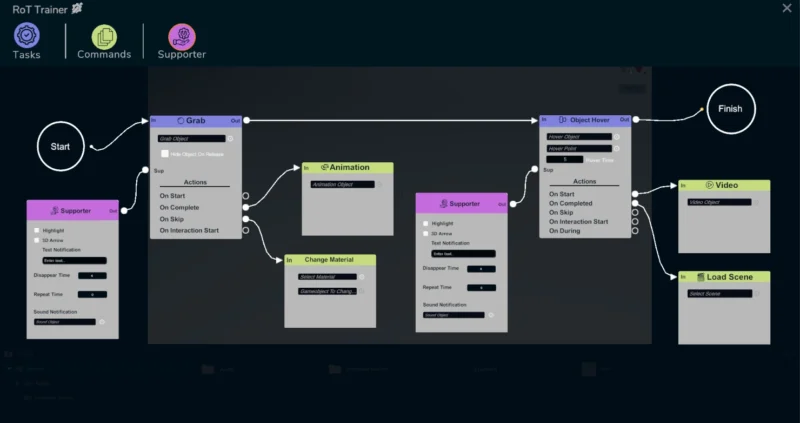
Moreover, RoT STUDIO provides platforms for companies to manage VR content internally. The RoT STUDIO License is a no-code VR authoring suite that lets organizations build, update, and deploy their own VR training content on a secure, centralized platform. This accelerates governance objectives: for instance, procedures can be rapidly encoded into VR and distributed company-wide. With real-time tracking and feedback, managers gain oversight on who has completed required training. As one manufacturing account manager noted, having a centralized VR training system “accelerated our processes” and “strengthened our employees’ safety awareness” while achieving zero incidents. These benefits extend to quality and compliance too – workers rehearse standard operating procedures until mastery, which improves consistency and reduces operational risk.
Virtual tools also support accountable leadership. RoT STUDIO’s VR solutions can be used for executive training (e.g. HR and leadership modules), boardroom simulations, or disaster response drills, helping managers test strategies in a safe environment. By “bringing both VR design review and VR training content into one environment”, executives can visualize corporate plans (such as manufacturing layouts or emergency evacuations) in advance. This transparency aligns with good governance: stakeholders have tangible evidence of preparedness, and lessons learned in VR can feed into corporate ESG reports. In practice, companies using VR for governance training often see tangible results. For example, InnovateEnergy reports that training a new XR workflow can raise first-time quality by 90% (as Boeing did) and that XR-augmented compliance training has led to faster upskilling and fewer process errors.
Key Governance Benefits of Immersive VR:
✅ Compliance Training: VR modules ensure all employees complete up-to-date regulatory training (e.g. safety rules, data security) in an engaging format, with digital records to demonstrate compliance.
✅ Risk Management: Simulating incidents (equipment failures, cyberattacks, evacuations) in VR builds organizational resilience without real-world downtime or damage.
✅ Leadership Development: VR scenarios (from HR leadership to emergency response) let managers practice decision-making in virtual settings, improving readiness for crises.
✅ Data-Driven Oversight: Centralized VR platforms (like RoT STUDIO’s License product) provide analytics on who trained, what errors were made, and where processes can improve – supporting continuous governance improvement.
Case Studies: VR in Action for ESG
RoT STUDIO’s portfolio showcases VR’s ESG impacts in real projects across industries:
RoT STUDIO’s portfolio showcases VR’s ESG impacts in real projects across industries:
- Carmeuse Turkey – Safety & Sustainability: Using RoT STUDIO VR training, Carmeuse transformed factory floor safety. The customized VR lessons helped standardize emergency drills and equipment handling. As a result, the company won innovation awards and achieved zero lost-time accidents. VR cut the need for multiple live fire drills and heavy equipment demos, saving time and hazard materials.

- Carmeuse Turkey – Safety & Sustainability: Using RoT STUDIO VR training, Carmeuse transformed factory floor safety. The customized VR lessons helped standardize emergency drills and equipment handling. As a result, the company won innovation awards and achieved zero lost-time accidents. VR cut the need for multiple live fire drills and heavy equipment demos, saving time and hazard materials.

- Ford Otosan Romania – Electric Vehicle Assembly: Ford partnered with RoT STUDIO to train assembly-line workers on new EV models. The VR program delivered 210 training sessions in just 6 weeks. Employees learned complex wiring and new tooling in a realistic VR shop floor, avoiding physical mock-ups. This “Electric Future” initiative sped up onboarding and reduced waste, since many prototypes and safety checks happened virtually.

- Tosyalı Holding – Steel Plant Training: To keep its mills running 24/7, Tosyalı used on-site VR for process and safety training. Instead of halting blast furnaces for real drills, trainees learned crane and control-room operations inside VR. RoT STUDIO provided VR simulations for their iron and steel facilities, enabling “continuous vocational training and workplace safety” without downtime. This innovation minimized travel (no need to send workers off-site) and conserved resources in a traditionally resource-intensive industry.

- Mersin Municipality – Earthquake Preparedness: RoT STUDIO’s Mixed Reality experience taught thousands of schoolchildren what to do in an earthquake. Rather than relying on repetitive evacuation drills (which consume time and printed worksheets), the city deployed guided VR scenarios. The result was a much higher retention of safety behaviors, achieved with a one-time setup. This digital outreach exemplifies how public-sector organizations can use immersive tech to meet social goals efficiently.

- Gazi University – VR Anatomy Education: In the education sector, RoT STUDIO moved anatomy classes into VR for Turkey’s oldest medical school. Students dissected 3D brain and organ models virtually. This not only enhanced learning but also “minimized reliance on cadaver-based training,” aligning with sustainable educational practices. Fewer cadavers means lower biological waste and associated ethical issues – a win for social responsibility.

- ErBatu Machine – Virtual Prototyping: An engineering firm, ErBatu adopted RoT STUDIO License – Designer Module to preview their new machines in VR. Teams could walk around virtual equipment, catch design errors, and adjust workflows before any metal was cut. Engineers reported “faster decisions and increased confidence”. In ESG terms, this reduced the need to build and ship multiple physical prototypes, saving steel, fuel, and labor.
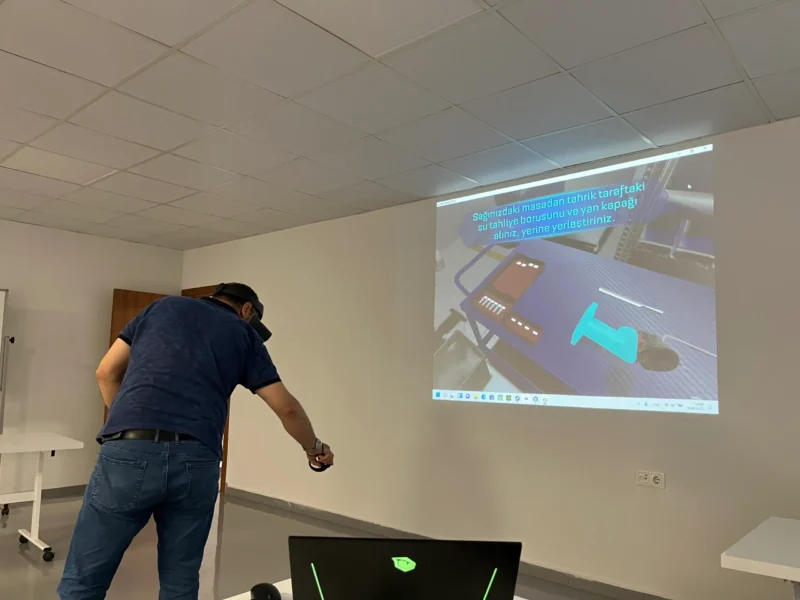
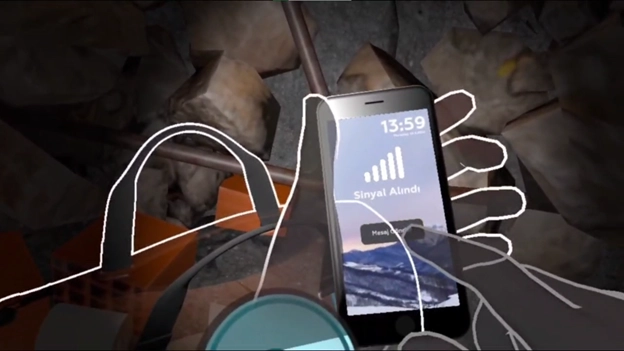
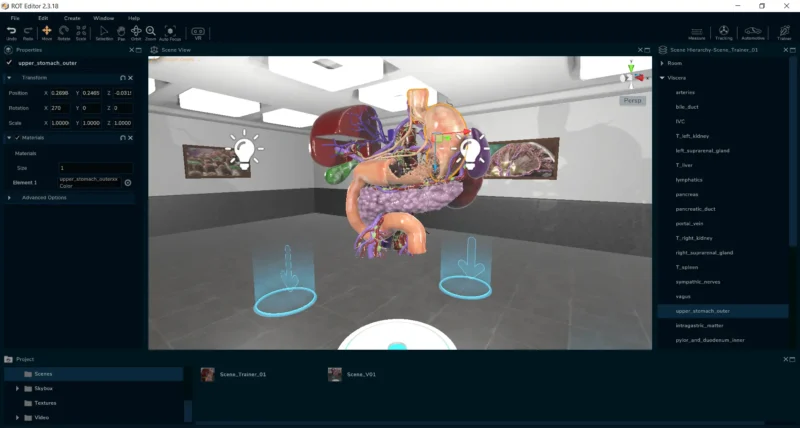
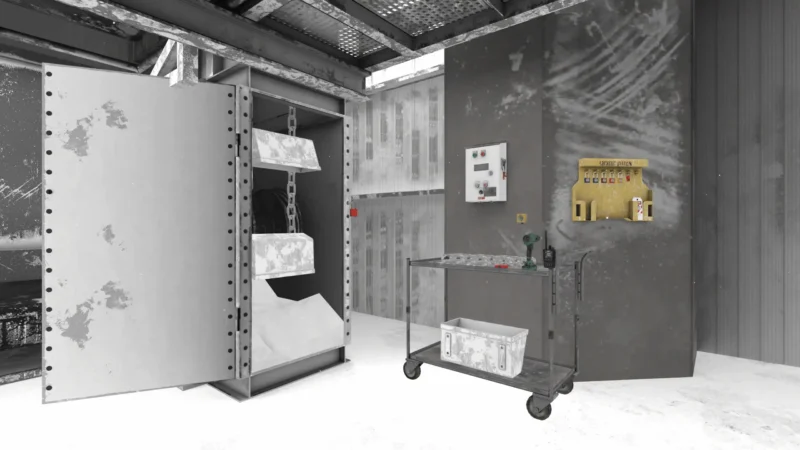
Each of these examples highlights a VR-driven sustainability outcome: lower accident rates, higher training throughput, and cut resource use. Across sectors – from manufacturing and mining to education and government – VR has proven to support ESG mandates by delivering quantifiable gains.
Measuring the Sustainability Gains
Quantitative studies back up these real-world results. Analysts find that fully leveraging VR can deliver outsized returns on investment. For instance, one survey of corporate VR adopters found up to 300% five-year ROI, 75% cuts in training time, and a 43% drop in injuries. Similarly, data from Energy and Industrial reports show VR implementations cutting total training time by about 50% and boosting first-time task quality by 80–90%. These efficiency gains translate directly into sustainability metrics: less rework, fewer repeat training, and fewer accidents, all of which lower environmental and social costs.
When it comes to carbon tracking, even conservative models suggest VR can be a carbon neutralization tool. The sustainability directory notes that while VR hardware does consume energy, the “displacement” effect on high-emission activities dominates the calculation. For training programs that previously involved shuttling dozens of people to remote locations, switching to VR can slice emissions per trainee by orders of magnitude. Every avoided business flight or bus trip is roughly a ton of CO₂ saved; multiplied by hundreds of employees, that’s a significant cut.
RoT STUDIO’s own publications mirror this. Their analysis underscores that moving to immersive VR “reduces carbon footprint across various industries”. For example, they compare a traditional training session (with plane tickets, vehicles, lodging) to a virtual alternative with zero travel. The result: the corporation’s carbon footprint can drop dramatically. These figures reinforce the intuitive logic: digital drills generate far less pollution than real-world ones.
RoT STUDIO: Pioneering VR for Sustainability
RoT STUDIO’s offerings are tailored to bridge VR and ESG at every stage. Rooted in its parent infoTRON’s legacy, RoT STUDIO has expanded from VR simulations into a full suite of tools and content. Its VR Training Catalogue includes ready-made modules for key ESG topics: HSE risk hunts, lockout/tagout safety, mining and earthquake drills, and healthcare simulations. These plug-and-play scenarios let companies quickly upskill employees in critical safety and health areas without custom development.
For organizations with specific needs, RoT STUDIO Customized VR/XR Services create bespoke simulations – whether that’s a unique manufacturing process, a chemical plant safety drill, or medical procedure. These tailored VR experiences ensure that even niche ESG challenges can be addressed. For instance, RoT STUDIO built a Virtual Crane Safety Checklist project for a heavy metals manufacturer, helping staff practice crane operations amid “potential consequences” that emphasize caution. This type of custom work directly embeds governance (follow the checklist) and safety training into the employee routine.
At the platform level, the RoT STUDIO License system empowers companies to take ownership of VR content. Its Designer Module and Trainer Module let teams create their own VR content without coding. In practice, this means sustainability programs can be continually updated by internal staff. For example, if new environmental protocols or emergency procedures arise, they can be coded into VR scenarios instantly and rolled out globally. Engineering teams also use the Designer Module to visualize entire factories or product assemblies in VR. By inspecting a 3D layout before it’s built, companies can catch inefficiencies (like excessive energy use or safety blind spots) early. This “early human integration” of design reduces costly changes and scrap later. In ESG terms, that means a lighter environmental footprint and better working conditions built into the product from day one.
Importantly, RoT STUDIO’s team brings multidisciplinary expertise – from 3D artists to safety engineers – to ensure VR training is realistic and effective. Their focus on human-centered design and instructional engineering means each VR scenario is not just a flashy game, but a proven learning experience. Whether it’s a surgeon practicing an ophthalmic procedure or a factory worker navigating an evacuation, the goal is the same: make the workforce skilled, prepared, and safe in a way that advances ESG.
Conclusion
Immersive VR is no longer a speculative buzzword; it’s a pragmatic solution for businesses aiming to fulfill ESG commitments. By virtually replicating real-world tasks, VR eliminates wasteful practices (flying, building dummy units, using expendables) and replaces them with efficient, repeatable simulations. The environmental payoff is clear: fewer emissions, less material scrap, and leaner R&D. The social payoff is equally compelling: safer workplaces, better-trained employees, and more resilient communities. And under governance frameworks, VR ensures compliance training is rigorous, up-to-date, and measurable.
Companies like RoT STUDIO are at the forefront of this convergence. With over 30 years of 3D and engineering innovation, RoT STUDIO offers VR platforms and content that make sustainability tangible. Its case studies span automakers, miners, educators, and government agencies – each demonstrating how VR can drive sustainability to the next level. As one client put it after adopting RoT STUDIO’s VR/XR solutions: processes were accelerated, safety culture was strengthened, and coveted international awards (in innovation and health & safety) were attained.
Looking ahead, immersive VR will only grow more integral to ESG. As corporate responsibility standards tighten globally, companies will seek scalable tools to verify their sustainability claims. VR provides a dual advantage: it both teaches employees greener behaviors and embodies green practices in operation. By training in virtual yet highly realistic environments, organizations get ready for the future – with minimal environmental impact today. In sum, VR is redefining what it means to “go green.” It turns training and design into engines for sustainability, proving that cutting-edge technology and ESG goals can go hand-in-hand.