The procurement committee has approved the budget. The L&D team is aligned. The internal pilot showed strong retention results. Then the compliance or legal function asks the question that freezes the process: does virtual reality training actually satisfy our regulatory obligations?
In industries governed by OSHA’s safety standards, in clinical environments under FDA oversight, and in UK healthcare institutions operating within NHS and Health Education England frameworks, this question comes up in every serious VR procurement conversation. It is also, consistently, answered incorrectly by both sides. Safety managers assume regulators demand classroom instruction. VR vendors oversell ‘full compliance’ without explaining what that phrase requires in practice. The gap between these two misreadings costs organizations time, money, and defensible training programs.
The regulatory picture is more workable than the debate suggests. OSHA, FDA, and NHS frameworks are far more compatible with simulation-based training than most buyers realize. What matters is not the delivery modality. What matters is whether the training produces documented, verifiable competency, and whether the program architecture is built to evidence that outcome.
The Compliance Objection That Stalls Most VR Programs
When regulatory compliance becomes a hurdle in VR training adoption, it almost always takes one of two forms. The first is a genuine knowledge gap: HSE managers, clinical education coordinators, and procurement leads assume that OSHA, FDA, or NHS regulations specify how training must be delivered, rather than what training must achieve. The second is a documentation problem: the VR program is educationally sound, but no one has built the paper trail that regulators and auditors expect to see.
Both problems are solvable. Solving them requires understanding what each regulatory framework actually demands, which differs substantially from what most organizations assume.
Understanding what HSE-specific VR training involves from a regulatory standpoint often reveals that the technology is not the compliance risk. The process design is.
OSHA and Simulation-Based Safety Training: Reading the Framework Correctly
OSHA’s Performance-Based Approach to Training
OSHA does not prescribe training methods. Across its general industry, construction, maritime, and agriculture standards, OSHA uses language like ‘adequate training,’ ‘appropriate training,’ and ‘trained to recognize hazards,’ without mandating that training occur in a classroom, through a printed manual, or in any specific format. The intent is outcome-based: workers must demonstrate the knowledge, recognition capability, and skills required for their role and environment.
This structure is explicit across OSHA’s core training standards: 29 CFR 1910.132 for PPE, 29 CFR 1910.147 for lockout/tagout, and 29 CFR 1910.1200 for hazard communication. All three require employers to certify that training occurred and that workers demonstrated understanding, without specifying a delivery method. The OSHA Training Institute and OSHA’s online training guidance recognize simulation and interactive formats as legitimate training modalities.
What OSHA Compliance Requires in Practice
The substantive requirements of OSHA-aligned training programs center on three elements that every compliance manager should produce on demand: evidence that the correct hazard-specific content was covered, records of each worker’s participation and outcome, and documented competency verification for high-risk roles.
Classroom training typically addresses the first two elements through sign-in sheets and certificates of completion. It consistently fails the third. Workers who sit through a lecture on lockout/tagout procedures do not automatically demonstrate competency in applying them. OSHA’s definition of VR training effectiveness is about knowledge and skill transfer, not attendance.
This is precisely where occupational health and safety training in virtual environments changes the equation. A VR lockout/tagout scenario that requires a worker to execute the isolation procedure in the correct sequence, with the correct tools, under realistic time pressure, generates a competency record rather than an attendance record. The distinction is material in an OSHA inspection.
How VR Strengthens the OSHA Documentation Chain
Well-implemented VR training platforms automatically produce the documentation that OSHA inspectors and legal teams require: timestamped session records, scenario-by-scenario completion logs, performance scores, attempt counts, and pass/fail thresholds tied to specific learning objectives. Each data point maps to a specific regulatory requirement.

For organizations managing multi-site workforces across shifting staffing cycles, this automated recordkeeping is a risk management necessity. The documentation burden of maintaining OSHA-compliant training records for hundreds of workers across multiple hazard categories is one of the genuine operational costs that immersive simulation reduces.
Expert Note: The Competency vs. Attendance Distinction Most organizations treat OSHA compliance as an attendance problem: get workers through the training, collect the signatures, file the certificates. OSHA’s actual framework treats it as a competency problem. When an incident occurs, inspectors look for evidence that workers could perform the required task safely, not simply that they were present when someone explained it. VR training produces performance data that survives that scrutiny; a sign-in sheet typically does not. |
FDA’s Position on Simulation in Medical Device and Healthcare Training
The Regulatory Shift Toward Simulation
FDA’s engagement with simulation in healthcare training has accelerated significantly since 2018. The agency’s guidance on human factors engineering and usability testing explicitly recognizes simulation environments as a valid context for assessing whether users can safely operate medical devices. The principle extends to clinical training: simulation that produces objective, measurable performance data is increasingly treated as a credible evidence source, not a supplemental activity.
FDA-regulated training requirements are not identical across device classes. Specific obligations depend on the device class, the clinical procedure, and the regulatory pathway (510(k), PMA, or de novo). But the directional shift is consistent: regulators are looking for outcomes data, and simulation is one of the few training modalities that produces it systematically.
Procedural VR and the FDA Evidence Chain
For high-stakes procedural training in surgical, interventional, and diagnostic domains, virtual reality medical simulation generates the kind of performance metrics that FDA reviewers and IRBs are increasingly familiar with: time-to-completion, error rates by procedure step, number of attempts required to reach proficiency, and performance comparison against validated clinical benchmarks. These are data points that traditional training methods cannot produce with equivalent objectivity.
The fidelity of the simulation environment matters significantly in this context. FDA does not define a minimum fidelity threshold for training simulations in general guidance, but the implicit expectation in premarket submissions and postmarket surveillance documentation is that simulation must replicate the clinical scenario with sufficient accuracy to produce transferable skill. For procedural training, that typically means anatomical accuracy, realistic instrument behavior, and haptic resistance that reflects actual tissue response.
Building a Documentation Chain for FDA-Oriented Training
Training records in FDA-regulated environments serve a different purpose than OSHA records. Where OSHA records demonstrate that workers met a safety standard, FDA-oriented medical training records are part of the device use lifecycle: they establish that individuals using a device have been trained to a defined proficiency level, and that training was updated when the device or procedure changed.

For clinical VR training programs, this means maintaining records that tie specific simulation sessions to specific device versions, procedure protocols, or scope of practice qualifications. It also means building refresher and recertification pathways into the program from the outset, rather than treating initial training as a one-time event.
| To assess how VR-based training can be structured to meet your organization’s specific regulatory requirements, whether in workplace safety or clinical settings, get in touch with the RoT STUDIO team. |
NHS and Health Education England: VR in the UK Clinical Framework
Recognition of Simulation in NHS Training Standards
The NHS and Health Education England (HEE) have formalized simulation’s role in clinical training more explicitly than most UK healthcare organizations realize. HEE’s frameworks for postgraduate medical education and clinical skills development reference simulation-based learning as a core pedagogical method, not a supplement. The national curriculum for foundation year doctors, specialty training programs, and nursing competency frameworks all incorporate simulation-based assessment as a recognized evidence source for sign-off.

Within the NHS, simulation centers are an established part of the training infrastructure. What is changing is the scale and specificity of immersive simulation, moving from high-fidelity mannequin-based labs toward virtual reality environments that offer individual performance tracking at a level of granularity that physical simulation cannot match.
Evidence Base Requirements for UK Clinical VR Programs
UK clinical training programs that incorporate VR need to satisfy two parallel requirements. The first is clinical: the simulation must demonstrate sufficient validity evidence, meaning the research base supporting the claim that performance in the simulation environment predicts performance in the clinical one. For VR surgical training, ophthalmology simulation, anatomy education, and procedural training in critical care, that evidence base is now substantial. Published studies referenced in NICE guidance, Royal College program specifications, and NHS-commissioned evaluations increasingly cite VR simulation as a valid component of competency assessment.
The second requirement is operational: the program must produce the documentation that job plan reviews, appraisals, and revalidation processes require. NHS appraisers and Royal College examiners need evidence that training occurred, that it covered the required content areas, and that performance was assessed against defined standards. The role of haptic feedback integration in procedural simulation is particularly relevant for UK surgical training, where program directors are evaluating whether simulation-based practice can substitute for reduced operative volumes in postgraduate programs.

Four Pillars of Compliance-Ready VR Training
Regardless of which regulatory framework applies, organizations that implement VR training without compliance friction share four structural characteristics in their programs.
Competency Framework Alignment
The simulation library must be explicitly mapped to the regulatory standards or clinical competency frameworks that govern the organization. For an OSHA-regulated manufacturing facility, that means scenarios covering the specific hazard categories in the relevant standards, not generic safety content. For an NHS surgical training program, it means alignment with the applicable Royal College curriculum. The mapping should be documented, reviewable, and updatable as standards change.
Assessment Documentation with Audit-Trail Integrity
Every training session must produce a record that includes who trained, when, which scenarios were completed, what performance threshold was required, and whether it was met. This record must be tamper-evident and exportable to the organization’s learning management system, quality management system, or clinical portfolio system. The frequency of a regulatory inspection does not change the documentation requirement; it only determines when the record is examined.
Scenario Fidelity to Regulatory Conditions
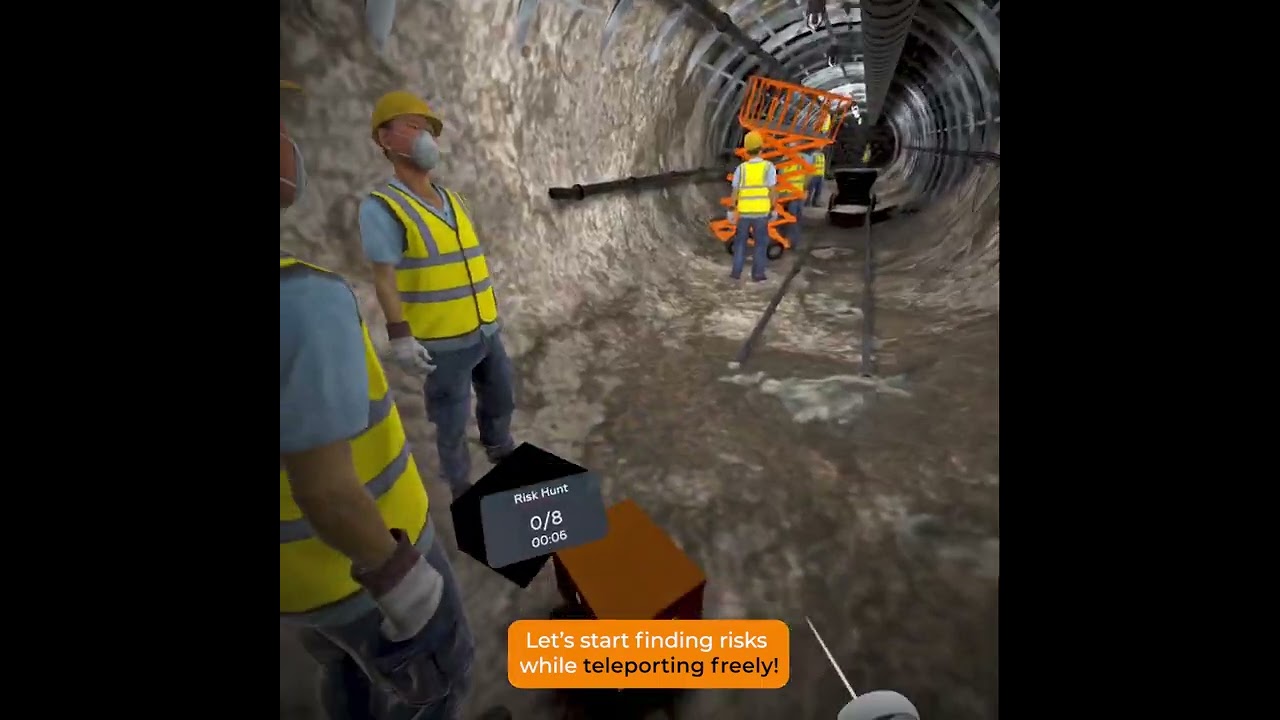
Generic simulation scenarios do not satisfy regulators who expect training to replicate the actual hazard or clinical environment. For VR safety training programs in high-risk industries, scenarios must reflect the organization’s actual equipment, procedures, and site-specific hazard conditions. For clinical programs, fidelity must extend to anatomical specificity and, where procedural skill is the training target, to realistic instrument resistance and tissue response. Fidelity is not a feature for its own sake; it is the mechanism by which simulation produces competency that transfers to real environments.
Recurrency Mechanisms Built Into the Architecture
OSHA, FDA, and NHS frameworks all contemplate ongoing competency maintenance, not one-time training events. OSHA’s lockout/tagout and confined space standards specify retraining conditions explicitly. FDA’s quality system regulation expects training records to reflect updates when procedures or devices change. NHS revalidation requires annual evidence of continuing professional development. VR training architectures that track license expiry, flag overdue refreshers, and queue recertification modules reduce the compliance management burden substantially.
Technical Note: Training Records vs. Competency Records These two terms are often used interchangeably, but they mean different things to regulators. A training record establishes that a worker or clinician was exposed to training content: typically a date, a duration, and a topic. A competency record establishes that they demonstrated the required skill or knowledge to a defined standard. OSHA inspectors and FDA auditors assess training programs by whether they produced competency records, not just training records. VR platforms that capture performance data rather than simple completion data produce what regulators actually need. |
The Documentation Gap Most Organizations Miss
The majority of organizations that struggle with regulatory compliance and VR training do not fail because the training itself is inadequate. They fail because the data produced by the VR platform never reaches the systems and people responsible for maintaining compliance records.
In practice, this looks like: an L&D team manages the VR content and stores session logs within the VR platform’s own dashboard; a separate safety or quality management function maintains the official compliance records; and neither group has established a protocol for data transfer between the two. When an auditor arrives, the performance data exists in one system and the compliance records in another, with no documented connection between them.
Solving this requires establishing, before the first training session runs, an integration protocol between the VR platform’s data output and the organization’s learning management system, quality management system, or clinical portfolio system. For enterprise deployments across multiple sites, this protocol becomes part of the technical specification for the VR training program, not an afterthought.
Frequently Asked Questions
Does VR training count toward OSHA compliance?
VR training can fully satisfy OSHA compliance requirements when the program is designed correctly. OSHA’s standards do not require classroom instruction; they require demonstrated competency and documented training records. VR programs that cover the relevant hazard scenarios, assess performance against defined thresholds, and produce auditable records meet OSHA’s substantive requirements. The training design and documentation architecture matter more than the delivery modality.
What does the FDA require for simulation-based medical device training?
FDA does not publish a universal training standard for medical devices; requirements vary by device class and regulatory pathway. However, FDA guidance on human factors and usability testing recognizes simulation environments as a valid context for assessing user competency. For training programs tied to FDA-regulated devices or procedures, the key requirements are: sufficient simulation fidelity to produce transferable skill, documented competency verification tied to specific device versions, and a clear recertification pathway when the device or procedure changes.
Is VR training recognized by the NHS for clinical competency?
NHS and Health Education England frameworks explicitly recognize simulation-based learning as a valid component of clinical competency assessment. Postgraduate medical training curricula, nursing competency frameworks, and Royal College specialty curricula all reference simulation as a recognized evidence source. For VR to satisfy NHS appraisal and revalidation requirements, programs must produce structured performance records that can be referenced in e-portfolios and annual appraisal documentation.
What records do I need to satisfy regulatory auditors for VR-based training?
The record requirements across OSHA, FDA, and NHS contexts follow the same core logic: evidence of who trained, when, on what content, against what performance standard, and with what outcome. VR platforms generate this data automatically at the session level. The critical step is establishing a protocol to export, store, and link that data to the organization’s official compliance management system, so records are accessible and interpretable to auditors without manual reconstruction.
Can VR training replace classroom HSE induction entirely?
In most OSHA-regulated contexts, VR can replace the competency-development components of HSE induction. Some site-specific orientation requirements, such as physical facility walk-through and emergency exit location confirmation, require physical presence by definition. Where training is about knowledge transfer, hazard recognition, and procedure rehearsal, VR is a capable replacement and typically produces stronger competency outcomes than classroom instruction alone.
The Compliance Framework Is Moving in VR’s Direction
The regulatory landscape for simulation-based training is not static. OSHA’s current emphasis on training effectiveness rather than training format reflects a broader shift in occupational health policy toward outcome measurement. FDA’s engagement with simulation as a valid evidence source in premarket submissions and postmarket surveillance is accelerating as device complexity increases. NHS workforce development strategy has positioned simulation-based learning as a priority methodology for a system under sustained capacity pressure.
The practical takeaways for enterprise L&D and HSE decision-makers are three. First: the compliance question is not whether VR training is legally acceptable; for most regulated environments, it already is. Second: the risk sits in the program design, not the technology, specifically in whether competency frameworks are mapped, documentation is integrated, and recertification is built in from day one. Third: the organizations that invest in that program architecture now are building a compliance capability that will grow more valuable as regulatory scrutiny of training quality increases.
Organizations that delay VR training adoption on compliance grounds are increasingly making a risk calculation that runs in the wrong direction. The question is not whether VR training will satisfy regulatory requirements. For most applications and frameworks, it already does. The question is whether the program is designed, documented, and integrated with enough rigor to demonstrate that to an auditor.
How RoT STUDIO Approaches This
At RoT STUDIO, regulatory compatibility is embedded in the design of every training deployment rather than addressed after the fact. The HSE Training Catalogue covers the hazard categories and procedural domains most commonly subject to OSHA, NHS, and sector-specific regulatory requirements, with scenario libraries that can be mapped directly to compliance documentation. Customized VR/XR Services extend this into organization-specific environments, replicating the actual site conditions, equipment configurations, and procedural sequences that regulators expect training to reflect.
RoT HEALTHCARE addresses the clinical compliance dimension specifically, with simulation programs in surgical training, anatomy education, ophthalmic procedure practice, and nursing skills that align with NHS and Health Education England curriculum frameworks. The haptics capability within the RoT STUDIO platform addresses the fidelity requirement that clinical regulators and educators increasingly apply to procedural simulation: the training environment must replicate not just the visual scene but the tactile feedback of actual clinical practice.
The no-code RoT STUDIO License gives enterprise training teams the ability to build and update compliance-mapped scenarios without development cycles, which matters in environments where procedures, equipment, or regulatory standards change on a regular basis. The European headquarters at High Tech Campus Eindhoven (3EALITY), backed by the 3D engineering depth of infoTRON’s legacy, means RoT STUDIO deployments meet the technical specification standards that enterprise compliance environments require.
For organizations managing the intersection of VR training investment and regulatory accountability, RoT STUDIO provides end-to-end guidance from scenario design through to compliance documentation integration. To explore what that looks like for your sector and regulatory context, reach out to the RoT STUDIO team directly.
References
- OSHA Training Requirements and Outreach Resources: osha.gov/training
- FDA Guidance: Applying Human Factors and Usability Engineering to Medical Devices (2016): fda.gov
- Health Education England – Simulation and Immersive Technologies Programme: hee.nhs.uk
- 29 CFR 1910.147 – Control of Hazardous Energy (Lockout/Tagout): osha.gov
- PwC – Seeing Is Believing: How VR and AR Will Transform Business (2019): pwc.com
- NHS England Long Term Workforce Plan (2023): england.nhs.uk
- NICE Evidence Review on Procedural Simulation in Surgical Training: nice.org.uk