The global manufacturing sector is currently navigating a period of profound structural transformation. Driven by shifting geopolitical landscapes, aggressive reshoring initiatives, and rapid advancements in industrial automation, the physical landscape of the factory floor is evolving at an unprecedented pace. However, this operational evolution is simultaneously being constrained by a severe and compounding human capital crisis. Broad industry analyses indicate that the manufacturing skills gap could result in up to 2.1 million unfilled jobs by the end of the decade, potentially costing the global economy approximately $1 trillion in unrealized revenue in a single year. Despite stabilized production levels and intensive, continuous recruiting activities, a significant portion of the experienced workforce is aging out of the market, taking decades of irreplaceable institutional knowledge and nuanced operational intuition with them.
Simultaneously, modern manufacturing facilities are evolving into highly complex, data-driven environments that require a substantially different, highly technical skill set than traditional assembly line operations of the past. Compounding this demographic and technological shift is the rapid acceleration of required core competencies. The specific skill sets required for standard industrial roles have shifted by a quarter over the past decade, a metric that is projected to double in the near future. Consequently, enterprise organizations find themselves trapped in a paradox: they possess the capital and the advanced technological infrastructure to optimize production, yet they lack the skilled human workforce required to operate, maintain, and innovate within these advanced environments.
Traditional workforce development and training methodologies—reliant on static classroom instruction, passive two-dimensional e-learning modules, and highly disruptive job-shadowing techniques—have proven fundamentally inadequate in addressing this bottleneck. These legacy educational systems are difficult to scale, financially burdensome, and critically ineffective at transferring the complex, spatial, and psychomotor skills demanded by modern industrial machinery.
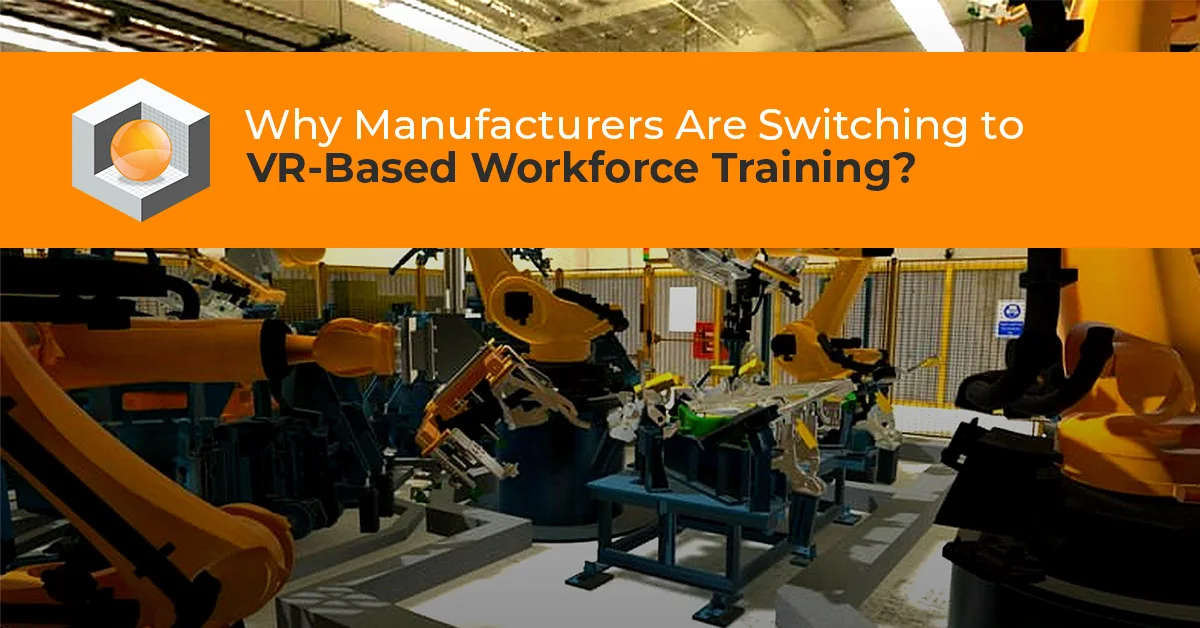
In response to this systemic failure, industrial leaders are aggressively adopting immersive technologies, providing a definitive answer to why manufacturers are switching to VR-based workforce training. By virtualizing the learning environment, manufacturers are fundamentally redefining how human capital is developed, deployed, and retained in the era of Industry 4.0, ensuring that as production systems become increasingly complex, the human capability to master them evolves in parallel.
Cost Efficiency and Accelerated ROI
The transition toward immersive workforce training is heavily underpinned by compelling economic metrics and highly verifiable returns on investment. Historically, immersive virtual technologies were viewed as experimental novelties relegated to research laboratories, hindered by the exorbitant costs of tethered hardware, specialized programming requirements, and immense computational demands. However, the hardware and software ecosystems have matured rapidly over the last several years. Standalone, untethered headsets now operate with high fidelity without the need for external rendering computers, and enterprise deployment costs have plummeted, fundamentally altering the industrial cost equation.
Traditional workforce development is highly capital-intensive and fraught with hidden operational expenses. Annual conventional training costs routinely range from $1,500 to $5,000 per employee. These figures encompass instructor fees, travel logistics, physical training materials, facility rentals, and the immense opportunity costs associated with taking expensive production machinery offline to be used for training purposes. Immersive training directly circumvents these financial burdens by entirely virtualizing the learning environment and the required equipment. Once a virtual simulation is developed, the marginal cost of training each additional employee approaches zero, creating an economy of scale that traditional methods simply cannot replicate.
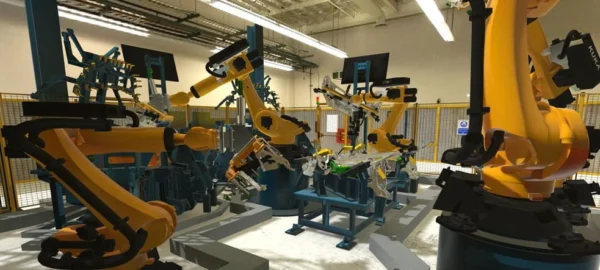
Scalability is the primary driver of this profound cost efficiency. Comprehensive financial modeling within the enterprise sector demonstrates that at a threshold of just under 400 learners, virtual training achieves total cost parity with traditional classroom instruction. As deployment scales to 3,000 learners, immersive training becomes over 50% more cost-effective than classroom alternatives, and at 10,000 learners, the cost advantage expands to nearly 65%. Beyond direct cost mitigation, virtual environments introduce unprecedented efficiencies in time-to-competency. Employees engaged in immersive training modules consistently master complex mechanical and procedural tasks up to four times faster than those utilizing traditional instructional methods.
This velocity of learning ensures that new hires transition from the training room to the production line significantly faster, directly accelerating organizational output and reducing the time-to-productivity drag on the enterprise. Furthermore, enterprise organizations deploying these systems have reported an average return on investment exceeding 200%, with complete financial payback typically realized in under six months. This rapid amortization accounts for all initial capital expenditures, including hardware procurement, platform licensing, and continuous content management, proving definitively that immersive training is no longer a speculative technology but a core, indispensable operational efficiency driver.
| Training Performance Metric | Traditional Classroom & E-Learning | Virtual Immersive Training |
| Time-to-Competency | Baseline (Standard prolonged duration) | Up to 4x faster completion rates |
| Long-term Knowledge Retention | Approximately 20% retention after one week | Up to 80% retention after one full year |
| Financial Cost at Scale (3,000 users) | High (Linear cost scaling per employee) | 52% more cost-effective than classroom |
| Confidence in Skill Application | Moderate to Low for complex tasks | 275% higher confidence levels reported |
| First-Time Quality Improvement | Baseline error rates expected | 90% increase in first-time execution quality |
The Cognitive Architecture of Immersive Learning and Muscle Memory
The superior efficacy of immersive training is not merely a byproduct of engaging visuals; it is deeply rooted in cognitive neuroscience and the distinct biological mechanisms by which the human brain processes spatial information and acquires physical skills. Traditional educational paradigms predominantly target cognitive skills—abilities that require conscious, effortful concentration, such as mathematical calculation, regulatory compliance memorization, or software programming. However, heavy manufacturing, assembly, and industrial maintenance tasks rely heavily on behavioral and psychomotor skills. These skills govern physical actions, spatial coordination, and reflex responses, requiring the development of robust neural pathways commonly referred to as “muscle memory.”
Immersive spatial environments are uniquely capable of engaging the brain’s behavioral learning centers. By placing trainees in hyper-realistic, three-dimensional simulations where they must physically reach, manipulate, walk around, and interact with virtual machinery, the technology stimulates the motor cortex in ways that textbooks, slide decks, or two-dimensional videos categorically cannot. This physical, kinesthetic engagement triggers the release of dopamine, a critical neurotransmitter responsible for reinforcing learning and strengthening neural synaptic connections. Consequently, the brain encodes the virtual experience not as an abstract concept read on a page, but as a genuine, lived physical memory.
Research evaluating the psychological impact of immersive training indicates that employees exhibit a nearly 300% increase in confidence when executing tasks in the real world following virtual instruction. This surge in confidence occurs because their neurological architecture has already rehearsed the physical movements, spatial relationships, and procedural sequences required for success. Furthermore, virtual environments significantly optimize cognitive load management. While highly complex immersive environments can initially introduce increased cognitive demands during initial visuomotor adaptation—as the brain adjusts to the digital physics—the experiential nature of the training ultimately facilitates deeper explicit learning and superior long-term motor memory formation.
Because immersive headsets entirely occlude the physical world, they eliminate external distractions, workplace noise, and interruptions, forcing a state of hyper-focus on the procedural task at hand. The culmination of this profound neurobiological engagement is an unprecedented increase in knowledge retention. Industry data reveals that traditional training suffers from a steep forgetting curve, with learners often losing the vast majority of acquired information within days of a lecture; conversely, immersive experiential training yields retention rates of up to 80% an entire year after the instructional session.
Re-engineering Workplace Safety Through Zero-Risk Simulations
In high-consequence industries such as heavy metal manufacturing, aerospace engineering, energy production, and chemical processing, the margin for error is virtually nonexistent. Training employees on high-voltage electrical equipment, extreme-temperature smelting operations, or complex, multi-axis robotic assemblies inherently exposes both the personnel and the organization to catastrophic risk. Traditional safety training often struggles to bridge the psychological gap between theoretical safety protocols taught in a sterile classroom and the high-stress, sensory-overload reality of an active industrial emergency.
Immersive simulations completely neutralize this operational risk profile by providing a psychologically safe but perceptually hyper-real environment. Trainees can experience the exact visual and auditory sequence of a catastrophic equipment failure, a hazardous chemical leak, an active fire, or a rapid facility evacuation without any actual physical danger. This visceral exposure is absolutely critical; it forces trainees to make split-second decisions and manage the physiological stress response—such as an elevated heart rate and narrowed vision—in a controlled, repeatable setting.
By allowing industrial workers to repeatedly experience, navigate, and correct critical failures, organizations can forge deeply resilient crisis-response behaviors. Quantitative analyses of virtual safety training deployments consistently demonstrate substantial increases in overall safety awareness, enhanced self-efficacy, and a marked improvement in proactive risk perception among industrial workers. This capability to simulate the extreme, hazardous boundaries of operational failure without incurring physical harm, equipment damage, or financial consequences represents a fundamental paradigm shift in industrial Health, Safety, and Environment (HSE) protocols.
Integrating CAD, CAM, and CAE with Immersive Training
The rapid evolution of virtual training in the manufacturing sector is inextricably linked to the broader digitalization of engineering workflows, specifically the deep integration of Computer-Aided Design (CAD), Computer-Aided Manufacturing (CAM), and Computer-Aided Engineering (CAE) systems. Historically, these foundational engineering tools operated in rigid silos. CAD was utilized purely for conceptual geometric modeling, CAE was reserved for structural, fluid, and thermal simulation testing, and CAM was deployed for generating precise machining toolpaths for physical production. While these digital tools drastically reduced the need for physical prototyping and accelerated product development cycles, their output was primarily confined to flat, two-dimensional screens, severely limiting the intuitive spatial comprehension of complex mechanical assemblies.
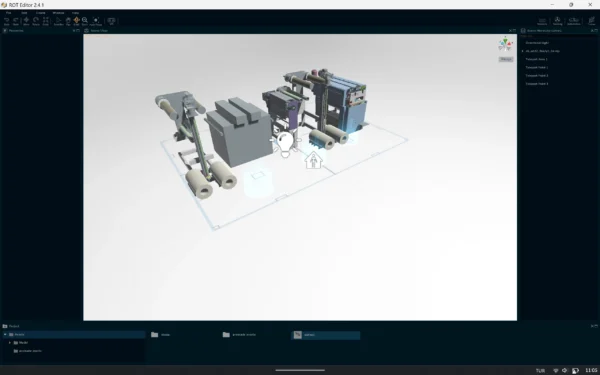
The modern integration of CAD, CAM, and CAE databases directly into immersive virtual reality environments establishes a continuous, unbreakable “digital thread.” This thread seamlessly connects the initial conceptual design phase directly to workforce training, ergonomic analysis, and production validation. By converting high-fidelity CAD engineering models into interactive 3D virtual assets, organizations can create fully functional digital twins of their products and factory floors long before a single physical component is forged or assembled. This convergence allows engineers, floor managers, and assembly technicians to step inside a full-scale, 1:1 virtual model of a new production line to validate human ergonomics, test the reachability of automated robots, and optimize the flow of raw materials through the facility.
More critically, this deep system integration allows comprehensive training programs to be developed and executed concurrently with the product design phase. Instead of waiting for physical prototypes to be built, or for operational machinery to be fully installed before training the workforce, manufacturers can import the exact CAD geometry directly into a virtual engine. Assembly technicians can begin practicing the intricate assembly, maintenance routing, and teardown procedures of new, unreleased machinery months before it physically arrives on the shop floor. This parallel processing of advanced engineering and human capital development drastically shortens product time-to-market, reduces costly late-stage design rework, and ensures that the manufacturing workforce is fully competent and confident on day one of physical production.
This interconnected digital ecosystem is further enhanced and accelerated by industrial 3D printing and additive manufacturing technologies. As virtual prototypes are rigorously validated in the immersive environment for ergonomic safety and assembly feasibility, the corresponding digital files can be instantly transmitted to additive manufacturing cells for rapid physical realization. Whether utilizing Fused Deposition Modeling (FDM), Stereolithography (SLA), or complex Laser Powder Bed Fusion for metal parts, the seamless flow of data from the virtual simulation directly to the physical 3D printed component creates a highly agile, decentralized production model. This synergy minimizes material waste, accelerates continuous design iteration, and completely transforms the traditional research and development lifecycle.
RoT STUDIO: A Global Pioneer in Digital Engineering and Immersive Innovation
At the absolute vanguard of this industrial transformation is RoT STUDIO, a preeminent technology company that has masterfully synthesized heavy engineering precision with immersive human learning. Recognized as a global pioneer in 3D technologies and digital engineering solutions since 1994, RoT STUDIO operates with a unique and profound technological legacy. Established as a dedicated spin-off from its parent company infoTRON, RoT STUDIO inherits over 30 years of unparalleled expertise. For three decades, this enterprise has introduced, refined, and seamlessly integrated advanced tools—including complex CAD/CAM/CAE systems, immersive VR/AR platforms, and industrial 3D printing arrays—into mission-critical engineering and research and development workflows across the automotive, defense, aerospace, manufacturing, and healthcare industries.
The heritage of RoT STUDIO is deeply rooted in the highest-stakes simulation environments known to modern engineering. The foundational history includes developing the first virtual reality applications in its geographic region in the late 1990s and engineering complex, 100% domestic flight simulators for demanding defense and aerospace sectors. This rigorous background in simulating the uncompromising aerodynamics of fighter jets, the complex physics of air traffic control, and the intense tactical demands of military training provides the exact foundational DNA that powers RoT STUDIO today.
In the defense and aerospace domains, the margin for error is absolute zero. A simulation must provide visual, physical, and kinesthetic fidelity that is indistinguishable from physical reality, as human lives and massive capital investments rely on the accuracy of the training. RoT STUDIO has successfully transferred this extreme, uncompromising precision from military and aerospace applications directly into the realms of industrial manufacturing, corporate safety compliance, and advanced medical healthcare training. The transition from simulating the fluid dynamics of an aircraft to simulating the complex hydrodynamics of the human eye, or the precise physics of a heavy industrial crane, represents a seamless transfer of high-stakes engineering excellence.
The core mission of RoT STUDIO is to transform complex, high-risk operational processes into realistic, highly measurable, and infinitely scalable virtual experiences. The organization operates on a highly multidisciplinary foundation, uniquely combining deep engineering know-how, human-centered instructional design, and cutting-edge software development. By maintaining a rigorous understanding of the exact geometries, physical laws, and material constraints of the physical world, RoT STUDIO ensures that their virtual training scenarios are not merely visually impressive animations, but are technically rigorous, physically accurate environments that are functionally identical to real-world operations.
Empowering Enterprise Agility with the RoT STUDIO License Platform
A primary, historical barrier to the widespread adoption of enterprise-grade virtual reality has been the strict requirement for highly specialized software developers. In the past, organizations were forced to rely on external programming agencies to code, update, and manage their virtual environments, creating a bottleneck that slowed agility and inflated long-term maintenance costs. RoT STUDIO directly eliminates this critical bottleneck through its proprietary software platform, the RoT STUDIO License. This comprehensive, completely no-code virtual reality solution is designed specifically to empower enterprise organizations to create, manage, deploy, and update immersive content entirely in-house, without writing a single line of code.
The RoT STUDIO License platform is elegantly structured around two highly synergistic modules that operate within a unified, intuitive workflow, providing end-to-end control over the digital engineering and training lifecycle.
The Designer Module: Engineering Validation at Full Scale
The Designer Module is engineered specifically for full-scale engineering design review and rigorous ergonomic validation. By allowing organizations to easily import massive, complex external CAD models into the virtual environment, cross-functional engineering teams can step physically inside their spatial layouts. This allows them to identify geometric interferences, workflow bottlenecks, and ergonomic flaws long before physical production or facility construction commences.
This module features high-precision motion tracking integration—utilizing advanced active and passive trackers, specialized motion capture suits, and sensory haptic gloves—to capture highly realistic human kinematics within the virtual space. Industrial engineers can conduct deep, data-driven visual ergonomics analyses, leveraging precise anthropometric data to calculate and visualize physical strain, operator visibility, and joint reachability for assembly line workers. By identifying these physical stressors virtually, organizations can drastically accelerate design alignment across global teams, reduce costly late-stage re-engineering, and proactively mitigate the long-term risk of repetitive workplace injuries. Furthermore, the module allows users to seamlessly benchmark new internal designs directly against existing market products within the same virtual environment.
The Trainer Module: Democratizing Immersive Content Creation
Complementing the heavy engineering capabilities is the Trainer Module, which fundamentally democratizes the creation of immersive educational content. Utilizing an intuitive, drag-and-drop authoring workflow, users with only basic computer proficiency can construct complex, multi-step procedural training scenarios after just a brief familiarization period. This capability is transformative; it allows manufacturing organizations to capture existing, nuanced shop-floor workflows and instantly convert them into highly repeatable virtual training modules
As standard operating procedures naturally evolve, or as new machinery is introduced to the factory floor, internal corporate trainers can rapidly update the virtual environment without relying on external development agencies. All applications and training sessions are executed via the high-fidelity RoT STUDIO Viewer. This playback engine supports advanced material customization, allowing users to adjust brightness, color, and texture, and supports custom pattern uploads at high resolutions up to 2048×2048. Additionally, the engine supports High Dynamic Range Imaging (HDRI) to ensure optimal, photorealistic lighting that perfectly mimics the actual factory environment. This highly scalable deployment architecture ensures that identical, premium-quality training can be distributed instantly across a vast global network of manufacturing facilities, ensuring absolute standardization of evaluation and operational execution regardless of geographic location.
| Platform Module | Core Functionality | Primary Enterprise Benefit |
| Designer Module | Immersive 3D environment review, high-precision motion tracking, anthropometric ergonomics analysis. | Eliminates late-stage design flaws, ensures operator physical safety, aligns cross-functional engineering teams instantly. |
| Trainer Module | No-code authoring, drag-and-drop scenario creation, reusable spatial content generation. | Democratizes training creation, allows rapid internal updates, massively reduces content development expenditures. |
| Viewer Engine | High-resolution material rendering, HDRI lighting support, seamless SteamVR hardware compatibility. | Delivers photorealistic immersion, maximizing user cognitive engagement and replicating exact physical site conditions. |
Tailored Immersive Excellence: Customized VR/XR Services
While the no-code software platform empowers autonomous internal development, RoT STUDIO also provides deeply Customized VR/XR Services for organizations requiring bespoke, highly specialized simulations that address unique industrial edge cases. Operating under the operational directive of “You request, we develop,” the multidisciplinary team constructs hyper-realistic, tailor-made environments customized to exact organizational workflows, highly specific factory layouts, and unique proprietary equipment.
The industrial customized services have demonstrated profound, measurable utility among leading global manufacturers. For instance, RoT STUDIO has developed expansive, risk-free virtual environments for leading global motor companies, allowing operators to master complex robotic arm operations without the risk of damaging multi-million dollar automation cells. They have also engineered bespoke virtual crane operation and maintenance simulations for heavy metal manufacturers. These specific simulations accurately replicate the complex physics, dynamic weight distribution, and pendulum momentum of heavy suspended machinery, fostering a deep-rooted culture of incident prevention in an inherently dangerous environment. Additionally, specialized forklift operation modules allow logistics personnel to master safe and efficient navigation through crowded virtual warehouses before stepping onto a physical vehicle.
In the critical and highly regulated domain of Health, Safety, and Environment (HSE), RoT STUDIO provides specialized “Risk Hunt” training modules. These highly engaging, gamified but technically rigorous simulations place employees in complex environments—ranging from standard manufacturing floors to highly hazardous, subterranean underground mining operations. Trainees are challenged to systematically identify and mitigate safety violations, structural risks, and procedural deviations against a ticking clock. Furthermore, their highly specific LoTo (Lockout/Tagout) virtual training ensures absolute, uncompromising adherence to energy isolation protocols, a vital life-saving necessity in heavy manufacturing and processing plants.
A standout innovation within their disaster and crisis management portfolio is the Earthquake Experience Room. Utilizing advanced Mixed Reality (MR), this solution allows government personnel, first responders, and corporate teams to experience historical or scientifically predicted seismic events in a fully 3D interactive environment. By simulating the exact visual and auditory chaos of an earthquake, including subsequent fires, chemical leaks, and structural collapses, the training builds profound, automated competencies in extreme stress management, crisis communication, and rapid facility evacuation protocols.
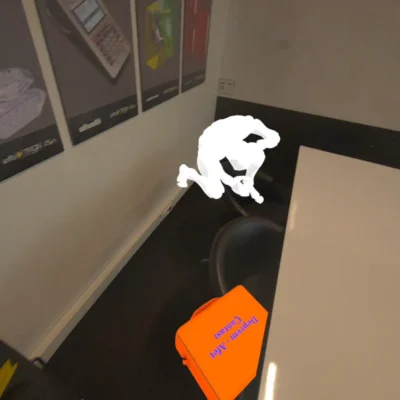
Beyond heavy manufacturing and industrial safety, the extreme precision required by their defense and aerospace legacy has propelled RoT STUDIO deeply into the medical sector through the specialized RoT HEALTHCARE division. Medical and surgical training faces systemic challenges entirely analogous to manufacturing: the exceptionally high cost of physical training resources—such as cadavers and operating room time—and the absolute, non-negotiable necessity for zero-risk practice environments to ensure patient safety.
RoT STUDIO has effectively revolutionized surgical education by developing incredibly high-fidelity simulators for delicate ophthalmic (eye) surgery, complex colorectal nursing protocols, and precise surgical catheterization procedures. By utilizing real patient MRI and CT scan data to construct the virtual models, these personalized simulations allow medical professionals to navigate complex, patient-specific anatomical structures, anticipate severe complications like sudden hemorrhage or organ perforation, and perfect their spatial reasoning in a completely risk-free virtual operating theater. Furthermore, highly detailed 3D anatomy modules covering the brain and musculoskeletal systems provide an unparalleled spatial understanding of human biology that traditional textbooks cannot offer.
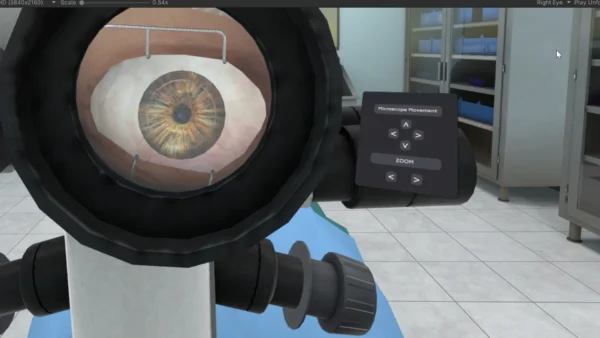
Across all these customized industrial and medical services, RoT STUDIO strategically integrates advanced haptic hardware. By utilizing specialized gloves and feedback mechanisms to simulate the sensation of touch, vibration, thermal changes, mechanical resistance, and physical force, haptic integration transforms the user from a passive visual observer into an active, physically engaged participant. This immediate sensory feedback is absolutely critical for developing the incredibly fine motor skills required for both delicate, life-saving surgical procedures and the precise, millimeter-accurate calibration of heavy industrial machinery.
Measurable Results from the Field: Industry Case Studies
The theoretical benefits of immersive technology are thoroughly validated by the measurable, real-world impact RoT STUDIO has delivered across diverse, heavy-industry sectors. The application of their technology has driven operational excellence, enhanced safety, and accelerated complex transitions for massive global enterprises.
A prime example is their collaboration with Ford Otosan Romania. As the automotive industry aggressively pivots toward electrification, adapting massive, legacy assembly lines for electric vehicle production presents a monumental logistical and training challenge. Through the implementation of bespoke virtual reality training solutions developed by RoT STUDIO, the manufacturer successfully prepared their workforce and their assembly lines for an “Electric Future,” ensuring that workers were fully trained on high-voltage systems and new assembly protocols long before the physical EV components arrived on the factory floor.
In the heavy materials sector, Carmeuse Turkey partnered with RoT STUDIO to drive a highly ambitious “Zero Accidents” initiative. By deploying award-winning immersive safety training initiatives, the organization significantly elevated its workplace safety culture, utilizing the psychological impact of virtual hazard simulations to reach next-level operational sustainability and drastically reduce workplace incident rates. Similarly, Tosyalı Holding, a dominant global leader in the iron and steel industry, utilizes specialized on-site training modules designed specifically on the RoT STUDIO platform. The sheer scale and inherent danger of steel manufacturing make traditional on-the-job training highly perilous; virtual environments allow their operators to master the complex, high-heat processes in total safety.
The impact extends deeply into mechanical engineering as well. ErBatu Machine, a prominent industrial equipment manufacturer, leveraged RoT STUDIO’s immersive solutions to elevate its engineering excellence. By adopting a “Design-to-Experience” journey, the company utilizes virtual environments to validate the engineering of complex machinery, ensuring that physical prototypes are built right the first time, significantly reducing waste and accelerating their time to market.
Even in the academic and public sectors, technology is driving profound change. The Faculty of Medicine at Gazi University has successfully integrated highly detailed anatomy lessons into virtual reality using RoT STUDIO’s specialized healthcare platform, providing the next generation of physicians with unprecedented spatial access to the human body. Meanwhile, civic entities like the Mersin Municipality have deployed the Mixed Reality Earthquake Awareness Training to drastically enhance public preparedness and emergency response coordination in seismically active zones.
The Future Trajectory: AI, 5G, and the Digital Twin Ecosystem
As enterprise transformation accelerates toward 2026 and beyond, virtual reality workforce training is rapidly evolving from an isolated software application into an interconnected, foundational pillar of the global industrial technology stack. The convergence of spatial computing with Artificial Intelligence (AI) and next-generation telecommunications connectivity is completely redefining the boundaries of what immersive learning can achieve in a manufacturing context.
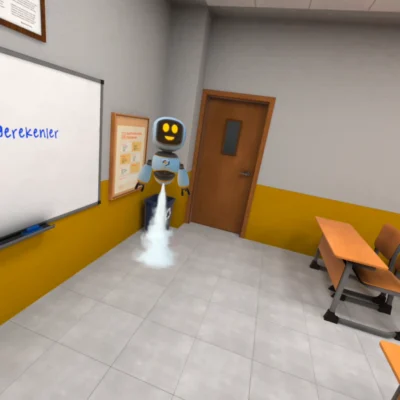
The integration of advanced, generative AI into virtual training environments is initiating a massive shift from static, linear simulations to highly adaptive, intelligent learning systems. Future iterations of industrial virtual training will prominently feature non-player characters (NPCs) and virtual instructors driven by generative AI algorithms. These digital entities will be capable of engaging in completely unscripted, natural-language conversations, answering complex technical questions on the fly, and reacting dynamically to the trainee’s unique decisions in real-time.
Furthermore, advanced algorithmic monitoring of a trainee’s subtle biometric data—such as pupillary dilation response, micro-gaze tracking, and kinematic fluidity—will allow the simulation engine to infer the user’s real-time cognitive load and stress levels. If the artificial intelligence detects severe cognitive overload, confusion, or panic during a simulated crisis, it can automatically throttle the difficulty of the scenario, provide subtle visual hints, or pause the simulation, ensuring the trainee remains in the optimal psychological zone for learning and development.
Concurrently, the rapid global proliferation of high-speed, ultra-low-latency 5G networks is eliminating the final physical and computational barriers to immersive global collaboration. The massive data bandwidth of 5G allows highly complex, photorealistic rendering and intricate physics calculations to be entirely offloaded to powerful edge cloud servers. This capability allows the visual output to be streamed directly to lightweight, untethered headsets, removing the need for expensive localized computing hardware. This incredible connectivity facilitates instantaneous, multi-user collaboration across vast geographic distances. An engineering lead in Germany, an industrial designer in Japan, and a frontline assembly technician in the United States can inhabit the exact same virtual factory floor simultaneously, manipulating and interacting with the same digital twin of a prototype engine with sub-millisecond latency.
This era of total technological convergence positions the “digital twin” not merely as a passive 3D CAD model, but as a living, breathing, interconnected simulation that perfectly mirrors its physical counterpart in real time. These advanced digital twins will be continuously fed by streams of IoT (Internet of Things) sensor data directly from the actual physical factory floor. In this mature, highly interconnected ecosystem, virtual reality becomes the ultimate human-machine interface for the digital twin.
Manufacturing trainees will no longer practice on generic, theoretical machine models; they will train on the exact, data-driven digital replica of the specific machine they are scheduled to operate. This replica will feature the machine’s unique wear-and-tear profile, historical maintenance data, and specific operational quirks. This predictive and highly contextualized training environment ensures a workforce that is not just broadly competent in general manufacturing principles, but is hyper-specialized and intimately familiar with their specific operational reality before they ever turn a physical wrench.
Conclusion
The global macroeconomic pivot toward immersive, virtual reality-based workforce training is no longer an experimental luxury or a futuristic novelty; it is a critical, absolute strategic defense against a compounding labor crisis and the relentless, exponential acceleration of technological complexity on the factory floor. Traditional pedagogical methods, rooted in passive observation and two-dimensional abstraction, simply cannot bridge the widening industrial skills gap rapidly enough, safely enough, or cost-effectively enough to sustain the modern global manufacturing ecosystem.
By directly weaponizing the underlying mechanisms of human neurobiology, immersive virtual training facilitates the rapid acquisition of durable, long-lasting muscle memory, drastically accelerates the time-to-competency for new hires, and permanently insulates organizations from the catastrophic financial and human risks inherently associated with real-world physical training in hazardous environments.
The profound convergence of CAD, CAM, CAE systems, additive manufacturing, and immersive spatial simulation has established a continuous, unbreakable digital thread. This technological synergy is fundamentally transforming static, theoretical engineering data into dynamic, interactive crucibles for human capital development. At the absolute forefront of this industrial paradigm shift is RoT STUDIO. Leveraging over three decades of unparalleled, uncompromising expertise in defense, aerospace, and high-fidelity industrial simulation, RoT STUDIO has successfully democratized the deployment of enterprise-grade virtual reality.
Through their highly intuitive, no-code RoT STUDIO License platform and their hyper-realistic, precision-engineered Customized VR/XR Services, they are providing global manufacturers, energy producers, and advanced healthcare institutions with the exact, scalable tools required to forge a resilient, highly skilled, and thoroughly future-proof workforce.
As generative artificial intelligence, ultra-fast 5G connectivity, and living digital twins become inextricably linked with spatial computing, enterprise organizations that fail to virtualize their knowledge transfer processes will find themselves fundamentally unable to compete in the modern market. Immersive experiential learning is no longer an alternative methodology; it is the definitive, foundational infrastructure of the next industrial era, ensuring that as manufacturing machinery becomes infinitely more complex, the human capability to master it evolves in parallel.