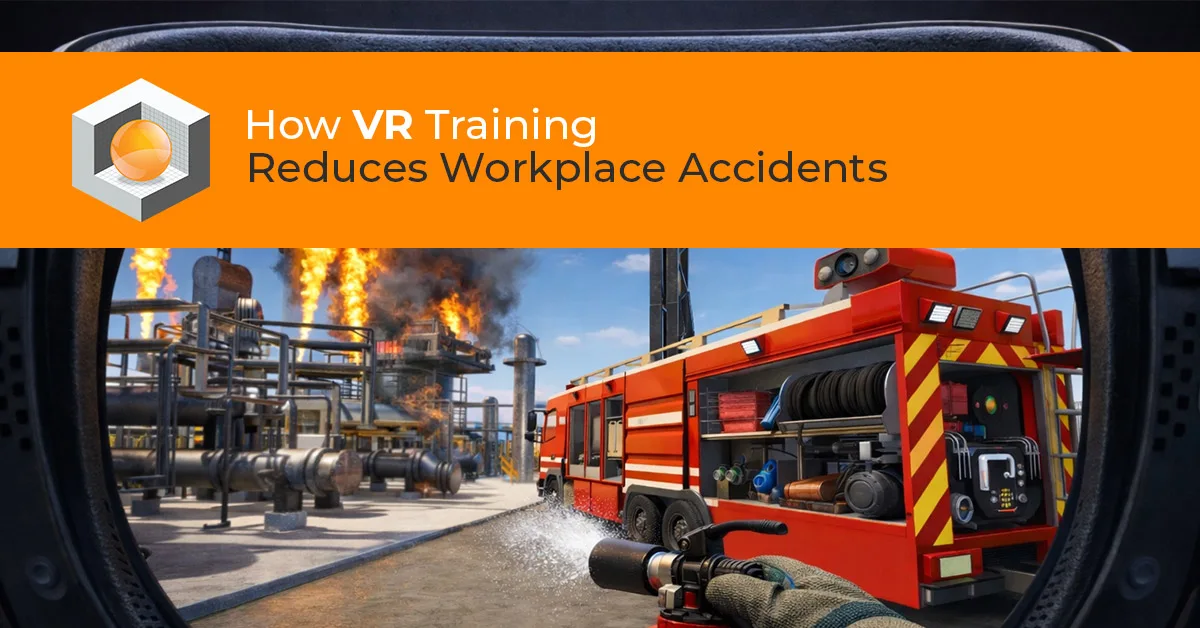
Workplace injuries and fatalities remain alarmingly high in dangerous sectors like energy, construction, manufacturing, oil and gas, mining, and heavy industry. Every year thousands of workers suffer accidents – from falls and machinery incidents to chemical spills and fires. These tragedies take lives, cause serious injuries, and cost billions in lost productivity and compensation. Traditional safety training (classroom lectures, videos, manuals) often fails to prepare employees for the chaos of real hazards. In contrast, immersive Virtual Reality (VR) training is emerging as a game-changing solution. By placing workers inside realistic 3D simulations of their work environment, VR safety training lets them rehearse dangerous tasks and emergency responses in a safe, controlled way. This hands-on practice builds muscle memory, sharpens hazard recognition, and dramatically improves retention – directly preventing mistakes on the job.
RoT STUDIO, a global pioneer in 3D engineering and VR/XR solutions since 1994, has harnessed these benefits. Rooted in decades of advanced simulation expertise, RoT STUDIO creates tailored VR training programs for industries like automotive, aerospace, energy, and manufacturing. Their ready-made and custom VR modules (from hazard hunts to lockout/tagout drills) let companies train safely at scale. By using VR, organizations can standardize training quality across sites and reduce the logistical burdens of physical drills.
In this blog, we explore why high-risk industries are turning to VR training – and how it leads to fewer accidents. We’ll examine the limitations of traditional safety training, explain the science of VR learning, and highlight real-world results (from major corporations and case studies). We’ll see how RoT STUDIO’s VR solutions fit into this trend, helping businesses achieve safer workforces and even “zero accident” goals.
The High Cost of Workplace Accidents
High-risk industries pay a steep price for workplace accidents. In the United States alone, federal data reports over 5,000 work-related fatalities per year, with millions more injuries and illnesses. Globally, accidents in construction, mining, oil & gas, transportation, and manufacturing account for a large share of these statistics. For example, construction consistently has one of the highest number of workplace deaths, often due to falls, struck-by incidents, and equipment failures. Agriculture and mining also rank among the deadliest sectors. Even nonfatal injuries (from overexertion, machinery, slips, etc.) cause lost workdays and recurring costs.
These incidents are not just personal tragedies – they carry enormous economic costs. Medical bills, workers’ comp, damaged equipment, and production downtime can run into the billions. OSHA reports that workplace injury and illness rates have declined over decades due to safety efforts, but there is still much room for improvement. In the U.S. in 2023, injuries and illnesses affected an estimated 2.4 per 100 workers, translating to over 2 million cases. In Europe and other regions, similar challenges persist. As global industrial demand grows, so does the potential for accidents.
Regulators are taking note. Many safety standards now mandate comprehensive training on hazards, procedures, and emergency response. Yet compliance is uneven: passive training methods (slideshows, videos, checklists) often fail to produce real understanding. This gap in effective training directly contributes to incidents. Workers may know the rules in theory but not react correctly under pressure. The result: costly errors, near-misses, and sometimes fatal accidents.
Given these stakes, industries need better training tools. Organizations with a strong safety culture invest in drills, protective equipment, and new technologies. Virtual Reality has recently emerged as one of the most promising tools to help close the training gap and further reduce accidents.
The Limits of Traditional Safety Training
Traditional safety training methods face inherent limitations when preparing workers for hazardous tasks. Classroom sessions and e-learning modules tend to be passive: an instructor talks or employees watch videos and click through slides. This approach relies heavily on memory and does not simulate real stress or physical activity. Studies show that people typically forget up to 80% of what they learn from lectures or manuals within just a week. This leaves workers ill-prepared when a real emergency hits, often leading to hesitation or incorrect actions that cause accidents.
Passive training also struggles to engage modern learners. Construction and factory workers are often more kinesthetic than academic; they learn by doing. Telling someone how to don a safety harness or shut down a chemical spill through text or speech alone lacks impact. A major drawback is that workers rarely get to practice dangerous tasks before doing them on the job. For example, drilling procedures on an oil rig or navigating a narrow scaffolding platform are typically taught in abstract or theoretical ways, with very limited hands-on rehearsal.
Moreover, traditional training is hard to scale and standardize. For large organizations with multiple sites, ensuring every worker receives the same quality of instruction is difficult. Training often requires travel to a central location, specialized instructors, and taking machinery offline for drills. These logistical burdens mean drills happen infrequently, and results can vary. Real-world safety crises, by contrast, unfold quickly and unpredictably; one cannot stop a drill and slow down time in an actual accident. Without repeated practice under realistic conditions, employees may panic or overlook hazards when it matters most.
Regulatory training demands also evolve continually (OSHA, ISO, etc.), making it challenging to update static training materials rapidly. Furthermore, learners have diverse needs: language barriers, learning styles, and physical abilities can hinder effective knowledge transfer. In short, conventional methods often fail to translate knowledge into dependable action.
This is where Virtual Reality training steps in. By immersing trainees in vivid, interactive simulations, VR overcomes many of these limitations. It transforms abstract rules into muscle memory and instincts – exactly what is needed to reduce real accidents.
How Virtual Reality Transforms Training
Virtual Reality delivers a “real feel” of dangerous scenarios without any real danger. When an employee straps on a VR headset, they are instantly transported into a 3D replica of their workplace or task. The brain’s “presence” response kicks in: a high-quality simulation triggers genuine physiological reactions as if the user were truly there. For instance, standing on a virtual scaffold or facing a simulated fire will raise the heart rate and release stress hormones just like in reality. This realistic engagement turns training into something remarkably tangible and memorable.
VR training relies on experiential learning. Instead of passively reading rules, the trainee actively performs tasks. For example, rather than simply listening to how to use a fire extinguisher, a VR trainee actually reaches out to pull the safety pin, squeezes the trigger, and sweeps the spray – all in a controlled virtual fire scenario. Each successful action rewards the brain with dopamine, reinforcing muscle memory. Over many repetitions, the motions become automatic. If an emergency real event occurs, the worker’s body knows exactly what to do without hesitation.
Another key advantage is stress inoculation. In VR, trainees can be exposed to high-pressure situations gradually and safely. A worker might first experience a small electrical spark or a single falling object. Over successive sessions, the scenarios become more intense – perhaps a full-scale equipment failure. This graduated exposure helps the brain habituate to stress. By the time real danger strikes, the trained worker is calmer and thinks clearly, knowing they have already mastered similar situations in VR. This builds confidence and composure: workers trust their skills instead of freezing or panicking.
VR also allows error rehearsal without harm. Trainees can choose the wrong fire extinguisher or skip steps in a procedure and immediately see the virtual consequences (explosions, injuries, shutdowns). Experiencing a simulated accident from a mistake – with no physical harm – provides a powerful lesson. The software then resets the scenario for another try. This trial-and-error learning solidifies correct procedures more effectively than memorization. Over time, trainees develop keen hazard recognition: in a VR “risk hunt,” they must scan an environment for hidden dangers (loose cables, blocked exits, unguarded machinery). This repeated scanning builds a habit of vigilance that carries over on the job.
Crucially, VR is repeatable and scalable. A VR module can be used by dozens or thousands of employees across different locations with identical quality. The only limits are headset availability and training time – both much lower hurdles than shipping people or setting up real drills. Once a VR training module is developed, adding more learners costs virtually nothing. Global teams can train simultaneously from remote sites using the same scenario. This consistency closes the quality gap found in traditional methods.
Rot STUDIO’s VR platform encapsulates these principles. It provides an entire curriculum architecture: starting with simple orientation (first-time users learn controls and safety), guided assisted learning (with prompts and cues), then full practice mode (no prompts, just user initiative) . Every interaction is tracked – where the user looked, how they moved, how they answered questions. This rich data lets safety managers quantify performance, identify knowledge gaps, and tailor follow-up training. In short, VR turns safety training into a measurable, engaging system that builds critical skills deeply.
Retention, Skill, and Confidence: The VR Advantage
Immersive VR training dramatically boosts knowledge retention and skill mastery compared to conventional training. Educational research confirms that active learning (doing rather than reading) leads to far better memory of what is learned. VR adds a sensory layer that anchors new knowledge firmly in long-term memory. For instance, trainees often remember safety steps vividly because they have physically enacted them in a simulation. This contrasts starkly with traditional learners who “learn” rules and then forget the details under stress.
Field studies illustrate these gains. Employees trained with VR retain up to 75-80% of knowledge even a year later, whereas traditional methods often see retention plummet below 20% in that time frame. One industry report cites VR trainees being four times faster to learn and over twice as confident in applying skills post-training. Wall Street’s PwC and NSC studies even found that VR learners can be 275% more confident in using new skills than those taught normally.
This confidence matters hugely for safety. A worker who truly understands a procedure will not hesitate when a real incident occurs. In VR, performing the task correctly triggers physiological responses similar to the real event, so the memory is robust. Employees regularly report that VR training makes them feel much more prepared on the job. This mental readiness translates into fewer mistakes. In fact, organizations implementing VR safety training consistently see lower accident rates over time.
Businesses also see performance gains beyond safety. VR training is highly immersive and engaging, leading to higher motivation. Trainees don’t just sit through a lecture; they interact with lifelike machinery and get immediate feedback. This active approach means trainees often test better than with other methods. For example, a Walmart VR pilot showed learners achieving higher test scores 70% of the time compared to prior methods. These higher scores reflect deeper understanding, which in turn correlates with safer behavior.
Another factor is that VR can track soft metrics like reaction time and procedural accuracy in detail. Rot STUDIO’s system, for example, captures every decision and mistake, allowing trainers to see exactly how each person performed the scenario. This level of insight is unheard-of in conventional drills. By reviewing VR session analytics, managers can coach individuals on specific weak points – whether it’s missing a step in lockout/tagout or taking too long to identify a hazard. Over successive VR sessions, the data shows concrete progress. This creates a data-driven safety culture where improvements are transparent and celebrated.
Finally, VR is ideal for hazard anticipation training. Studies highlight that workers often don’t recognize hazards until it’s too late. VR addresses this directly. Modules like RoT STUDIO’s “Risk Hunt” force trainees to spot every potential danger (loose tools, overloaded racks, chemical spills) in an environment before it “starts.” This repeated hazard spotting sharpens instinct. Evidence suggests that VR hazard training can reduce near-miss incidents significantly because employees learn to see and avoid risks early.
All of this adds up: VR-trained workers are sharper, more aware, and more confident on the job. They’re essentially “pre-trained” for the worst-case scenarios. Companies find that after rolling out VR safety programs, incident reports decline and employees handle crises calmly. The training has prepared them, so what would have been a panicked reaction becomes a practiced routine.

VR Training Delivers Measurable Safety Benefits
It’s one thing to claim VR training is effective; the results speak volumes. Early adopters of VR safety training report dramatic reductions in accidents and injuries. For instance, DHL, a global logistics firm, deployed VR-based safety training in their warehouses and documented a 100% elimination of lost-time injuries among the trained workforce.
They also saw a one-third drop in reported near-misses, showing VR-trained employees were catching hazards before incidents happened. Similarly, a virtual safety training initiative by Walmart and VR company STRIVR led to far better learning outcomes – employees were 30% more satisfied with training, scored 70% higher on safety tests, and retained knowledge 10-15% more effectively than before. Such numbers demonstrate not just improved training metrics, but real-world safety improvements.
The National Safety Council notes that VR training can reduce workplace accidents by up to one-third in high-hazard industries. This aligns with other studies: for example, companies implementing VR in manufacturing have reported roughly 45% fewer accidents compared to traditional training methods. In oil, gas, and chemical sectors, where emergencies like spills or fires are devastating, VR simulation of these scenarios prepares teams to react flawlessly. Hand-on VR exercises in emergency response build reflexes, so if a fire breaks out, employees don’t panic; they instinctively recall the drill they’ve done virtually.
Even in highly complex environments like mines, VR is paying off. Miners can be trained to recognize structural collapse warning signs or properly use breathing apparatus without ever leaving surface-level safety. RoT STUDIO has developed an Underground Mining Risk Hunt VR module for exactly this reason. By giving miners practice in crisis scenarios (roof collapse simulation, gas leak drill), the training engrains correct safety behavior. Mines using VR for safety report smoother evacuations and far fewer blind spots in hazard recognition.
Across industries, VR training often yields ROI beyond safety. Productivity goes up when accidents go down. Operating costs decline when fewer incidents mean less downtime for investigations and repairs. Companies also save on training logistics: no need to rent practice sites, schedule external trainers, or shut down production lines for drills. For example, traditional lockout/tagout (LoTo) training might mean turning off a machine and risking hours of downtime, whereas a VR LoTo simulation trains operators virtually with zero production impact.
Moreover, VR training enables standardization. Every new employee in a global company can get identical high-quality safety training, whether in Texas or Tokyo. Data from VR training systems can be aggregated to spot company-wide trends (e.g., if a certain forklift procedure is consistently mishandled, the curriculum can be updated globally). Such continuous improvement loops effectively tighten the safety net over time.
In short, evidence from practice shows that VR training delivers measurable safety outcomes: fewer injuries, reduced near-misses, and a workforce that genuinely understands safety protocols. This translates to improved regulatory compliance as well, since many agencies (from OSHA to international bodies) recognize that VR can meet or exceed traditional training standards if done right. By adopting VR, companies demonstrate a commitment to cutting-edge safety practices, which can also bolster their reputation and employee morale.
Real-World Results: Case Studies
Carmeuse, operating multiple plants, partnered with RoT STUDIO to overhaul its safety training. They launched customized VR hazard recognition and procedure drills. The impact was impressive: with more engaged training and centralized management tools, Carmeuse achieved zero lost-time accidents in the period following implementation. They even won industry awards for safety innovation. A RoT STUDIO VR consultant noted that VR “strengthened our employees’ safety awareness” and “helped us reach the goal of zero accidents” by making training more effective and trackable.
- DHL (Logistics/Warehousing):
DHL’s adoption of VR for forklift and warehouse safety training led to no lost-time injuries in trained sites and a 32% drop in near misses. The VR modules, featuring realistic warehouse aisles and obstacle scenarios, trained workers in hazard spotting and proper equipment operation. DHL credits VR with helping workers understand protocols deeply, rather than just memorizing them.
- Walmart (Retail Distribution):
Walmart rolled out a VR safety program across thousands of stores after a successful pilot with STRIVR. In that pilot, associates using VR reported higher satisfaction and mastery: test scores increased 70%, and workers retained 10–15% more information than with previous training. Walmart now employs VR for things like spill cleanup procedures and forklift safety, ensuring consistent high-quality training at scale.
- Global Logistics (Various Companies):
Numerous logistics firms have developed VR simulations of truck loading docks, hazardous material spills, and emergency response drills. One report noted that VR-trained teams can handle warehouse equipment more competently, reducing common injuries like struck-by or caught-between accidents. Trainees repeatedly practice emergency evacuations and incident reporting in VR, so real incidents see swift, organized responses.
RoT STUDIO worked with Ford’s Romanian plant to prepare assembly line workers for electric vehicle production. Using the RoT STUDIO License platform, engineers created VR assembly scenarios mirroring the actual plant floor. Over six weeks they completed 210 VR training sessions. Workers got hands-on with virtual components and learned safety steps for new EV equipment – all without tying up the real production line. The result was smoother training with no disruptions, and a safer, more adaptable workforce ready for the transition to electric vehicle assembly.
One of Turkey’s biggest steel producers, Tosyalı integrated RoT VR training on-site. Instead of halting operations for training, staff donned VR headsets and completed modules on-site in realistic scenarios. Over time, the company deployed multiple VR modules across facilities, ensuring that training happened in sync with work and did not risk any stoppages. The VR curriculum emphasized hazardous processes in steel plants. Although quantitative results weren’t published, safety officers observed better retention of safe procedures and appreciated that training could reach everyone without shutting down furnaces or cranes.
Even city governments use VR. Mersin in Turkey implemented a VR “earthquake awareness” program with RoT. The VR module simulates office and home settings during an earthquake, teaching people to identify hazards and evacuate properly. The interactive practice of “drop, cover, and hold” drills in VR made citizens more prepared for seismic events. This example shows that VR is not limited to factory floors – any environment with high-risk emergencies (like natural disasters) benefits from it.
These cases demonstrate a common theme: companies that have embraced VR for safety often see rapid gains in awareness, behavior, and outcomes. Training becomes safer and more effective, and accident rates follow suit.
VR in Construction and Manufacturing
Two of the most dangerous sectors – construction and heavy manufacturing – are prime candidates for VR training, and results are encouraging. Construction work involves constantly changing hazards: heights, moving equipment, and dynamic site layouts. A recent industry study found that VR training in construction significantly improved worker safety skills. Trainees using VR scored higher on post-training tests and showed greater motivation than those given paper instruction
. VR sessions on tasks like steel beam erection or welding at height helped workers rehearse emergency procedures (like arresting a fall) while still on the ground. As a result, these workers enter job sites more knowledgeable and less likely to make critical mistakes.
RoT STUDIO offers modules like HSE Risk Hunt Training and Working at Height Training, specifically built for industries with fall hazards. In a typical VR construction drill, a trainee might navigate a scaffold scenario, learn to secure harnesses correctly, and identify unstable surfaces. Repetition in VR makes the correct response instinctive. The ASCE (American Society of Civil Engineers) even reports that VR reduces on-site accidents by addressing the failure of classroom training – real site experience in VR bridges that gap.
In manufacturing, VR’s benefits are equally clear. Factory floors have heavy machinery, robotics, chemicals – plenty of risk factors. Many manufacturing accidents happen during setup, maintenance, or human-machine interaction. VR lets operators practice equipment maintenance without powering down actual machines. For example, RoT’s Lockout/Tagout (LoTo) Training module teaches maintenance crews how to safely de-energize and service machinery. In VR, workers practice every step: shutting off power, locking controls, verifying zero energy – all without touching a real machine. This is critical because errors in LOTO are a common cause of injuries.
Motor manufacturers like Ford use VR for assembly line safety and skills training. At Ford Otosan, the VR program not only taught assembly tasks but also emphasized safety awareness (e.g., correct handling of heavy battery packs). By training with RoT STUDIO’s VR license software -RoT STUDIO License-, assembly teams became adept at new procedures without ever endangering themselves or slowing the real line. The result: safer ramp-up of new processes.
Across manufacturing, other examples include VR forklift operator training, VR welding hazard training (fumes, sparks), and VR chemical handling. Trainees build familiarity with safety protocols so when a real alert goes off (like a fire or spill), they act decisively. Statistically, plants using VR safety training report fewer equipment-related accidents and less downtime.
VR in Energy, Oil, and Mining
Energy production, oil & gas, and mining are among the most hazardous industries. Workers face exploding rigs, crushing machinery, confined spaces, and flammable substances. Here VR is proving invaluable.
In oil and gas, major companies have adopted VR to teach emergency response. Simulations recreate rig fires, gas leaks, and offshore platform evacuations. Trainees repeatedly practice shutting valves, using fire suppression, and donning breathing gear – all in VR before ever facing real danger. These drills build muscle memory for emergency shutdowns and life-saving procedures. According to safety experts, such VR programs can lower accident risk by up to 32% in energy operations.
RoT STUDIO’s Risk Hunt and Emergency Response modules are designed for this sector. For example, a VR scenario might simulate a refinery with a leaking tanker. Workers must identify the leak source, grab appropriate gear, and follow the emergency plan. The environment can be paused or slowed as needed for debriefing. This sort of training builds confidence so that if a real leak occurs, the crew knows exactly which valves to close and what evacuation path to take.
Mining too sees VR gains. Underground mines are inherently dark, confined, and accident-prone. Hazards include cave-ins, faulty equipment, and toxic gases. A VR training module can virtually place miners in these conditions, teaching them to recognize unstable rock, check gas levels, and execute safe exit routes. Because it’s dangerous to simulate a roof collapse in real life, VR is the only practical way to train for it. With VR, miners develop the instincts to halt work the moment conditions look unsafe. This can literally save lives by preventing collapses or asphyxiation incidents.
Even drilling operations benefit. VR tools allow new drillers to learn complex machinery controls and well-site emergency protocols from day one, without risk. The technology fosters a safety-first mindset across a workforce that was previously trained on the job with actual risks.
VR Training and Regulations
As VR training matures, regulatory and standards bodies are increasingly recognizing its value. OSHA in the U.S. has issued guidance confirming that VR can meet training requirements if it effectively conveys the necessary knowledge. The key, OSHA says, is demonstrating that VR meets the standard’s goals: for example, through hands-on practice and opportunities for questions. This flexibility means employers can use VR in place of or alongside traditional training, as long as it achieves the learning objectives.
Internationally, entities like ISO and industry safety boards are studying VR as a recognized best practice for dangerous work training. For instance, the ILA (International Lime Association) awarded Carmeuse’s VR training program for its contribution to health and safety. Such endorsements encourage more companies to invest in VR.
Furthermore, during inspections or audits, companies can now present VR training records and analytics as evidence of proactive occupational safety programs. The digital nature of VR training makes compliance tracking easier: attendance is logged, scores are stored, and performance metrics are available. This rich documentation often exceeds what paper training can provide.
While VR hasn’t replaced all traditional hands-on components (some skills still require physical practice), it’s now viewed as a powerful supplement that enhances compliance. Many safety standards explicitly mention the need for scenario-based or practical training – roles that VR fulfills neatly.
In summary, the regulatory environment is supportive of VR. Employers are increasingly confident that well-designed VR training will satisfy auditors and, more importantly, protect their people better than old methods.
RoT STUDIO: Pioneering VR Safety Solutions
RoT STUDIO stands at the forefront of the VR safety revolution. Rooted in infoTRON’s pioneering 3D and simulation heritage (since 1994), RoT brings 30+ years of engineering excellence to training. They understand the complexities of high-risk industries, having delivered CAD/CAM and virtual modeling tools to automotive, aerospace, and defense long before VR headsets existed
.
Today, RoT STUDIO applies that expertise to training. Their team of engineers, 3D artists, and training experts build VR content that mirrors real workflows and equipment. For example, a RoT VR simulation might replicate an actual factory floor or oil rig control panel at 1:1 scale. This industry-specific accuracy means users train on exactly the machines and procedures they will use on the job, only virtually. The familiarity bridges over to the real world.
RoT STUDIO offers both ready-made modules and fully-custom solutions. Companies pressed for time can license RoT STUDIO’s pre-built VR scenarios – such as the HSE Risk Hunt Training, which has users scour virtual factories for everyday hazards, or LoTo Lock Training, which walks through proper lockout/tagout steps. These off-the-shelf courses can be rapidly deployed to cover common safety themes.
For unique processes, RoT STUDIO’s custom VR/XR services create new training content tailored to a client’s needs. They have developed VR drill simulators, assembly line practice modules, and even soft-skills training in VR. Every solution is backed by RoT STUDIO License, a no-code VR software platform, letting clients eventually edit and update scenarios themselves as procedures evolve.
Key features of RoT STUDIO’s approach include:
- Immersive realism – advanced 3D graphics and audio place trainees inside their working environment.
- Haptics support – optional tactile feedback can be added so that using a virtual tool feels more lifelike.
- Modular structure – training flows from orientation (learning controls) to assisted guidance (on-screen cues) to independent practice (no cues), exactly as modern pedagogy recommends.
- Data-driven – every session can be recorded, allowing trainers to drill down into each user’s performance metrics (time to complete tasks, errors made, etc.).
RoT STUDIO’s portfolio spans multiple sectors. In healthcare they train surgeons with VR laparoscopic simulators, but for safety we focus on their industrial work. In sectors like energy and manufacturing, RoT STUDIO has implemented VR labs where employees rotate through simulations for machine operation, emergency drills, and hazard hunts. They’ve also integrated VR into company-wide safety campaigns; for example, using VR earthquake simulations to improve workplace preparedness for quakes.
Why RoT STUDIO matters: as Türkiye’s VR pioneer, RoT STUDIO has built a bridge between old-school engineering and new-age training. They ensure that VR training isn’t just a flashy gadget, but a serious educational tool. Clients benefit from RoT STUDIO’S track record of helping companies “go virtual” effectively, avoiding the common pitfalls of gamified training that lacks rigor.
Scaling Safety with VR: Deployment and ROI
Investing in VR training might seem significant at first glance, but the long-term savings are substantial. RoT STUDIO’s data shows that after the initial set-up, the cost per trainee of VR drops steeply. Unlike yearly live drills, VR modules are assets: once created, they can train hundreds or thousands without extra media costs. Case in point: a RoT STUDIO deployment for a manufacturing client required many hours of VR content development, but that same content could then be used year after year, each training session costing only the time of the trainee.
Moreover, VR training slashes indirect costs. Travel budgets vanish when global teams can train virtually in local VR rooms. Downtime costs go away since no need to take real machinery offline. OSHA statistics on training costs historically included travel, logistics, and lost productivity – VR effectively eliminates much of that overhead. Over a five-year horizon, companies often see a positive ROI on VR training as accident-related losses and training costs shrink.
Productivity benefits accrue too. With VR, workers become competent faster. Industry analyses find that VR learners reach mastery 40–60% faster than those in traditional programs. That means skilled workers back on the floor sooner, further reducing the window of risk. Plus, as VR is more engaging, employees tend to enjoy it and even perceive the company as innovative, aiding retention of talent.
Given these advantages, VR training adoption is accelerating. The market for VR in safety and training is booming (some projections peg it reaching billions of dollars in the next decade). As more firms see their competitors cut accident rates with VR, they don’t want to be left behind. It’s not just the big manufacturers: oil majors, power plants, mining giants, and even government agencies (for first responder training) are getting on board.
RoT STUDIO facilitates this scalability. Their VR/STUDIO License product allows even smaller companies to build or tweak VR modules without starting from zero. It’s a drag-and-drop VR authoring system born from RoT’s heritage in simulation software. This means clients aren’t locked out of their own training content, they can continuously improve and expand scenarios. Such flexibility means VR training can grow with the company’s needs, further extending its value over time.
Industry Spotlight: Construction to Healthcare
Construction:
VR training is revolutionizing construction safety. Workers must handle heights, heavy gear, and shifting worksites. VR modules let trainees practice site walks, identify fall hazards, and undergo emergency drills. Studies show construction workers retain more and perform safer when trained with VR. RoT’s modules for construction include scaffold safety and earthquake drills. As one study noted, VR is particularly effective because it is “hands-on” and contextually relevant, unlike static briefings. Results: firms report fewer falls and safer work attitudes after VR programs.
Manufacturing & Automotive:
From heavy machinery to assembly lines, manufacturing benefits greatly from VR. The automotive industry, especially, has integrated VR for new vehicle lines (electric vehicles, for example) and maintenance training. Ford’s partnership with RoT STUDIO in Romania is a prime example: assembly workers trained in VR on the new electric vehicle equipment, significantly cutting errors and safety incidents on the live line. In general manufacturing, VR is used for ergonomics training (lifting techniques), lockout/tagout drills, and even emergency evacuations. This leads to measurable drops in strains, cuts, and equipment accidents.
Energy & Oil & Gas:
High-risk energy facilities use VR for everything from confined-space entry training to fire response. Offshore platforms simulate hurricane strikes, refineries simulate power failures, and pipelines simulate leak scenarios. VR ensures that emergency procedures become second nature. A notable stat: VR safety training can improve an oil rig worker’s emergency response time by a large margin, thereby preventing spill escalations or fire spread. Energy companies also use VR to onboard contractors safely, standardizing safety knowledge across hundreds of field locations.
Mining:
In deep mines, VR is often the only way to safely rehearse collapse or explosion drills. Miners train in VR for breathing apparatus usage, escape routes, and operating haulage equipment. Companies find that VR training significantly reduces panic in mine emergencies because miners have “seen it all before” virtually. Additionally, VR is used above-ground to plan mine site layouts and teach proper maintenance of large machinery, mitigating potential accidents.
Transportation & Warehousing:
Forklift operators, delivery drivers, and warehouse staff use VR to practice hazard avoidance. Forklift collisions are a top cause of injury; VR simulations let operators train on tight aisle navigation without any real damage. Warehouse staff practice stacking and picking in VR to avoid back injuries and tripping hazards. Emergency evacuation drills from large transport hubs (airports, shipping terminals) are also done in VR. The immersive repetition leads to safer routines and better situational awareness on the job.
Healthcare:
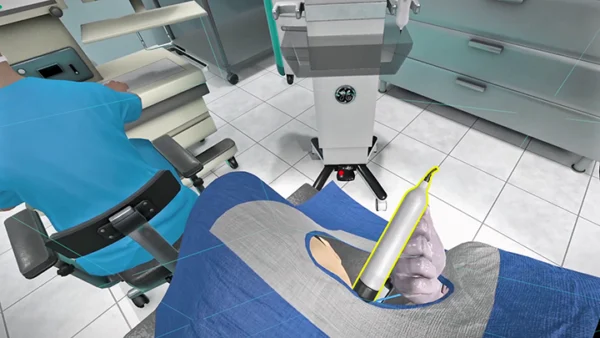
While not typically thought of as “high-risk” in the traditional sense, healthcare has its own critical safety issues (needlestick injuries, surgical errors, patient handling incidents). VR is used to train surgeons and nurses in emergency procedures (e.g., VR trauma simulations or safe patient lifting) with great success. Hospitals using VR for surgical training report fewer errors in the operating room, which translates into better patient and staff safety. Rot STUDIO has applied its VR expertise to healthcare, offering things like anatomy modules, but that’s a topic for another day.
The Future: VR, AR, and Beyond
Looking ahead, Virtual Reality training will only become more powerful. With continuous improvements in VR graphics, haptics, and comfort, simulations will feel even more real. Extended Reality (XR) is another frontier – imagine workers wearing XR glasses that overlay real-time safety instructions on live equipment. RoT STUDIO is already exploring these mixed-reality solutions to provide on-the-job guidance.
On the strategic level, VR training will become intertwined with data analytics and AI. Imagine a system that not only trains you on a drill but then uses AI to adapt the scenario to your weak points. Early prototypes of this exist, where the VR platform adjusts difficulty or focus based on the trainee’s past performance. This promises even greater ROI: the training becomes personalized.
Policy makers and industry leaders will likely set VR training standards. We may soon see safety certifications that require VR-qualified trainers or validated VR modules. Already, global safety organizations are publishing VR best practices.
For businesses, the message is clear: VR is no longer an experimental luxury; it is a practical tool that measurably improves safety. Companies not exploring VR now risk falling behind in safety performance and employee training quality.
RoT STUDIO’s mission is to ensure that organizations can meet this challenge. By combining 3D technology leadership with instructional design, RoT STUDIO empowers clients to make VR training a strategic safety initiative, not just a pilot project.
Conclusion
High-risk industries have always grappled with the challenge of keeping workers safe. Traditional training has its place, but it has clear limits. Virtual Reality training is now proving itself as a superior way to build skills, awareness, and confidence – all of which translate directly into fewer accidents.
From improved knowledge retention and stress resilience to massive cost and time savings, VR offers a compelling value proposition. Real-world evidence from logistics firms, manufacturers, and utilities shows striking safety improvements after adopting VR. Workers who train in VR become better at hazard spotting, safer in emergencies, and more proficient at complex tasks.
RoT STUDIO stands ready to make these benefits a reality. With decades of 3D technology experience and a portfolio of proven training solutions, RoT STUDIO is helping organizations around the world harness VR for safety. Whether it’s a mine, a factory, or a power plant, RoT STUDIO’s immersive VR programs are tailored to each company’s unique risks and equipment. The result is safer training that blends seamlessly with real workflows.
In the end, VR training is not just a tech trend – it’s a life-saving investment. By allowing employees to “train how they fight,” companies empower their workforce to act decisively when it matters most. That means more employees returning home safely every day. For any high-risk industry aiming to reduce accidents, improve compliance, and protect its people, VR training is rapidly becoming an indispensable solution.