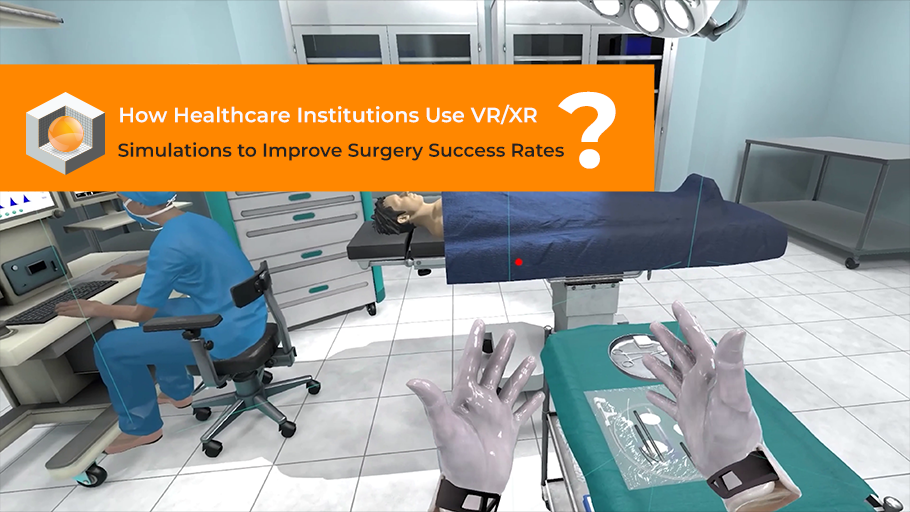
Surgical procedures have become increasingly complex, with rising patient expectations and higher clinical standards pushing healthcare institutions to rethink how they train their teams. Traditional training models; limited OR observation, cadaver labs, and simulation mannequins; offer value, yet they fall short in providing the repeatability, realism, and risk-free environment needed to truly master today’s advanced procedures.
Virtual Reality (VR) and Extended Reality (XR) technologies are transforming this landscape. These immersive tools allow surgeons and medical teams to practice repeatedly in lifelike scenarios, manage rare complications, and refine their motor and cognitive skills long before entering the operating room. With healthcare systems striving to improve surgery success rates, reduce complications, and standardize skill acquisition across teams, VR/XR has emerged as a powerful solution that bridges the gap between theory and hands-on experience.
Healthcare institutions worldwide now recognize that immersive simulation is no longer an accessory; it is the foundation of next-generation surgical excellence.
The New Era of Surgical Education: Immersive VR/XR Technologies
Advances in VR/XR are ushering in a new standard of surgical training, where medical professionals can interact with highly detailed anatomical environments and realistic patient scenarios created from CT and MRI datasets. Unlike traditional tools, VR/XR simulations deliver a fully immersive, measurable, and highly adaptable learning experience tailored to institutional needs.
VR places trainees inside a fully virtual environment, while XR blends the real and digital worlds; allowing simulations to occur alongside actual operating room tools or medical devices. This flexibility enables surgeons to practice in conditions that accurately reflect real-life pressures and spatial constraints.
RoT Healthcare’s VR/XR solutions take this further by offering deeply realistic surgical simulations for laparoscopic bariatric operations, colon cancer surgeries, catheterization procedures, ophthalmic surgery VR training simulators, and nursing practices. These modules replicate authentic tissue reactions, stress-inducing complications, and perioperative workflows; helping surgeons develop confidence and precision before ever performing the procedure on a patient.
By embracing immersive simulation technologies, healthcare institutions can reduce training time, improve surgical outcomes, and build a scalable, repeatable, data-driven education model that elevates the entire clinical ecosystem.
How VR/XR Simulations Improve Surgery Success Rates
VR/XR technologies are redefining what it means to be a prepared, confident, and competent surgeon. By merging immersive environments with real-time performance analytics, these simulations give healthcare institutions the ability to improve outcomes in ways traditional training cannot match. Below are the key mechanisms through which VR/XR contributes directly to higher surgery success rates.
Risk-Free Practice for Complex & High-Stakes Procedures
One of the strongest advantages of VR/XR is the ability to practice repeatedly without exposing real patients to risk. Surgeons can perform advanced laparoscopic and robotic procedures; such as bariatric or colorectal cancer surgeries; inside highly realistic virtual environments designed to mimic the exact challenges of the operating room.
RoT Healthcare’s simulations replicate complications including organ punctures, bleeding, incorrect trocar placement, or limited visibility. These controlled “failure-safe” scenarios allow trainees to:
- Learn from mistakes without consequences
- Understand anatomical variations and operative risks
- Build muscle memory through limitless repetition
- Develop advanced decision-making strategies
Repeated exposure to high-risk moments ultimately leads to fewer intraoperative errors and increased surgeon confidence.
Objective Skill Assessment & Performance Tracking
Unlike subjective evaluations in traditional surgical training, VR/XR simulations generate measurable and objective performance data. Trainee movements, instrument paths, speed, accuracy, force applied, and completion success rates are recorded and analyzed.
This data-driven approach enables:
- Individualized training programs, tailored to each surgeon’s weaknesses
- Real-time feedback, accelerating learning
- Long-term performance tracking, supporting institutional benchmarking
- Standardized skill assessment, essential for accreditation and quality control
By turning surgical training into a quantifiable process, healthcare institutions ensure that every surgeon meets a consistent level of competency.
Faster Learning Curve & Increased Retention
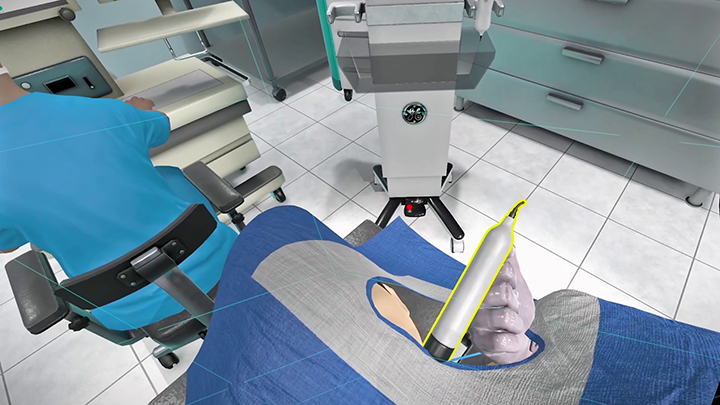
Immersive learning significantly boosts memory retention and comprehension.
Because the trainee is fully engaged; visually, cognitively, and kinesthetically; the information transitions more effectively from short-term memory to long-term mastery.
VR/XR simulations enhance:
- Procedural recall
- Spatial awareness
- Hand-eye coordination
- Cognitive readiness under time pressure
Studies consistently show that immersive practice reduces training time while producing more skilled surgical performers. The result is a shorter path to proficiency and a stronger foundation for surgical excellence.
Reduced Surgical Errors & Better Decision-Making Under Stress
Real operating rooms are unpredictable, and stress levels can directly affect surgical outcomes.
VR/XR simulations replicate the pressure of real OR conditions; alarms, complications, limited visibility, time constraints; and require surgeons to react quickly and correctly.
This builds:
- Emotional resilience
- Crisis management skills
- Rapid problem-solving abilities
- Improved teamwork and communication
By practicing under realistic stress, surgeons enter the OR more prepared, resulting in fewer errors and consistently higher success rates.
The Role of Haptics: Bringing Real Surgical Tactility Into VR
While visual and auditory realism are essential components of immersive surgical training, true mastery requires a sense that cannot be replicated through screens alone: tactile feedback. Haptic technology adds the sensation of touch, pressure, vibration, and resistance; turning VR environments into realistic surgical ecosystems.
With the haptic-supported solutions enabled by the RoT STUDIO License, surgeons can interact with virtual tissues, instruments, and anatomical structures as if they were performing an actual procedure. With multi-degree force feedback and precision motor control, trainees feel the distinction between delicate tissue handling, instrument resistance, and subtle changes in pressure; critical elements that shape real-world surgical outcomes.
Haptics enhance VR surgical training by enabling:
- Authentic Instrument-Tissue Interaction
Surgeons experience the physical resistance of tissue, organ density, and the force required to manipulate instruments accurately. - Greater Precision and Fine Motor Skill Development
Advanced haptic feedback strengthens hand-eye coordination and supports the development of procedural finesse. - Early Detection of Improper Technique
Excessive force, incorrect angling, or misapplied pressure results in immediate tactile cues; encouraging rapid corrective behavior. - Improved Preparedness for Live Surgeries
Because surgeons no longer rely solely on visual cues, they build confidence and motor accuracy before entering the operating room.
In short, haptics transforms VR from a visual learning tool into a complete sensory training environment, making simulations more impactful and directly contributing to higher surgery success rates.
Why Healthcare Institutions Choose RoT STUDIO
Healthcare institutions seeking to elevate surgical performance and operational excellence increasingly turn to RoT STUDIO for its unmatched capabilities in VR/XR training solutions. Unlike generic simulation platforms, RoT STUDIO offers a fully customizable, scalable, and medically precise ecosystem built specifically for healthcare education and surgical innovation.
Here’s why RoT STUDIO stands out:
1. Comprehensive Healthcare Training Ecosystem
RoT Healthcare provides a diverse portfolio of surgical and clinical VR modules, including:
- Anatomy VR Brain Module
- Anatomy Musculoskeletal System Module
- Surgical Catheterization Procedure
- Ophthalmic Surgery VR Training Simulator
- Colorectal Surgery Nursing Trainings
These modules allow hospitals to build structured, repeatable, and measurable training programs across multiple medical disciplines.
2. Hyper-Realistic Surgical Simulations for Advanced Procedures
RoT Healthcare specializes in recreating complex laparoscopic procedures; such as bariatric and colon cancer surgeries; with lifelike anatomical accuracy and real-time complication modeling. Surgeons can practice high-risk tasks, including managing organ punctures or limited-visibility scenarios, within a safe virtual environment that mirrors true OR conditions.
This leads directly to:
- Higher surgery success rates
- Reduced complication rates
- Stronger team preparedness
- Enhanced institutional reputation as a “Center of Excellence”
3. Tailor-Made VR/XR Solutions for Medical Devices & Hospital Systems
Beyond standard modules, RoT STUDIO delivers custom VR/XR training projects for:
- Robotic surgical systems
- Surgical tables
- ICU beds
- Cathlab ecosystems
- Other high-complexity medical equipment
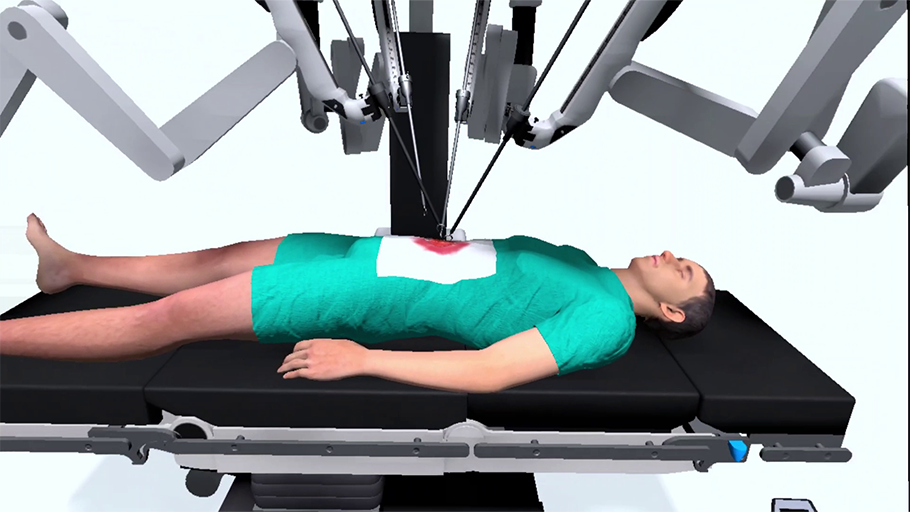
These solutions allow manufacturers, hospitals, and biomedical teams to train staff or demonstrate devices without needing physical hardware; saving time, cost, and logistics.
4. No-Code VR Scene Creation for Hospitals
With the RoT STUDIO License, healthcare institutions can independently create:
- Their own VR training scenarios
- Custom procedural workflows
- Interactive 3D surgical demonstrations
Using drag-and-drop design tools, departments can update or expand their training content without ever writing a line of code; enabling full autonomy and rapid iteration.
5. Data-Driven Performance Insights
The RoT STUDIO License integrates real-time feedback and assessment capabilities that allow institutions to:
- Track trainee progress
- Identify skill gaps
- Benchmark performance
- Enhance certification and evaluation processes
This analytical approach ensures continuous improvement and alignment with modern surgical standards.
6. Scalable, Cost-Effective, and Future-Proof
RoT STUDIO License reduces costs associated with cadaver labs, travel, scheduling, equipment, and physical training facilities. Its flexible architecture scales seamlessly; from small residency programs to multinational hospital networks.
Because simulations can be updated as medical techniques evolve, institutions stay ahead of technological and educational advancements.