
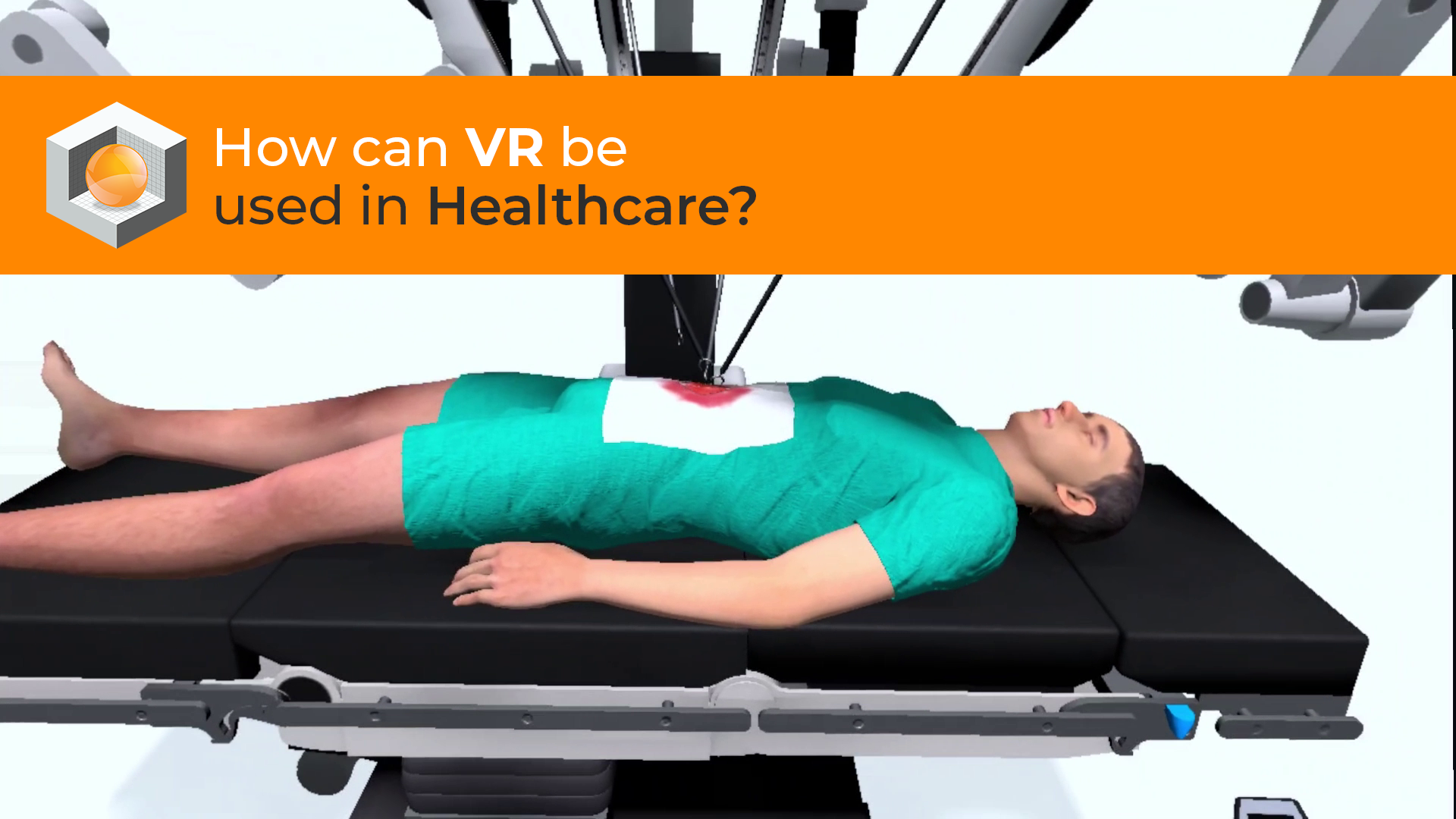
The global healthcare landscape is currently undergoing a structural metamorphosis, driven by the convergence of high-fidelity computing, haptic engineering, and artificial intelligence. Virtual Reality (VR), once relegated to the periphery of entertainment and gaming, has matured into a mission-critical infrastructure for modern medicine. As of 2025, the technology is no longer an experimental novelty but a fundamental pillar of medical education, surgical planning, therapeutic intervention, and rehabilitation. This report provides an exhaustive analysis of how VR is reshaping healthcare ecosystems in the United States and Europe, exploring the engineering heritage that powers these innovations, the clinical data validating their efficacy, and the economic imperatives driving their adoption.
The Shift from Observation to Immersion
Historically, medical training relied on the “Halstedian” model of apprenticeship: “See One, Do One, Teach One.” While this methodology has served the medical community for over a century, it is fraught with inherent limitations and risks. The “Do One” phase often occurs on live patients, introducing significant safety concerns, ethical dilemmas, and variability in training outcomes. Furthermore, the scarcity of cadavers and the high cost of animal models have created bottlenecks in surgical education, limiting the frequency with which trainees can practice complex procedures.
VR disrupts this paradigm by introducing a new pedagogical standard: “See One, Do Many, Teach One.” In a high-fidelity virtual environment, a resident can perform a corneal transplant or a catheterization procedure hundreds of times before ever touching a patient. This shift from passive observation to active, repeatable immersion is not merely a change in medium; it is a fundamental restructuring of skill acquisition. It allows for the decoupling of training from the operating room, democratizing access to high-quality medical education regardless of geographical location or hospital resources.
The Convergence of Engineering and Biology
The efficacy of modern medical VR is not solely a product of better graphics; it is the result of rigorous engineering principles applied to biological systems. The most successful VR platforms in healthcare today utilize “defense-grade” simulation technology—physics engines originally designed for aerospace and automotive industries—to replicate the biomechanics of human tissue.
This engineering-first approach is exemplified by RoT STUDIO, a company that stands at the vanguard of the medical VR revolution. Established as a spin-off from infoTRON, a pioneer in 3D technology and industrial simulation since 1994, RoT STUDIO leverages over three decades of mission-critical engineering experience. infoTRON’s history of developing flight simulators and digital twins for the defense and aerospace sectors provides the foundational DNA for RoT STUDIO’s medical solutions. The transition from simulating the aerodynamics of a fighter jet to simulating the hydrodynamics of the human eye represents a transfer of high-stakes precision. In both domains, the margin for error is zero, and the simulation must provide fidelity indistinguishable from reality.
The Post-Pandemic Catalyst
The COVID-19 pandemic acted as a potent accelerant for VR adoption. With physical access to hospitals restricted and elective surgeries cancelled, medical institutions in the UK and USA were forced to seek alternative methods for training and patient care. VR emerged as the solution, allowing remote collaboration, decentralized training, and contactless rehabilitation. By 2025, what began as a crisis response has solidified into standard practice. The “new normal” in healthcare is digital, immersive, and data-driven, with VR serving as the interface through which clinicians interact with data, anatomy, and each other.
Engineering Virtual Hospital Scenarios
To understand the clinical utility of VR, one must first appreciate the underlying technology stack. Modern medical VR is a composite of three critical technologies: high-resolution visual rendering, haptic feedback loops, and digital twin integration.
Visual Fidelity and Stereoscopic Depth
In medical applications, visual fidelity goes beyond 4K resolution; it encompasses depth perception and spatial awareness. Stereoscopic 3D rendering allows a neurosurgeon to perceive the intricate depth of a brain tumor relative to the optic nerve, a spatial understanding that 2D monitors cannot convey. High dynamic range (HDR) rendering ensures that the subtle color variations of tissue—crucial for distinguishing healthy tissue from pathology—are accurately represented.
Companies like RoT STUDIO utilize advanced rendering pipelines that integrate with 3DEXPERIENCE platforms to ensure that anatomical models are not just artistically approximations but data-accurate representations derived from CT and MRI scans. This level of visual accuracy is essential for procedures like ophthalmic surgery, where the visual field is microscopic and depth perception is paramount.
Haptic Virtual Solutions
Perhaps the most significant advancement in medical VR in the last five years is the integration of haptics. “Visual-only” VR is insufficient for surgical training because surgery is a tactile art. A surgeon relies on the “feel” of tissue resistance to determine how much force to apply.
RoT STUDIO has pioneered the integration of visio-haptic technology in its simulators. Their systems utilize force-feedback devices that physically resist the user’s hand movements in response to the virtual environment.
- Tissue Resistance: When a trainee inserts a needle into virtual skin, they feel a “pop” as the needle punctures the epidermis, followed by a change in resistance as it moves through subcutaneous tissue.
- Bone vs. Soft Tissue: The haptic engine differentiates between the rigid feedback of bone and the elastic feedback of muscle, allowing for realistic orthopedic and trauma training.
- Microsurgery: In ophthalmic procedures, the haptic feedback is incredibly subtle, replicating the delicate tension of the corneal surface. Without this feedback, a trainee might apply too much pressure, which in real life would be catastrophic. RoT STUDIO’s simulators are calibrated to these microscopic tolerances, ensuring that muscle memory is built correctly.
Medical Digital Twins
The concept of the “Digital Twin”—a dynamic virtual replica of a physical entity—has migrated from industrial manufacturing to healthcare. A Medical Digital Twin is not a generic model; it is a specific virtual replica of a single patient, generated from their electronic health records (EHR) and imaging data.
infoTRON’s expertise in Product Lifecycle Management (PLM) and digital twins for the automotive industry has been instrumental in this transition. Just as a digital twin of a car engine allows engineers to test stress loads before manufacturing, a digital twin of a patient’s heart allows surgeons to test stent placement before the operation.
- Pre-operative Rehearsal: Surgeons can “operate” on the digital twin multiple times, trying different approaches to determine the optimal strategy. This reduces intraoperative time and improves patient safety.
- Predictive Modeling: By integrating AI, the digital twin can predict physiological responses. For example, it can simulate how blood flow dynamics will change after a valve replacement, allowing the surgeon to anticipate complications.
The “No-Code” Democratization: RoT STUDIO License
A major barrier to VR adoption has traditionally been the high cost and technical complexity of content creation. Hospitals typically had to hire expensive external developers to build training scenarios, a slow process that often resulted in content that was quickly outdated.
RoT STUDIO has disrupted this model with the RoT STUDIO License, a “no-code” content creation platform. This software allows medical educators to build and modify VR training scenarios using a drag-and-drop node system.
- Drag-and-Drop Workflow: A nurse educator can create a training module by dragging “nodes” (actions) into a sequence: Node 1: Wash Hands -> Node 2: Check Patient ID -> Node 3: Prepare IV Kit.
- Institutional Autonomy: This platform empowers healthcare institutions to own their training curriculum. If a hospital updates its infection control protocol, the educator can simply update the VR node in minutes, rather than waiting months for a software vendor to release a patch.
- Scalability: The platform facilitates collaboration, allowing teams across different hospital sites (e.g., varying NHS Trusts) to share and standardize training modules, ensuring consistency in care delivery.
Surgical Education and Training
The application of VR in surgical training is the most mature segment of the market, driven by the imperative to reduce medical errors and the cost of training.
The Proficiency Gap
Modern surgery is becoming increasingly complex, involving robotic systems, minimally invasive techniques, and new devices. However, the working hours of residents are often restricted (e.g., the 80-hour work week in the US, the European Working Time Directive in the UK), reducing the time available for hands-on training. This has created a “proficiency gap,” where graduating surgeons may not have enough repetitions to be fully autonomous in complex procedures.
VR bridges this gap by providing unlimited, risk-free repetitions. Studies have shown that surgeons trained in VR operate 29% faster and make 6 times fewer errors than those trained via traditional methods.
Ophthalmic Surgery: A Case Study in Precision
Ophthalmology presents unique training challenges. The margin for error is measured in microns, and the consequences of error are permanent vision loss. Traditional training often involves wet labs with porcine eyes, which are messy, expensive, and have different biomechanical properties than human eyes.
RoT STUDIO’s Ophthalmic Surgery VR Training Simulator addresses these challenges directly.
- Modules: The system includes modules for Corneal Transplant, Glaucoma Surgery, and Strabismus Surgery.
- Microscopic Simulation: The simulator replicates the view through a surgical microscope, including the depth of field and focus controls.
- Haptic Fidelity: The system provides tactile feedback for delicate maneuvers like capsulorhexis (tearing the lens capsule). The trainee learns exactly how much force is required to tear the tissue without damaging the underlying structures.
- Complication Management: Crucially, the simulator can generate random complications (e.g., posterior capsule rupture) that a resident might rarely see in a live setting. This prepares them to manage emergencies calmly and effectively.
Surgical Catheterization
While microsurgery grabs headlines, routine procedures like catheterization account for a significant volume of hospital complications (e.g., catheter-associated urinary tract infections, CAUTIs). Improper insertion techniques or breaches in sterile protocol are common causes.
The Surgical Catheterization Procedure module by RoT STUDIO focuses on standardization and protocol adherence.
- Sterile Field Training: The VR environment strictly enforces the steps of setting up a sterile field. If a trainee touches a non-sterile object, the system flags the error immediately, reinforcing infection control habits.
- Anatomical Variation: Unlike a plastic mannequin, the VR patient can have varying anatomical characteristics (e.g., obesity, anatomical anomalies), challenging the trainee to adapt their technique.
- Metric-Based Assessment: The system tracks metrics such as procedure time, number of attempts, and adherence to steps, providing an objective score that can be used for competency assessment.
Nursing
Nurses form the largest segment of the healthcare workforce, and their training requirements are vast. VR is particularly effective for nursing education because it can simulate the chaotic, multi-tasking environment of a hospital ward.
RoT STUDIO’s Colorectal Surgery Nursing Training is a prime example of role-specific simulation.
- Perioperative Workflow: The module trains nurses on the specific sequence of instruments and assistance required during colorectal surgery. Anticipating the surgeon’s needs (“passing the instrument before it is asked for”) is a hallmark of an expert surgical nurse, and VR helps build this anticipation through repeated exposure to the surgical flow.
- Post-Operative Care: The training extends to post-op care, including stoma management and wound dressing, allowing nurses to practice these sensitive patient interactions virtually.
Mechanisms of Action: The Neuroscience of VR
To advocate for VR in healthcare, one must articulate not just what it does, but how it works on a neurological level. VR is a powerful modulator of the nervous system.
Gate Control Theory and Pain Modulation
Pain is not merely a sensory input; it is a complex perception constructed by the brain. The Gate Control Theory suggests that non-painful input closes the “gates” to painful input, preventing pain sensation from traveling to the central nervous system.
VR acts as a “super-distraction.” By flooding the brain with high-fidelity visual and auditory information, VR consumes a massive amount of the brain’s limited attentional resources (cognitive load). This leaves fewer resources available to process nociceptive (pain) signals.
- Burn Care: The classic application is in burn wound care, notoriously one of the most painful procedures in medicine. Studies show that patients immersed in a “SnowWorld” VR environment report 35-50% less pain than those on medication alone. The “cool” imagery of snow directly counteracts the “hot” sensation of the burn pain.
- Pediatric Anxiety: In children, fear amplifies pain. VR headsets transport children to a playful environment during needle sticks or IV insertions, reducing both anxiety and the perception of pain. This minimizes trauma and makes future medical interactions easier.
Neuroplasticity and Motor Learning
In physical rehabilitation, particularly after a stroke, the goal is to induce neuroplasticity—the brain’s ability to rewire itself.
- Mirror Neurons: The “Mirror Neuron System” in the brain fires both when we perform an action and when we observe someone else performing it. When a stroke survivor with a paralyzed arm watches a virtual avatar move its arm in VR, it stimulates these mirror neurons, keeping the motor pathways active and priming them for recovery.
- Agency and Feedback: VR can provide “augmented feedback.” For example, if a patient can only move their arm 5 degrees, the VR system can amplify this to show a 20-degree movement. This positive reinforcement boosts motivation (dopamine release), which is chemically essential for neuroplastic consolidation.
Extinction Learning in Psychiatry
For conditions like PTSD and phobias, VR facilitates Extinction Learning. This is the process by which a conditioned response (fear) to a conditioned stimulus (e.g., a spider, a battlefield sound) is weakened.
- Safety Signaling: In Virtual Reality Exposure Therapy (VRET), the patient is exposed to the fear trigger in a graduated, controlled manner. Because the patient knows they are in a simulation (safety signal), they can confront the trigger without the overwhelming panic that causes avoidance. Over repeated sessions, the brain “learns” that the trigger is not dangerous, leading to symptom remission.
Clinical Applications by Medical Specialty
Pain Management
The opioid crisis in the United States has created a desperate need for non-pharmacological pain management solutions. VR has emerged as a validated alternative.
- Chronic Pain: Companies like AppliedVR have pioneered the use of VR for chronic lower back pain. Their program, RelieVRx, is the first FDA-authorized VR therapeutic for chronic pain. It combines CBT, mindfulness, and relaxation exercises within a headset to teach patients how to self-regulate their pain response.
- Labor and Delivery: VR is increasingly used in the UK and US as a drug-free pain relief option during labor, allowing women to “escape” the delivery room to a calming beach or forest during contractions.
Mental Health and Psychiatry
The UK’s National Health Service (NHS) has been a global leader in deploying VR for mental health, driven by the need to improve access to psychological therapies (IAPT).
- Psychosis and Agoraphobia: The gameChange project, supported by the NHS, uses VR to help people with psychosis overcome agoraphobia. A virtual coach guides patients through anxiety-provoking scenarios (e.g., getting on a bus, going to a café). This automated approach allows the therapy to be delivered without a therapist present, significantly increasing scalability.
- PTSD in Veterans: In the US, the VA (Veterans Affairs) uses VR extensively to treat combat veterans with PTSD. By recreating the sights and sounds of combat (e.g., Iraq or Afghanistan) in a controlled setting, clinicians help veterans process traumatic memories that they have been avoiding.
Physical Rehabilitation and Neurology
- Stroke Recovery: VR systems gamify physical therapy. Instead of doing boring repetitive movements, a patient might play a game where they have to “grab” virtual fruits. This increases adherence and dosage (number of repetitions), leading to better functional outcomes.
- Gait Training: VR combined with treadmills is used to train gait in Parkinson’s patients. The VR can project visual cues (e.g., lines on the floor) that help patients overcome “freezing of gait”.
Preoperative Planning
- Neurosurgery: At Imperial College Healthcare NHS Trust, surgeons use mixed reality to visualize patient holograms before surgery. They can “walk inside” the 3D model of the patient’s brain to understand the relationship between a tumor and critical blood vessels. This improves surgical confidence and reduces the likelihood of “surprise” findings during the operation.
- Conjoined Twins: VR has been instrumental in planning the separation of conjoined twins, allowing international teams to collaborate on the surgical strategy on a shared digital twin before the high-stakes procedure.
Economic Impact and ROI Analysis
For VR to be sustainable, it must demonstrate a Return on Investment (ROI).
Cost Savings in Training
- Material Costs: Traditional surgical training requires cadavers (costing $3,000-$10,000 each) or synthetic models, which are single-use. VR simulators involve a high upfront cost but have near-zero marginal cost per use. Over 5 years, VR is significantly cheaper for high-volume training centers.
- Operating Room Efficiency: Training residents in the OR extends surgery time. Operating room time costs between $60 and $100 per minute. If VR training reduces procedure time by just 10 minutes per case, the savings for a hospital performing thousands of surgeries are typically in the millions of dollars annually.
Clinical Cost Avoidance
- Reduced Complications: Surgical errors are expensive, leading to readmissions, litigation, and lost revenue. By improving surgeon proficiency through haptic simulation (like RoT STUDIO’s solutions), hospitals can reduce complication rates, directly impacting the bottom line.
- Length of Stay: In pain management and rehabilitation, VR has been shown to reduce hospital length of stay (LOS). For example, VR rehabilitation can accelerate stroke recovery, discharging patients sooner. A reduction of 1 day in LOS saves the hospital thousands.
Implementation Guide for Healthcare Leaders
Implementing a VR program requires a strategic approach to navigate technical and cultural barriers.
Strategic Roadmap
- Identify the Clinical Need: Do not adopt VR for VR’s sake. Identify a specific pain point (e.g., “Our catheterization infection rates are too high” or “Our stroke patients are not adhering to rehab”).
- Select the Right Hardware/Software:
- For Surgical Skills: Choose high-fidelity, haptic-enabled systems like RoT STUDIO. The physical feedback is non-negotiable for skill transfer.
- For Soft Skills/Mental Health: Standalone headsets (e.g., Meta Quest, Pico) are sufficient and more scalable.
- Engage Stakeholders: Success requires a “Clinical Champion”—a respected doctor or nurse who advocates for the technology. You also need IT security buy-in early to handle data privacy.
- Integration: VR data must not sit in a silo. Integrate the VR platform with the hospital’s Learning Management System (LMS) or Electronic Health Record (EHR) to track performance and outcomes.
Overcoming Barriers
- Cybersickness: A small percentage of users experience nausea. Mitigate this by using high-refresh-rate hardware (90Hz+) and limiting session lengths to 20 minutes initially.
- Hygiene: In a post-COVID world, shared headsets are a concern. Implementation must include UV-C cleaning stations (like Cleanbox) and disposable hygiene masks.
- Data Privacy: Ensure all vendors are HIPAA (US) and GDPR (UK) compliant. RoT STUDIO, with its European headquarters, is built with GDPR compliance as a baseline.
Future Outlook: Healthcare 2030
As we look toward 2030, VR will cease to be a “separate” technology and will become an invisible layer of the healthcare infrastructure.
- Convergence of XR: The lines between VR (fully immersive) and AR (overlay) will blur. Surgeons will wear lightweight glasses that can switch between opaque VR for pre-op planning and transparent AR for intra-operative guidance.
- 5G and Telesurgery: High-speed 5G networks will enable “Telesurgery,” where a surgeon in London can control a robotic system in a rural clinic, guided by a low-latency VR interface.
- AI-Driven Training: VR simulators will become intelligent tutors. AI algorithms will analyze a trainee’s hand movements in real-time, offering personalized coaching (“Your incision angle is too steep, adjust by 5 degrees”).
In the future, VR/XR companies like RoT STUDIO, with their mastery of haptics, engineering simulation, and accessible content creation, will be the architects of the new medical reality. The question is no longer if VR will transform healthcare, but how quickly institutions can adapt to this immersive revolution.

Business Development Europe Representative
Hello, I am Cem! I work as the Business Development Europe Representative at RoT STUDIO. You can contact me using the information below if you have any questions or want to work with us!