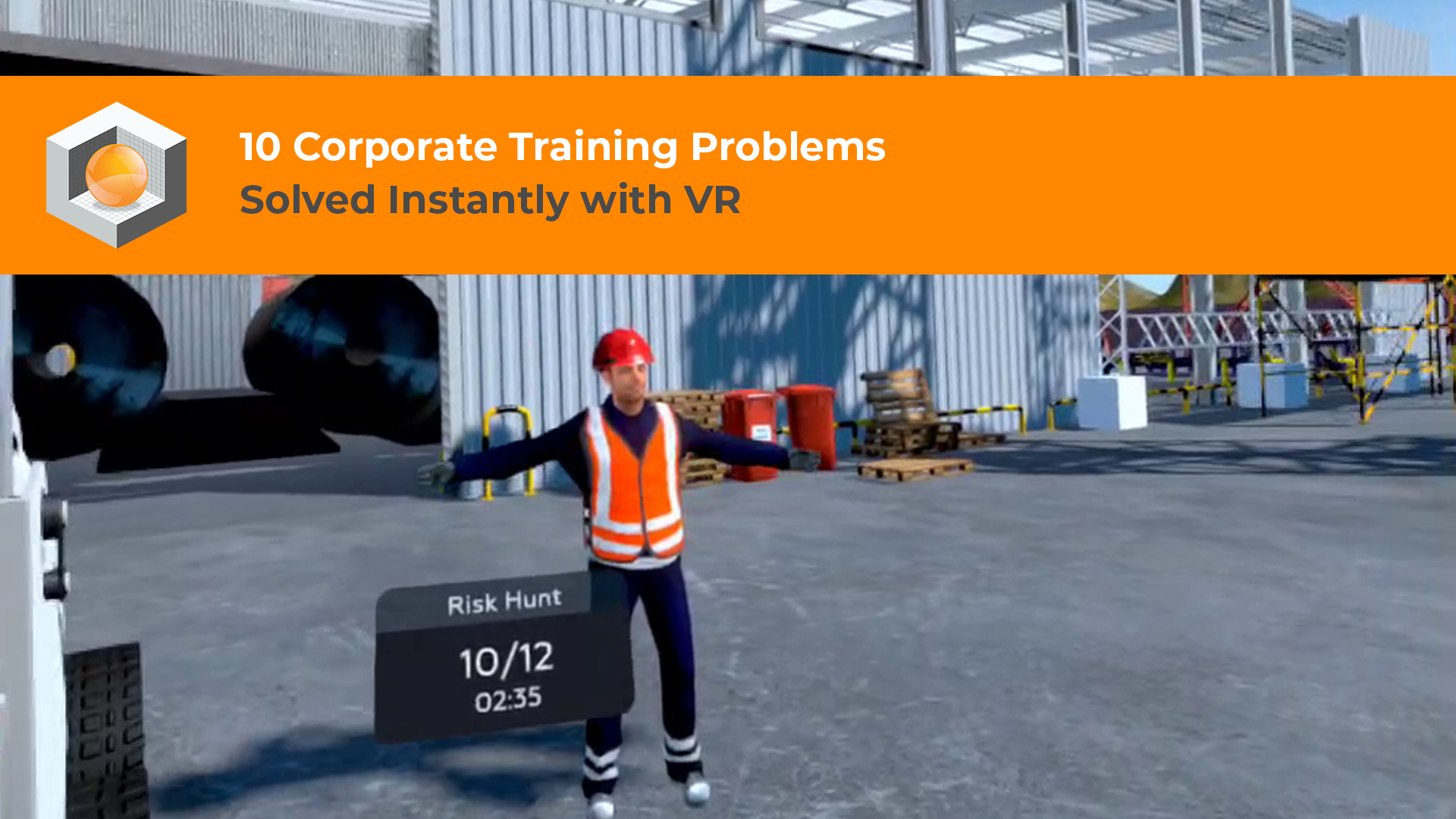
Despite rapid digital transformation, many organizations in 2025 still rely on outdated corporate training methods that fail to meet modern workforce needs. Traditional classroom and e-learning formats often struggle to deliver real engagement, measurable skill retention or practical hands-on experience. As a result, companies face costly operational downtime, inconsistent employee performance and training programs that simply do not scale.
Virtual Reality has emerged as the fastest-growing solution to these challenges. Immersive simulations provide employees with safe, repeatable and highly interactive environments where they can learn by doing. Instead of passively watching or listening, learners actively participate, make decisions and experience the consequences in real time.
RoT STUDIO empowers organizations to adopt VR training instantly. With a no-code creation platform, ready-to-use training catalogues and tailor-made VR/XR content development services, companies can transform their entire training ecosystem within days. Whether the goal is improving safety compliance, accelerating onboarding, standardizing skill development or reducing training costs, VR delivers measurable results fast.
Problem 1: Low Employee Engagement in Training
One of the biggest challenges in corporate learning is keeping employees genuinely engaged. Traditional training formats rely heavily on passive content like videos, slides and lectures. These methods often fail to maintain attention, resulting in low motivation and weak knowledge retention. When employees feel disconnected from the material, training becomes a box-ticking exercise rather than a meaningful learning experience.
VR changes this dynamic instantly by placing individuals inside immersive, interactive environments where they learn through direct action. Instead of watching how a task is performed, employees perform it themselves in a realistic virtual setting. Gamified tasks, branching scenarios and hands-on problem-solving increase curiosity and commitment, making training feel more like an experience than an obligation.
RoT STUDIO enhances engagement even further through the RoT STUDIO License, which enables organizations to design their own VR scenes without coding. Companies can import their own models, create procedural steps with drag-and-drop logic and tailor every detail to match real operational environments. This personalization turns corporate training into an active, immersive journey one that keeps employees focused, motivated and eager to learn.
Problem 2: Expensive Training Logistics and Operational Downtime
Corporate training often requires shutting down production lines, halting field operations or diverting key personnel from their daily responsibilities. Add travel, venue setup, physical materials and instructor costs, and training logistics quickly become one of the most expensive components of workforce development. For many organizations, this financial burden delays or limits essential training programs.
VR eliminates these constraints instantly. With immersive virtual environments, employees can train anytime, anywhere without interrupting business continuity. Instead of arranging physical spaces or scheduling availability around operational calendars, training becomes an on-demand experience accessible with a VR headset.
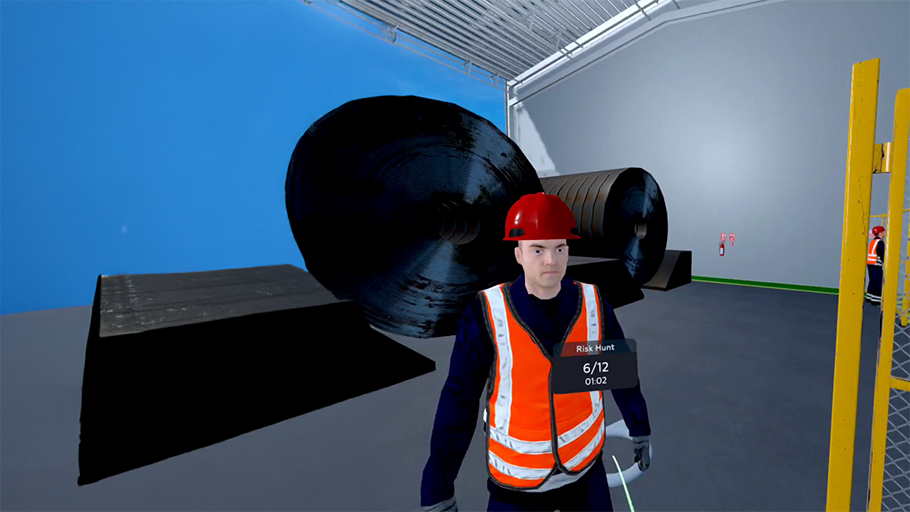
RoT STUDIO maximizes this benefit through its VR Trainings Catalogue, which offers ready-to-use HSE and medical training modules. Companies can deploy scenarios like Risk Hunt, Lockout Tagout, Working at Height or Anatomy and Surgical Procedure modules immediately; no custom development or preparation required. This dramatically reduces costs and eliminates downtime, allowing organizations to train continuously without disrupting productivity.
By shifting from resource-heavy in-person sessions to scalable VR programs, companies achieve faster rollouts, lower expenses and measurable ROI in the first months of implementation.
Problem 3: Inconsistent Training Quality Across Teams
Even the best-designed corporate training programs can vary significantly depending on the instructor, location or group size. Human-led sessions introduce inconsistencies in delivery, pacing and feedback, which ultimately result in uneven employee performance. Organizations with multiple facilities or large workforces face an even tougher challenge: ensuring every team receives the same high-quality training experience.
VR transforms this fragmented process into a fully standardized learning system. Every employee is placed in the same virtual environment, faces identical tasks and receives consistent instructions and assessments. This eliminates the variability of instructor-dependent training and ensures that competency levels are uniform across the organization.
With the RoT STUDIO License, companies gain full control over procedural training design through a drag-and-drop node system that requires no coding. Training leaders can build step-by-step workflows, define correct and incorrect actions and enforce sequences that guarantee consistency. Whether onboarding new personnel or maintaining compliance standards, every learner engages with the same exact scenario; every time.
By unifying training quality through VR, companies significantly reduce errors, improve operational reliability and create a measurable foundation for long-term skill development.
Problem 4: Limited Access to Realistic or Hazardous Training Environments
Many industries require employees to train in environments that are high-risk, hard to access or impossible to replicate safely in real life. Examples include working at height, mining, emergency response, earthquake preparedness, medical procedures or complex equipment operations. Real-world training in these scenarios is expensive, dangerous and often impractical.
VR removes these limitations by providing fully realistic, risk-free simulations where employees can practice critical skills under real-life conditions; without exposing themselves or others to danger. Trainees can repeat scenarios countless times, experiment freely and learn from mistakes with zero physical risk.
RoT STUDIO’s portfolio is uniquely suited for this challenge.
- The VR Trainings Catalogue includes high-risk modules such as Working at Height, Underground Mining Risk Hunt, Earthquake Risk Hunt and various HSE-focused experiences.
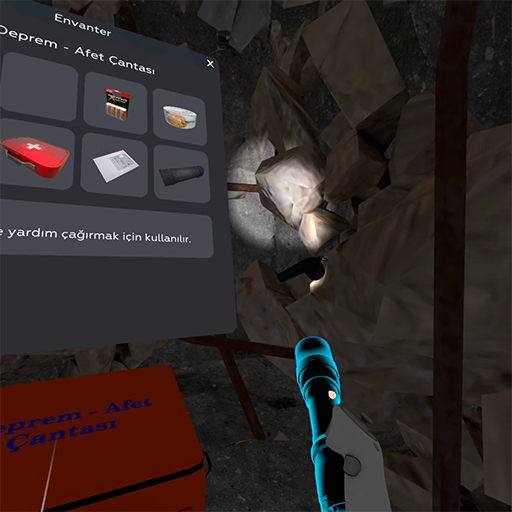
- The Earthquake Awareness Training offers a mixed-reality environment that enables users to experience real earthquake scenarios interactively, making preparedness training significantly more impactful.
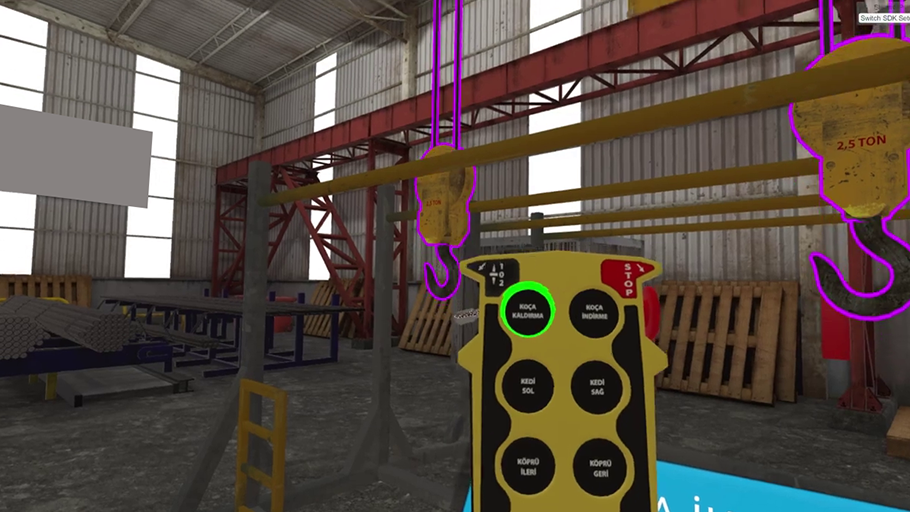
- Medical teams benefit from highly realistic RoT Healthcare simulations for catheterization, ophthalmology, anatomy and surgical procedures.
- Haptic-supported VR tools enhance realism further by enabling tactile interactions that mirror real-world force and touch.
By enabling access to environments that are otherwise difficult, dangerous or impossible to train in, VR gives organizations an unparalleled advantage in preparing employees safely, effectively and confidently.
Problem 5: Slow Learning Retention and Skill Decay
Even well-structured trainings often fail to create long-term knowledge retention. Employees may understand concepts during a session, yet forget critical steps when applying them weeks later. This “training decay” is a major source of workplace errors, reduced efficiency and compliance failures.
VR directly combats this issue by creating deeply immersive, multi-sensory learning experiences that transfer knowledge into long-term memory. When employees perform tasks in a realistic virtual environment, instead of simply reading or watching instructions, the brain encodes the experience as if it happened in real life. This dramatically increases retention rates.
RoT STUDIO enhances this advantage with several key capabilities:
- Interactive task repetition: Trainees can practice complex procedures repeatedly without consuming physical resources.
- Mixed-Reality Earthquake Awareness Training: Participatory learning reinforces memorability by combining physical movement with virtual scenarios.
- Haptic-supported VR: Tactile force-feedback strengthens muscle memory, especially in medical and technical training applications.
Through these immersive methods, organizations achieve stronger skill retention, fewer mistakes and more confident employees who can apply their training reliably in daily operations.
Problem 6: Difficulty Training Onboarding Employees at Scale
Rapidly growing organizations often struggle to onboard new employees efficiently. Traditional onboarding depends on trainers’ availability, physical resources and operational schedules. When hiring ramps up, training teams quickly become overloaded, leading to rushed or incomplete onboarding experiences.
VR solves this instantly by enabling scalable, self-paced onboarding programs available anytime and anywhere. New employees can receive standardized training on company procedures, safety protocols and equipment operations without waiting for a human trainer or access to a physical workspace.
RoT STUDIO simplifies large-scale onboarding with:
- RoT STUDIO License: HR and training teams can create their own onboarding modules with drag-and-drop scene building, even using imported 3D models from their facilities.
- VR Trainings Catalogue: Ready-made modules for HSE, security, emergency responses and basic procedural tasks accelerate initial skill acquisition.
- Custom VR/XR development: Organizations with unique workflows can build tailor-made simulations that replicate real operational environments precisely.
As a result, large groups of new hires can be trained simultaneously, consistently and efficiently; reducing onboarding time while improving readiness and productivity.
Problem 7: High Risks in Medical and Technical Skills Training
Training in fields like healthcare, manufacturing and heavy industry often involves performing complex tasks where mistakes carry significant consequences. Practicing these skills on real patients, expensive machinery or hazardous environments is risky, costly and limited by availability.
VR removes these barriers by allowing trainees to practice in a fully safe yet hyper-realistic virtual environment. They can repeat procedures, test their decision-making and learn from errors without any physical danger or financial loss.
RoT STUDIO delivers industry-leading solutions for this challenge through:
- RoT Healthcare modules: Anatomy, Surgical Catheterization, Musculoskeletal System and Ophthalmology simulations that teach critical medical skills under lifelike conditions.
- Haptic technology: Force-feedback enables users to feel resistance, pressure and tactile cues, providing an unmatched level of realism for surgical, procedural and precision-based tasks.
- Customized VR/XR Services: For organizations requiring specialized content; such as robotic arm operations, crane safety, forklift training or proprietary medical devices; RoT STUDIO develops fully bespoke simulations.
These capabilities help organizations improve competency, reduce risk, accelerate skill mastery and elevate training effectiveness in ways traditional methods cannot match.
Problem 8: Lack of Real-Time Competency Assessment
Most traditional training programs rely on manual evaluations, written tests or instructor observations. These methods are time-consuming, subjective and often fail to capture true performance. Without accurate, real-time assessment, organizations struggle to measure skill gaps or confirm whether employees are truly ready for real-world responsibilities.
VR provides instant, automated and data-driven performance tracking. Every action a trainee takes; correct steps, mistakes, reaction times, procedure pathways; is recorded and analyzed. This creates a clear, quantifiable competency profile for each employee.
RoT STUDIO incorporates these advanced assessment features through:
- Node-based logic inside RoT STUDIO License: Every training step is defined, monitored and evaluated automatically.
- Scenario-specific scoring: VR Trainings Catalogue modules include built-in performance metrics tailored to safety, medical or procedural tasks.
- Custom analytics dashboards: Organizations using tailored VR/XR simulations receive detailed data on employee behaviors and improvement areas.
With real-time competence tracking, training managers can identify risk areas early, personalize development plans and ensure every employee meets required standards before entering high-stakes environments.
Problem 9: Training That Fails to Adapt to Company-Specific Needs
Many corporate training programs fail because they rely on generic content that doesn’t reflect the company’s real processes, equipment or operational challenges. When employees train in scenarios that don’t match their daily work environments, the learning doesn’t fully translate into practice. This results in skill gaps, procedural errors and reduced performance.
VR solves this instantly by allowing organizations to create fully customized training modules that mirror real-life situations with extreme precision. Companies can replicate their actual facilities, machinery, workflows and safety procedures inside immersive virtual environments.
RoT STUDIO provides unmatched flexibility for tailored training through:
- Customized VR/XR Services: Expert development teams build simulations specifically designed for your company’s unique workflows, equipment and risk points.
- RoT STUDIO License: Internal teams can independently create training scenes by importing their own 3D models and assembling procedural steps using drag-and-drop nodes.
- Industry-specific use cases: Virtual Crane Safety Checklists, LoTo trainings, forklift operations, robotic arm handling, medical equipment demos and more.
With VR, organizations eliminate the disconnect between theoretical learning and real-world execution, ensuring employees are trained on exactly what they will encounter in daily operations.
Problem 10: Limited Training Time and Low Scheduling Flexibility
Coordinating training sessions around operational schedules is one of the biggest challenges for large organizations. Employees across shifts, departments or locations often cannot attend the same session, leading to inconsistent training completion rates and significant delays in workforce readiness.
VR makes training available anytime and anywhere. Instead of gathering teams in a classroom or stopping production for group sessions, employees can access training modules whenever they have time; whether during onboarding, between shifts or as part of continuous learning initiatives.
RoT STUDIO amplifies scheduling flexibility through:
- Stand-alone VR deployment: No need for a dedicated room or PC connection. Headsets can be used in any location, allowing instant access.
- Reusable scenarios: Training modules created with RoT STUDIO License or selected from the VR Trainings Catalogue can be launched unlimited times, reinforcing learning at the employee’s own pace.
- Immersive micro-learning: Short, high-impact VR sessions help employees retain information without requiring long training blocks.
This flexibility ensures that training is no longer restricted by scheduling conflicts, instructor availability or operational pressures; dramatically improving completion rates and workforce efficiency.
Bonus: Haptic Technology Takes VR Training to the Next Level
While visual immersion alone significantly enhances training impact, tactile interaction elevates the learning experience to a completely new level. Many tasks; especially in healthcare, manufacturing and equipment operation; depend heavily on physical sensation, such as force, resistance, pressure or fine motor control. Traditional VR cannot replicate these essential tactile cues, leaving skill development incomplete.
Haptic technology fills this gap by enabling employees to “feel” the virtual world. Through force feedback and precise motion tracking, users experience realistic sensations that accurately mimic real-life interactions. This significantly speeds up skill acquisition, improves accuracy and builds confidence before performing tasks in real environments.
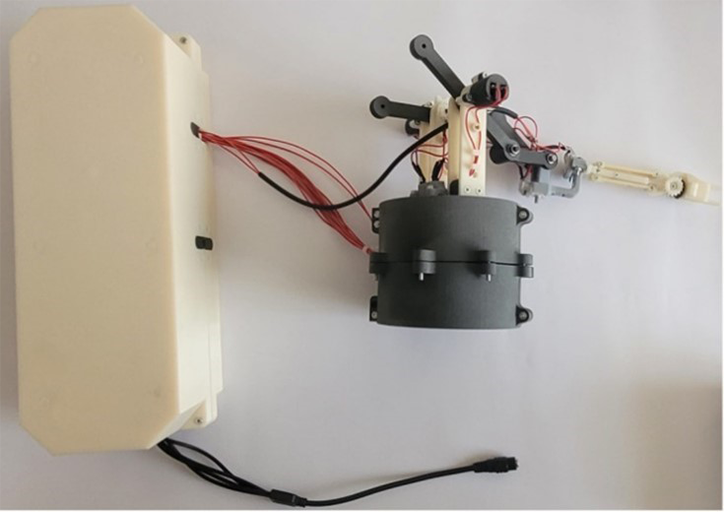
RoT STUDIO integrates advanced haptics into its VR solutions to support high-impact training scenarios:
- 4 DOF force feedback for realistic resistance and tactile response
- 6 DOF motion capabilities for fine control in surgical or technical micro-tasks
- Ideal for healthcare simulations, equipment handling and procedural work
- Seamless integration with RoT Healthcare modules and custom VR development
By combining immersive visuals with tactile realism, RoT STUDIO enables organizations to deliver the most comprehensive, high-fidelity VR training experiences available; closing the final gap between virtual learning and real-world performance.